

You’ve been scrolling through facelift before and after photos for weeks now, maybe late at night, maybe during lunch, maybe every time you catch your reflection and wonder what’s possible. That first click into a photo gallery feels equal parts exciting and overwhelming. Knowing how to read those images, and what to expect from different procedure types, can make the difference between realistic confidence and unnecessary anxiety.
With 79,058 facelifts performed in the U.S. in 2024, according to the American Society of Plastic Surgeons, and a 92% patient satisfaction rate, this procedure remains one of the most reliable paths to natural-looking rejuvenation. Yet before and after galleries vary dramatically in quality. Understanding what you’re seeing requires more than a quick scroll.
As the city’s first woman-led plastic surgery practice, Artisan Plastic Surgery is where co-founder Dr. Diane Z. Alexander, MD, FACS, a trusted Atlanta plastic surgeon with over 20 years of facial plastics expertise, artfully tailors each facelift to honor what makes you unique. This guide walks you through what results look like by procedure type, how to evaluate photos with confidence, and what to expect from your own transformation.
At a Glance
- Facelift results vary significantly by procedure type, with mini facelifts refining subtle aging and deep plane facelifts delivering comprehensive, long-lasting rejuvenation
- Final results take 6 to 12 months to fully emerge as swelling resolves, so patience during recovery is essential
- When evaluating before and after photos, consistency in lighting, angles, and head position matters more than the scale of the change
- A natural-looking result should make you look like a refreshed version of yourself, not a different person
- Choosing a board-certified surgeon with an extensive, unedited gallery of their own patients is the most important step
What Can You Learn from Facelift Before and After Photos?
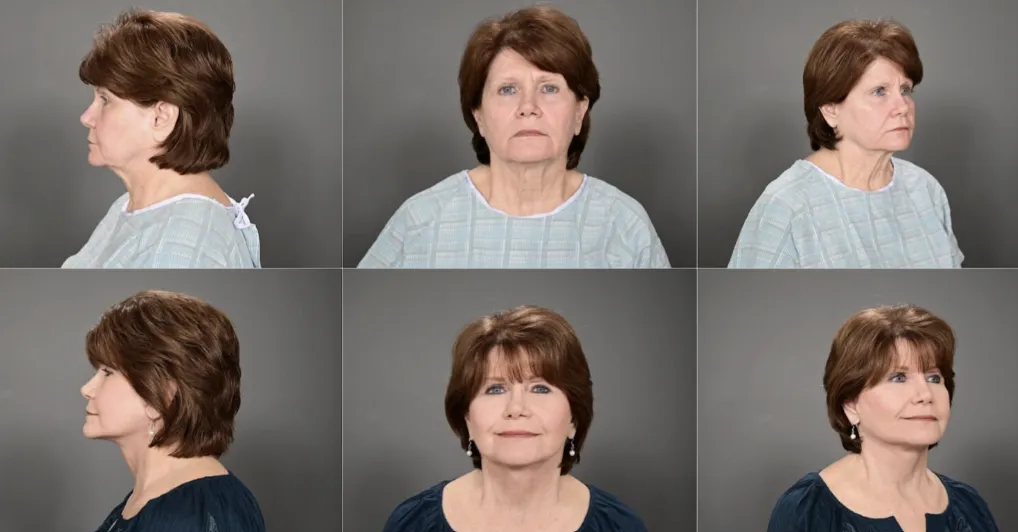
Before and after photos serve as a visual resume of a surgeon’s skill, aesthetic sensibility, and consistency across diverse patients. They reveal whether a surgeon creates refreshed, natural outcomes or overdone, pulled appearances that look nothing like the person who walked in.
A strong gallery includes patients of varying ages, skin types, and procedure types. This shows the surgeon’s ability to personalize results rather than apply a single template. If every patient in a gallery looks the same afterward, that’s a sign the surgeon isn’t tailoring their approach to each unique canvas.
When you’re feeling overwhelmed by photo galleries, start by focusing on patients whose starting features resemble yours. Look for results that reflect refinement, not reinvention.
Dr. Alexander’s facelift gallery showcases her artistic approach to facial rejuvenation, with each result reflecting her philosophy that natural beauty should be honored and refined, never overdone.
Our patient Susan described her experience firsthand:
“I had a facelift with upper and lower eye surgery with Dr. Diane Alexander at Artisan, and I’m so pleased with my experience so far. Dr. Alexander and her entire medical staff have been wonderful, attentive, caring, and professional every step of the way.”
How Do Facelift Results Differ by Procedure Type?

The right facelift depends on where you are in the aging process and how much correction you’d like to achieve. Understanding the differences between each approach helps you set realistic expectations before your consultation.
Mini facelifts target early lower face laxity with shorter incisions and minimal downtime. They’re ideal for patients in their late 30s to 40s with subtle jowling.
SMAS facelifts lift the deeper fibrous layer beneath the skin, addressing moderate sagging in the lower face and jawline. A 2025 systematic review in Aesthetic Plastic Surgery found an 87.8 percent patient satisfaction rate.
Deep plane facelifts reposition the deepest facial tissues for comprehensive rejuvenation of the cheeks, jawline, and neck. The same review reported a 94.4 percent patient satisfaction rate.
| Feature | Mini Facelift | SMAS Facelift | Deep Plane Facelift |
| Best For | Early jowling, mild laxity (late 30s-40s) | Moderate sagging, jowls, nasolabial folds (40s-50s) | Significant aging, midface descent, neck laxity (50s-70s) |
| Areas Addressed | Lower face only | Lower face and jawline | Midface, lower face, jawline, and neck |
| Expected Results | Refined jawline, subtle improvement | Defined jawline, reduced folds | Lifted cheeks, sharp jaw, smooth neck |
| Recovery Time | 7-10 days | ~2 weeks | 2-3 weeks |
| Satisfaction Rate | High for appropriate candidates | 87.8% | 94.4% |
Artisan Plastic Surgery offers three levels of facelift approaches, from surgical lifts that address deeper tissues to minimally invasive options like jowl treatment with FaceTite. Every patient receives a treatment plan tailored to their unique anatomy and goals.
What Should You Look for When Evaluating Before and After Photos?
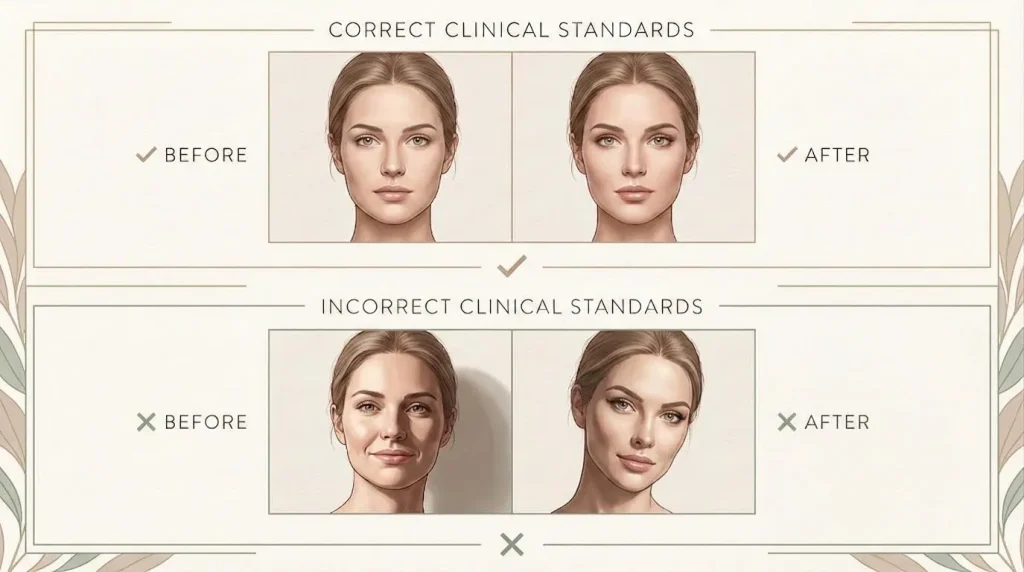
If you’ve ever felt unsure about what you’re actually seeing in a photo gallery, you’re not alone. Here’s the good news. These eight criteria will help you evaluate results with confidence.
- Check that lighting and camera angles match between before and after shots. Inconsistent lighting can make results appear better or worse than they actually are.
- Look for natural head and neck positioning in both images. A tilted-up chin in the after photo can artificially enhance jawline definition.
- Examine scar visibility. Ask to see photos with hair pulled back around the ears, as well-hidden scars along the hairline and natural creases indicate skilled technique.
- Evaluate whether the patient looks like a younger version of themselves, not a dramatically different person. Pulled, tight, or windswept appearances signal outdated techniques.
- Note how long after surgery the photos were taken. Six months or more is ideal for showing final, settled results.
- Look for consistency across many patients, not just one or two impressive cases. A reliable surgeon delivers refined results repeatedly.
- Assess jawline definition and neck contour. These are the hallmarks of a successful facelift and the areas where surgical skill truly shows.
- Watch for preserved facial symmetry and natural expression in the after images. You should still look like you, just refreshed.
What Are the Red Flags in Before and After Galleries?
Not all galleries deserve your trust. Some before and after galleries may feature deceptive imagery, or imagery inadvertently reveals lacking skill on the part of the practice. Learning to spot warning signs protects you from making a decision based on misleading images.
Inconsistent photo conditions between before and after images are a major red flag. Different lighting, angles, or makeup can exaggerate results and mask the true outcome. If the “before” photo uses harsh overhead lighting and the “after” uses soft studio lighting, you’re not seeing an honest comparison.
On-table or immediate post-op photos without disclosed timing can also be misleading. Swelling and surgical positioning distort the true outcome, and these images don’t represent what you’ll actually look like weeks or months later.
A gallery showing identical results across very different patients suggests a cookie-cutter approach rather than personalized care. Every face is unique, and a skilled surgeon’s results should reflect that individuality.
When Do Facelift Results Fully Appear?
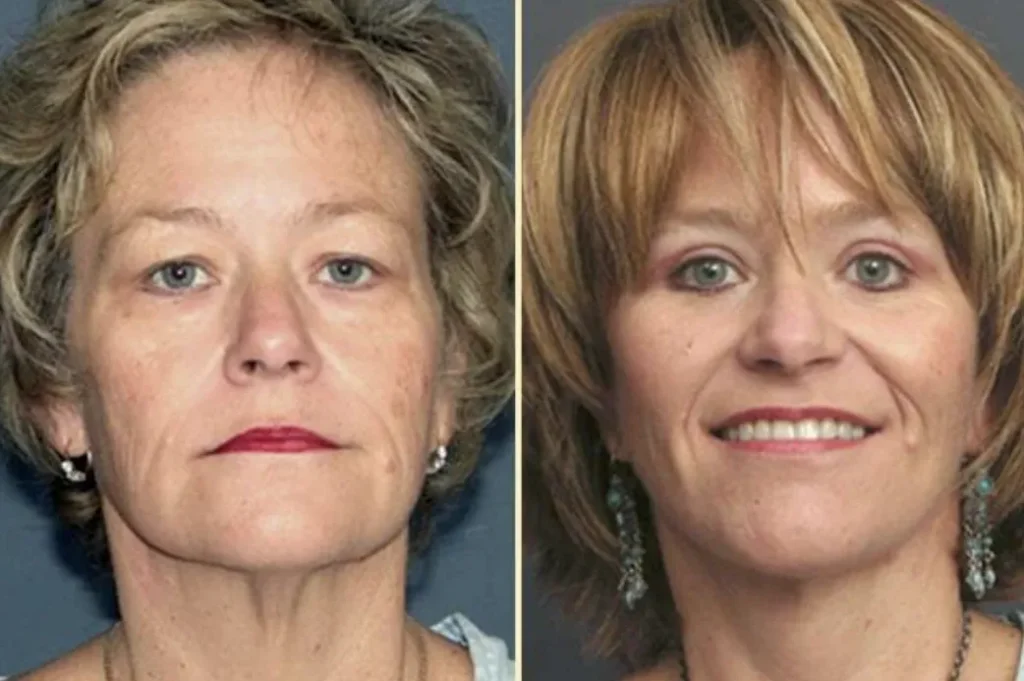
Most patients see encouraging changes within the first few weeks. However, it’s important to keep in mind that final results won’t be fully visible for six to 12 months. Understanding this timeline helps you stay patient and confident throughout recovery.
According to ASPS, most patients are ready to resume normal activities within two to three weeks, with most patients feeling back to normal around the three-month mark. Here’s what to expect week by week.
- Week 1: Swelling and bruising at their peak. Stitches may be removed between days seven and 10. Rest is essential.
- Week 2: Fifty to 60 percent of swelling has resolved. Bruising fades noticeably, and many patients feel comfortable returning to light activities.
- Weeks 3-4: Seventy to 80 percent of swelling gone. Facial contours become more defined, and you begin to look and feel more like yourself.
- Months 2-3: Ninety to 95 percent of swelling resolved. Results look increasingly natural, though minor tightness or numbness may linger.
- Months 6-12: All swelling fully resolved. Scars have matured. Final results are visible with complete tissue settling.
About half of facelift patients experience temporary post-operative anxiety during the first week, when swelling makes results look worse than expected. That’s completely normal, and it passes as healing progresses.
At Artisan Plastic Surgery, our team has spent years refining a detailed post-op protocol built around facelift recovery in Atlanta, helping each patient heal faster, from pre-operative vitamins to post-operative facials and customized skincare.
Our patient Carol describes the difference this support made:
“Dr Alexander performed a lower face and neck lift on me 5 weeks ago. The results are amazing already. The whole process included pre op vitamins and post op included very helpful facials and products to make the recovery so easy and painless.”
How Do Results Vary by Age, Skin Type, and Facial Structure?
Your individual anatomy plays a significant role in what your facelift results will look like. If you’re wondering whether your specific age, skin tone, or facial structure means you won’t get great results, the answer depends on matching the right technique to your unique features.
Patients in their 40s with early jowling are often well-suited for mini facelifts that produce subtle, natural refreshment with shorter recovery. Patients in their 50s to 70s with more significant aging typically benefit from SMAS or deep plane techniques that address deeper tissue layers.
Skin elasticity is an important predictor of facelift outcome. Elastic skin redrapes smoothly and produces longer-lasting results, while less elastic skin may benefit from complementary treatments like laser resurfacing. Darker skin tones require careful technique to minimize pigmentation changes, and sun-damaged skin often responds well to adjunct resurfacing treatments alongside the facelift.
What Does a Natural-Looking Facelift Actually Look Like?
This is the question that matters most to nearly every patient researching facelifts. A natural-looking facelift makes you appear approximately 12 years younger on average,according to ASPS research, without the telltale signs of surgery like pulled skin, pixie ears, or hollow cheeks.
The key to natural results lies in addressing deeper facial structures rather than simply tightening skin. Modern techniques like the SMAS and deep plane methods reposition the tissue that actually creates aging, producing results that look refreshed and last for years rather than months.
Natural results preserve your unique facial character. Your expressions remain fluid and authentic, and people notice you look refreshed without being able to pinpoint why. This is how to avoid the overdone, pulled look entirely. That’s the hallmark of a truly skilled surgeon.
This is where artistry matters. Dr. Alexander’s philosophy centers on sculpting and refining each patient’s features to create the most beautiful rejuvenation while ensuring results are never overdone and always reflect the patient’s natural beauty.
Here our patient Claudia explains how this approach exceeded her expectations:
“Dr Alexander did a lower face and neck lift on me. I could not be more pleased! She and her entire staff are truly wonderful people! My results are better than expected!”
How Much Does a Facelift Cost in Atlanta?
We understand this is a significant investment, and you want to make sure every dollar is well spent. Atlanta facelift costs range from $7,500 for a mini facelift to $24,000 or more for a deep plane facelift, with the total including surgeon fees, anesthesia, and facility costs.
The surgeon’s fee typically makes up 60 to 70 percent of the total cost. More experienced, board-certified surgeons with specialized facelift training generally charge more, but the investment reflects years of refined technique and consistently beautiful results.
| Facelift Type | Atlanta Cost Range |
|---|---|
| Mini Facelift | $7,500-$12,000 |
| SMAS Facelift | $12,000-$18,000 |
| Deep Plane Facelift | $15,000-$24,000 |
| Revision Facelift | $16,000-$26,000 |
Disclaimer: The pricing ranges provided are estimates based on regional averages and are intended for informational purposes only. A final, personalized price quote can only be provided after a private, in-person consultation and a comprehensive evaluation of your unique anatomy and aesthetic goals.
Your Consultation and Next Steps
During your consultation, your surgeon evaluates your facial anatomy, discusses your aesthetic goals, and recommends the facelift approach that will deliver the most natural, lasting results for your unique features. It’s a collaborative conversation, not a sales pitch.
Artisan Plastic Surgery provides a comprehensive experience that includes pre-operative preparation, detailed surgical planning, and a refined post-op protocol developed over 20 years of practice. Both the Northside and Johns Creek locations offer private, comfortable consultation settings, and financing through Alphaeon Credit, Cherry, and CareCredit makes your investment accessible.
- Browse the before and after gallery to see real patient results
- Gather any questions about your specific concerns and goals
- Schedule your consultation to discuss a personalized treatment plan
Ready to see what your refreshed reflection could look like? Request a consultation to get started.
Conclusion
Now that you know how to read between the lines of before and after photos, you’re already ahead of most patients walking into a consultation. Look for consistency in how photos are taken, results that still look like real people, and a surgeon who clearly tailors their approach, not one recycling the same look on every face.
Because here’s the truth: a great facelift doesn’t make you look different. It makes people wonder if you just got back from two weeks in Tuscany.
At Artisan Plastic Surgery in Atlanta, that’s exactly the goal — to help you look like the most refreshed, confident version of yourself, not a version of someone else. Every procedure is shaped around the face you already have, because the best work honors what’s already there.
Frequently Asked Questions
How long after a facelift do before and after photos show final results?
Final facelift results are typically visible six to 12 months after surgery, once all swelling has fully resolved and tissues have settled. Photos taken before this point may not accurately represent your long-term outcome.
What should you look for in a facelift surgeon’s before and after gallery?
Look for consistency across multiple patients, natural-looking results, patients of varying ages and skin types, well-hidden scars, and photos taken at least six months after surgery.
Can you see facelift scars in before and after photos?
Well-placed incisions along the hairline and natural ear creases are virtually invisible in properly taken photos. Ask to see images with hair pulled back to assess scar quality directly.
How much younger will you look after a facelift?
Facelifts can make patients appear approximately 12 years younger on average. Results vary depending on the technique used and individual factors like skin elasticity.
Do facelift results look different on different skin types?
Yes, skin elasticity, thickness, and tone all affect how results appear. Darker skin tones may require specific techniques to minimize pigmentation changes, while sun-damaged skin may benefit from adjunct resurfacing treatments.