

Breast Surgery, Atlanta
Breast Reduction in Atlanta
Relief from the back, neck, and shoulder pain of heavy breasts. Often covered by insurance.
CONSULTATION
Required
SURGERY LENGTH
2 to 3 hours
ANESTHESIA
General
SETTING
Northside, outpatient
BACK TO DESK WORK
About 1 to 2 weeks
INSURANCE
Often covered when medically necessary
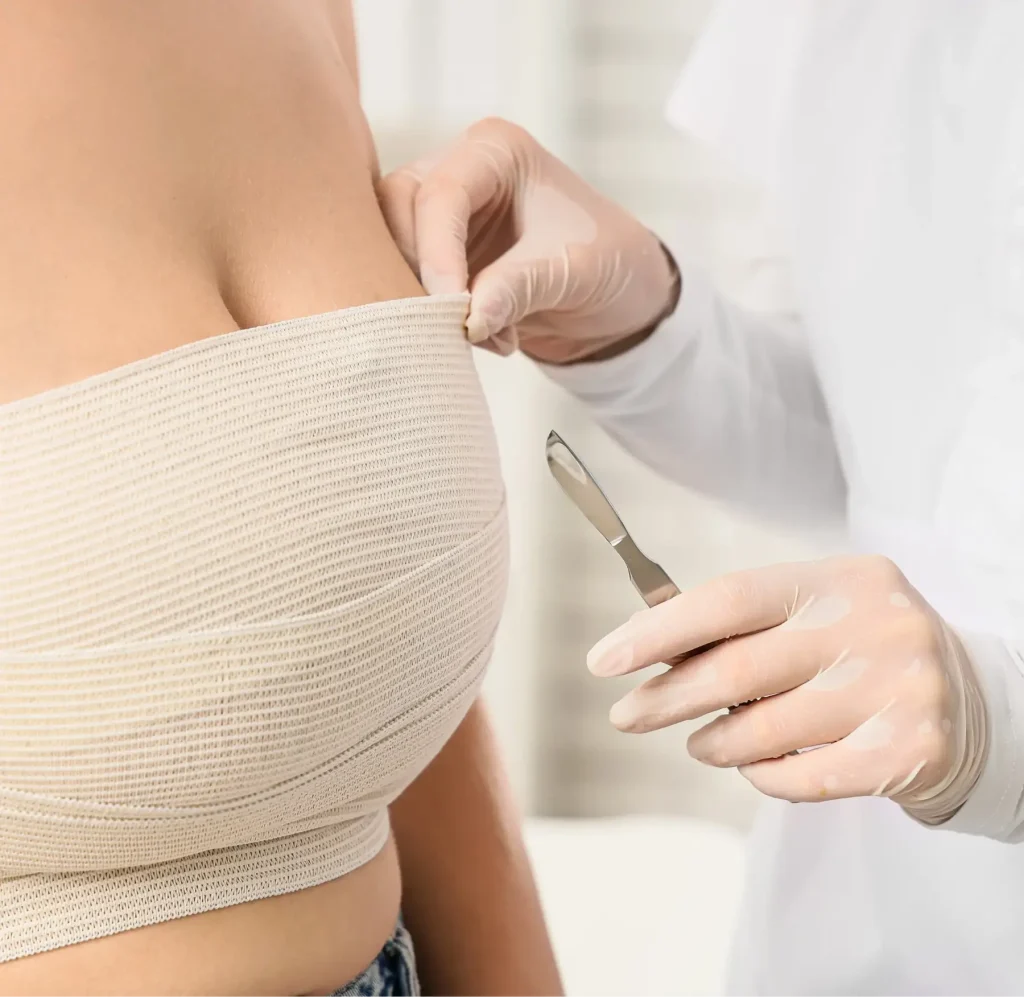
The Approach
For most patients this is not a cosmetic decision. It is the end of years of pain.
If heavy breasts have given you chronic back, neck, and shoulder pain, deep grooves from your bra straps, rashes underneath, and a wardrobe and an exercise life built around managing them, a breast reduction is genuinely life-changing. Patients routinely describe it as the best decision they ever made, not because of how they look, but because of how they feel: lighter, more comfortable, and free to move.
A reduction removes excess breast tissue, fat, and skin, and lifts and reshapes what remains, raising the nipple to a natural position, so your breasts are proportional to your body and no longer a source of pain. And because it relieves a documented medical problem, it is often at least partly covered by insurance, which we will help you navigate. We will be straight with you about all of it: the relief, the scars, the recovery, and whether your insurance is likely to cover it.
Candidacy
Are You a Candidate?
These symptoms are both how you know a reduction may help and, not coincidentally, what supports an insurance claim. If this is you, you are far from alone, and relief is very achievable.
Beyond the symptoms, we look for good general health, no conditions that impair healing, and non-smoking, or a genuine willingness to quit before surgery. We will confirm your candidacy and your insurance options at your consultation.
You may be a strong candidate if you experience:
- Chronic back, neck, or shoulder pain from the weight of your breasts
- Deep grooves in your shoulders from bra straps
- Chronic rashes, irritation, or skin breakdown underneath your breasts
- Numbness or tingling in your hands or arms
- Difficulty breathing when lying down
- Poor posture, or difficulty exercising and finding clothes that fit
The Operation
How It Is Done, and Your Scars
The operation
A breast reduction is performed under general anesthesia at Northside and takes 2 to 3 hours. Your surgeon removes excess tissue, fat, and skin, reshapes the breast, and repositions the nipple and areola to a natural, higher position. In most reductions the nipple stays attached to its underlying tissue to preserve blood supply and as much sensation as possible.
Your scars, honestly
They are real and they are permanent. The most common pattern is the anchor, or inverted-T: a scar around the areola, a vertical line down to the crease, and a horizontal line along the crease. Some patients are candidates for a shorter lollipop, or vertical, pattern with less scarring. Your scars fade substantially over the first year and sit where a bra and swimwear cover them, and for the overwhelming majority of patients the relief is well worth them. We will show you exactly where yours will fall at your consultation.
Coverage
Is It Covered by Insurance?
Often, yes, and this is one of the most important things to understand. Because a breast reduction treats real medical symptoms, insurers frequently cover it when it is deemed medically necessary. Coverage is not automatic, though.
Plans typically require a record of your symptoms and how they affect your daily life, evidence you have tried conservative measures such as supportive bras, physical therapy, or pain management, a minimum amount of breast tissue to be removed, which insurers calculate based on your height and weight, and photographs. Some plans also want a referral from your primary care doctor.
We help you through this, documenting your symptoms and working to secure the coverage you qualify for. And if you do not qualify, or prefer to pay directly for a more purely cosmetic reduction, we offer that as a self-pay option too. At your consultation we will give you an honest read on where you are likely to land.
Two Paths
Covered, or Self-Pay?
Insurance-Covered
Medically necessary
- Pursued when documented symptoms meet your plan’s criteria for medical necessity.
- Requires symptom documentation, evidence of conservative treatment, a minimum tissue-removal amount, and photos.
- Out-of-pocket cost may be limited to your deductible, copays, and coinsurance.
- Takes longer to arrange, because the documentation has to be assembled and approved.
Self-Pay
Cosmetic
- Chosen when you do not qualify, or when you would rather not go through the insurance process.
- No documentation requirements, and no minimum removal amount driven by an insurer.
- Cost depends on your procedure plus anesthesia and the Northside facility fee.
- Can be scheduled without waiting on an approval.
We give you a clear, personalized picture of your likely coverage and your costs at your consultation, and financing is available for any portion you pay yourself. Most patients do not know which path they are on when they walk in, and working that out is part of what the consultation is for.
Worth Knowing
Will I Be Able to Breastfeed?
This is an important question, especially if you may want children in the future, and we want you to have an honest answer. A breast reduction can reduce or, in some cases, eliminate the ability to breastfeed, because the surgery involves the breast tissue, ducts, and sometimes the nerves and structures involved in milk production and letdown. Techniques that keep the nipple attached to its underlying tissue help preserve the ability for some patients, but there is no guarantee. If breastfeeding a future child is important to you, tell us at your consultation. It is a genuine factor in the decision and the timing, and we will discuss it openly.
Recovery
Recovery Timeline
Here is the whole arc, so you can plan around it.
Surgery day
2 to 3 hours of surgery, outpatient at Northside. Someone drives you home and stays the first 24 hours. You wake in a surgical bra. Keep your head elevated to reduce swelling.
First week
Help at home. Nothing over 5 pounds, and no arms above shoulder height. Surgical bra around the clock except showering. Short easy walks encouraged. No alcohol while on pain medication.
1 to 2 weeks
Most patients return to desk work. Light duties resume around a week.
3 weeks
The 5-pound lifting limit typically eases. Follow-up with medical staff.
6 weeks
No sports or gym until now. Supportive bra around the clock through this point, then any bra, including underwire. Follow-up with the doctor.
3 to 4 months
Swelling resolves and your final size and shape settle, which is when you can be fitted for your final bra size. Scars keep fading over the first year.
Your breasts may look larger than you expected at first, because of swelling. That is normal and it settles.
Your Experience
Your Personalized Surgery Experience
Consultation
We listen to your symptoms and goals, examine you, discuss how much reduction is safely achievable and which incision pattern your anatomy calls for, and give you an honest read on your insurance coverage.
Surgery
Two to three hours at Northside under general anesthesia. Excess tissue, fat, and skin removed, the breast reshaped, the nipple and areola repositioned. Home the same day.
Recovery
Surgical bra, restricted lifting, and our detailed protocol. Back to desk work in one to two weeks, the gym at six.
Results
Immediate relief from the weight, with final size and shape settling over three to four months as swelling resolves.
The Practice
Why Patients Choose Artisan
We treat this as the relief it is
Our framing is your comfort and quality of life first, which is also exactly the medical-necessity case that supports your insurance coverage, and we help you pursue it.
Female plastic surgeons who understand
This is a personal decision, and being cared for by experienced female surgeons who understand what living with heavy breasts is like matters.
Honest about scars, breastfeeding, and coverage
We will not gloss over the trade-offs, and we will give you a straight answer on all of them so you can decide with confidence.
All female plastic surgery practice
Our practice was founded in 2002 and our surgeon staff is all female.
FAQ
Breast Reduction FAQs
Is breast reduction covered by insurance?
Often, yes. Because it relieves documented medical symptoms like chronic back, neck, and shoulder pain, insurers frequently cover it when it is deemed medically necessary. Plans usually require documentation of your symptoms, evidence you have tried conservative measures, a minimum amount of tissue to be removed based on your height and weight, and photos. We help you navigate this and pursue the coverage you qualify for, and we offer a self-pay option if you do not qualify or prefer a purely cosmetic reduction.
Will I have noticeable scars?
Yes. A breast reduction leaves permanent scars, most often in an anchor pattern around the areola, down to the crease, and along the crease, though some patients qualify for a shorter vertical pattern. They fade substantially over the first year and sit where a bra and swimsuit cover them. We will show you exactly where yours will fall, and for nearly all patients the relief is well worth them.
Will I be able to breastfeed afterward?
It may reduce or eliminate the ability, because the surgery involves the breast tissue and ducts. Techniques that keep the nipple attached to its underlying tissue help preserve it for some patients, but there is no guarantee. If breastfeeding a future child matters to you, tell us. It is a real factor in the decision and the timing, and we will talk it through honestly.
Does a reduction also lift my breasts?
Yes. A reduction inherently lifts and reshapes your breasts and raises the nipple and areola to a more youthful position, so you get a lift as part of the procedure. Many patients are pleasantly surprised by how much perkier and more proportional their breasts look, not just how much lighter they feel.
How much smaller will I be?
That is a conversation between you and your surgeon. We work toward a size that relieves your symptoms and looks proportional to your body, within what is safely achievable given your anatomy and, if you are going through insurance, any minimum-removal requirement. We will discuss a realistic goal at your consultation.
What are the risks?
Common surgery is still surgery. Specific risks include scarring, changes in nipple or breast sensation which are sometimes permanent, a reduced ability to breastfeed, asymmetry, wound-healing issues where the incisions meet, and rarely, compromised blood supply to the nipple. Bleeding, infection, and clots are the general surgical risks. Your surgeon reviews all of it with you.
How long is recovery?
Most patients return to desk work in 1 to 2 weeks, wear a surgical then supportive bra for 6 weeks, and resume the gym at 6 weeks. Short walks are encouraged early. Final size and shape settle over 3 to 4 months.
Will I stay overnight in the hospital?
No, it is an outpatient procedure at Northside. You go home the same day into the care of a loved one, who should stay with you the first 24 hours.
When will I see my final result?
You will feel relief from the weight immediately. Your breasts may look larger than expected at first due to swelling, which is normal, and your final size and shape settle over the next 3 to 4 months, at which point you can be fitted for your final bra size.
Can it be combined with other procedures?
Sometimes, yes, for example as part of a mommy makeover with a tummy tuck. If you are interested in combining procedures, we will discuss whether that is safe and appropriate for you at your consultation.
The end of the pain, and honest help finding out whether insurance will cover it.
Come in and we will tell you honestly what relief to expect, what your scars and recovery will involve, and whether your insurance is likely to cover it.