



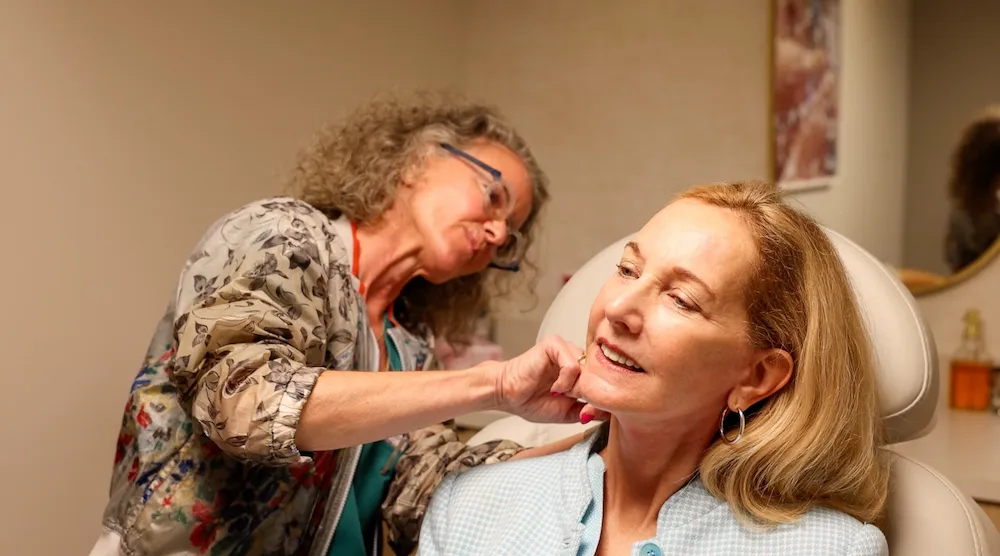
You’ve scrolled through dozens of before-and-after galleries, zooming in on jawlines and searching for telltale signs around the ears. The one thought that keeps coming back isn’t about cost, recovery, or even the surgery itself. It’s this: “What if I end up looking like I had work done?”
That fear is more common than you might think. According to the American Society of Plastic Surgeons, 79,058 facelift procedures were performed in 2024, and modern techniques have moved far beyond the skin-pulling methods that once gave facelifts their reputation. Today’s advanced approaches focus on repositioning deeper facial structures, producing results that look refreshed and natural rather than tight or artificial.
As the city’s first woman-led plastic surgery practice and a clear example of what to expect from an Atlanta cosmetic surgeon, Artisan Plastic Surgery brings over 20 years of experience and an artist’s sensibility aimed at a refreshed, more youthful appearance rather than an overdone one. This guide covers what natural facelift results actually look like, which techniques produce the most subtle outcomes, and how to choose the right approach for your goals.
At a Glance
- Natural facelift results come from repositioning deeper facial structures, not pulling skin tight, so the best outcomes look refreshed and rested rather than “operated on”
- Deep plane facelifts achieve 94.4 percent patient satisfaction in a 2025 meta-analysis of 2,896 patients because they lift tissues without relying on skin tension
- The overdone look, including the windswept appearance, pixie ears, and visible scarring, is almost always caused by outdated skin-only techniques or poor surgical planning
- Choosing a board-certified plastic surgeon who prioritizes artistry and customization is the single most important factor in achieving natural results
- Early post-operative tightness is temporary and normal, with final natural-looking results typically emerging between three and six months after surgery
What Does a Natural-Looking Facelift Actually Look Like?
You’ll recognize a truly natural facelift by what you don’t notice. The face moves expressively during conversation, smiling, and turning the head. Friends and family sense you look “rested” or “healthier” without being able to pinpoint what changed.
That’s the hallmark of skilled facial rejuvenation. Natural results restore harmony: a cleaner jawline, smoother neck, more supported cheeks, and a lighter midface, all without sharpness, tightness, or distortion.
The best facelifts preserve your unique facial identity. You should still look like yourself, just a more refreshed version. That sense of recognition is what separates artistry from overcorrection.
At Artisan Plastic Surgery, our surgeons view each patient as a unique canvas, artfully tailoring every facelift to deliver results that honor what makes you uniquely you. View our before and after gallery to see real patient results.
Carol B., who had a lower face and neck lift, shared her experience:
“The results are amazing already. The whole process included pre op vitamins and post op included very helpful facials and products to make the recovery so easy and painless.”
Once you understand what natural results look like, it helps to know what causes the opposite.
What Causes the ‘Overdone’ or ‘Pulled’ Facelift Appearance?
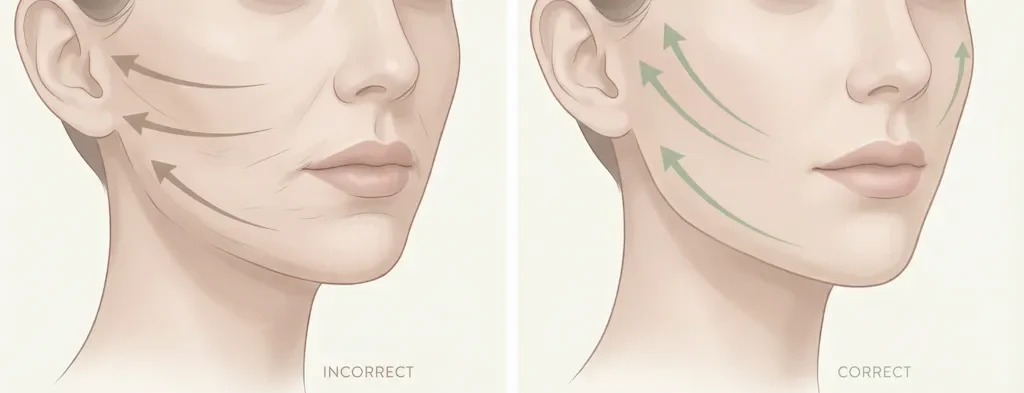
The pulled, windswept look isn’t inevitable. It follows predictable patterns rooted in technique and planning errors that are almost entirely avoidable with the right surgical approach.
If you worry about ending up with that mannequin-like appearance, here’s the reassuring truth: the overdone look has specific, well-understood causes. Knowing them puts you in a stronger position to avoid them.
Outdated skin-only techniques create visible tension by stretching the skin without addressing deeper structures. The direction of the surgical pull matters enormously, too. Horizontal pulls create that windswept look, while proper vertical or oblique vectors restore youthful contours naturally.
Here are the most common causes of an overdone result:
- Skin-only tightening without repositioning the SMAS (the deeper tissue layer beneath the skin), ligaments, or fat pads
- An incorrect vector of pull, horizontal instead of vertical or oblique
- Over-tightening that removes all natural facial softness and expression
- Failing to address the neck, creating an obvious imbalance between a rejuvenated face and an aging neck
- Ignoring volume loss, where deflated cheeks need fat grafting rather than just lifting
- A one-size-fits-all approach that doesn’t account for individual anatomy, skin quality, and aging patterns
- Poor incision planning that creates visible scars, altered hairlines, or pixie ears (earlobes pulled downward and attached directly to the face)
The ASPS notes that unnatural results often happen when “certain principles were not respected,” including failing to work with a patient’s natural vectors or individual anatomy.
Understanding these causes empowers you to ask the right questions and choose a technique designed to avoid them entirely.
Which Facelift Techniques Produce the Most Natural Results?
The depth of tissue manipulation is the primary factor determining how natural your results will look. Deeper techniques consistently produce more natural, longer-lasting outcomes because they reposition structure rather than pulling skin.
A 2025 meta-analysis of 2,896 patients across 21 studies found that deep plane facelifts achieved 94.4 percent patient satisfaction compared to 87.8 percent for SMAS techniques. The right technique, however, depends on your individual anatomy, age, and degree of aging.
| Feature | Deep Plane Facelift | SMAS Facelift | Mini Facelift |
|---|---|---|---|
| Surgical Depth | Beneath the SMAS, repositions deep tissues, ligaments, and fat pads | Lifts and tightens the SMAS layer without entering deeper planes | Primarily skin with limited SMAS plication |
| Natural Appearance | Most natural, skin redrapes without tension | Natural in well-selected patients, may appear tighter | Subtle improvement for early aging signs |
| Best For | Comprehensive midface, jaw, and neck rejuvenation | Moderate aging with lower face and jawline concerns | Early jowling and mild laxity in younger patients |
| Longevity | 10-12 years | 7-10 years | 3-5 years |
| Recovery | 2-3 weeks initial, 3-6 months for final results | 1-2 weeks initial, 2-4 months for final results | 7-10 days initial, 1-3 months for final results |
| Patient Satisfaction | 94.4% (2025 meta-analysis) | 87.8% (2025 meta-analysis) | High for appropriate patients |
Less invasive options like minimally invasive FaceTite treatment Atlanta and RF microneedling can tighten mild skin laxity without surgery. Your surgeon will discuss the specific risks and benefits of each technique during your consultation.
How Does Your Surgeon’s Approach Affect Natural-Looking Results?
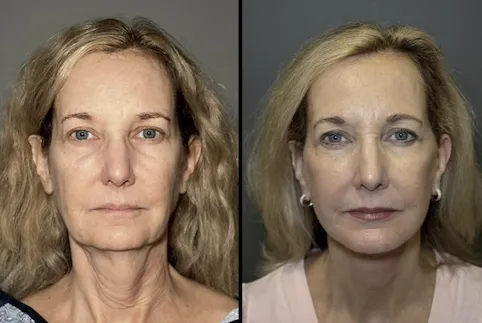
Technique matters, but surgical judgment is what makes technique look natural. It shows up in how a surgeon evaluates tissue, plans vectors, and customizes the approach for each patient’s unique anatomy.
A highly skilled surgeon performing any technique will typically achieve better, more natural results than a less experienced surgeon using even the most advanced method. Execution and artistry are inseparable from the technique itself.
Natural results require treating the face as a complete aesthetic system, not isolated zones. Coordinating the midface, lower face, jawline, and neck into a harmonious whole is what separates a refined outcome from one that looks unbalanced.
Board certification by the American Board of Plastic Surgery ensures foundational training. But you should also look for demonstrated experience with facial procedures specifically and a portfolio showing consistent, natural-looking outcomes across multiple patients, not just one or two standout cases.
Claudia W., who had a lower face and neck lift, described her outcome:
“My results are better than expected! Dr Alexander is a truly gifted surgeon. I HIGHLY recommend her and her staff. You will not be disappointed.”
When a surgeon treats your face as a cohesive composition rather than a collection of parts, the results reflect that level of care.
What Patient Factors Influence Whether a Facelift Looks Natural?
Skin quality and elasticity are among the most influential yet overlooked factors in facelift outcomes. Skin that’s flexible, well-hydrated, and evenly toned redrapes more smoothly and heals more predictably after surgery.
Timing plays a role, too. Patients who intervene earlier, often in their late 40s to 60s, frequently enjoy more refined results because their skin retains greater elasticity and healing capacity.
Several lifestyle factors directly impact your outcome:
- Smoking reduces blood flow and collagen production, compromising healing
- Sun damage degrades skin elasticity over time
- Significant weight fluctuations alter facial contours after surgery
- Previous cosmetic treatments, including fillers and thread lifts, can change tissue quality
The goal is to look refreshed and rested, like a more vibrant version of yourself. Patients who embrace this mindset tend to be the most satisfied with their outcomes.
What Questions Should You Ask During Your Facelift Consultation?

Your consultation is where natural results begin. It reveals whether a surgeon listens, evaluates your anatomy thoughtfully, and prioritizes subtle, natural-looking results.
Here are the essential questions to bring with you:
- Are you board-certified by the American Board of Plastic Surgery, and what specific training do you have in facial procedures?
- Can I see before-and-after photos of patients with similar facial structures and aging patterns to mine?
- Which facelift technique do you recommend for my anatomy and goals, and why?
- How do you avoid the pulled or overdone look, and what’s your approach to maintaining natural facial expressions?
- Will you address my neck as part of the procedure, and what approach would you use?
- What complementary procedures, such as fat grafting or eyelid surgery, might enhance my results?
- What does the recovery timeline look like, and when will my results look natural?
- How long can I expect results to last, and what maintenance might be needed?
- What are the potential risks and complications, and how do you manage them?
- Can I see examples of results I should NOT expect, so I have realistic parameters?
When you visit Artisan Plastic Surgery for your consultation, you’ll feel cared for and heard as our team discusses your goals, medical history, and timeline. We believe natural results start with truly understanding you. Meet our team.
How Long Does It Take for Facelift Results to Look Natural?
If you’re in the first weeks of recovery and your face looks tight or puffy, that’s completely normal. Early post-operative swelling can make even the most expertly performed facelift look overdone. It doesn’t mean your result will stay that way.
Most patients look presentable for social activities within two to three weeks. True natural-looking results emerge gradually between three and six months as deeper tissues settle into their new position.
Here’s what to expect during the healing process:
- Weeks 1-2: Peak swelling and bruising, the face may look tight or puffy, and this is entirely temporary
- Weeks 3-4: Swelling subsides significantly, bruising fades, and most patients feel comfortable resuming social activities
- Months 1-3: Subtle swelling resolves, facial contours look increasingly natural
- Months 3-6: Tissues continue to soften and settle, and most patients see their true, natural-looking result
- Months 6-12: Final refinement, scars fully mature, and the result looks completely natural in all lighting and expressions
Following your surgeon’s post-operative instructions closely, including head elevation, activity restrictions, and skincare protocols, directly supports smoother healing. Patience during this process is essential.
Can Complementary Procedures Enhance Natural Facelift Results?
A facelift that only addresses one area while leaving adjacent zones untreated can create an imbalance that looks obviously surgical. Treating the face as a complete system produces the most harmonious results. Exploring the full range of cosmetic surgery options in Atlanta with your surgeon helps you build a plan that balances every area of the face.
Fat grafting or volume restoration can soften transitions, restore youthful fullness to deflated cheeks, and make the overall result more believable. Volume loss is a key component of facial aging that lifting alone can’t correct.
Several complementary options enhance natural facelift outcomes:
- Blepharoplasty for a refreshed look brings the upper face in line with your lower-face rejuvenation
- A neck lift for sagging neck skin ensures the neck reflects the same level of improvement as the face
- Brow lift addresses forehead heaviness and sagging eyebrows
- Skin resurfacing smooths texture and evens skin tone
- Fat grafting restores volume to hollow cheeks and temples
Non-surgical maintenance treatments, including medical-grade skincare, sun protection, and injectables, can extend and complement surgical results over time.
Della D., who combined a facelift with blepharoplasty, breast augmentation, and a tummy tuck, shared her experience:
“Priced fairly, surgeons excellent, after care superb. Not one problem after surgery, results are amazing.”
Artisan Plastic Surgery offers full-spectrum care, from surgical facelifts to minimally invasive treatments and Artisan Beaute med spa services, all under one roof so your rejuvenation plan stays coordinated and balanced.
Your Consultation and Next Steps
Your facelift consultation is the most important step in ensuring natural-looking results. It’s where your surgeon evaluates your anatomy, discusses your goals, and builds a customized plan tailored specifically to your face.
During your consultation, expect a thorough evaluation of your facial structure, skin quality, and aging patterns, along with an honest conversation about realistic outcomes. Both our Northside and Johns Creek locations offer private, comfortable consultation settings.
Here’s how to take the next step:
- Research your procedure options and gather your questions using the list above
- Prepare your medical history, including any previous aesthetic treatments
- Schedule your consultation to begin building your personalized plan
To schedule your consultation, call (770) 230-6581 or book online. Flexible financing through Alphaeon Credit, Cherry, and CareCredit makes it easier to invest in the refined, natural results you deserve. Learn about financing options.
Conclusion
Achieving a beautifully natural facelift comes down to choosing the right techniques and trusting a skilled surgeon who truly understands your unique facial structure. You do not have to worry about looking pulled or artificial when you are in expert hands.
At Artisan Plastic Surgery, we combine advanced surgical methods with a deep appreciation for personalized artistry. Our goal is never to change who you are, but simply to reveal the most refreshed and vibrant version of yourself. We take the time to listen to your goals and craft a plan that feels completely right for you.
Whenever you’re ready, you can schedule your consultation at Artisan Plastic Surgery here, or call us at (770) 230-6581.
Frequently Asked Questions
Can a facelift really look natural, or will people be able to tell?
Yes, a well-performed facelift can look completely natural. Modern deep plane techniques reposition deeper structures rather than pulling skin, so the result looks refreshed without visible signs of surgery.
What are the telltale signs of a bad or overdone facelift?
Common signs include a windswept or pulled appearance, pixie ears, visible scarring near the ears or hairline, loss of natural facial expressions, and an obvious imbalance between a rejuvenated face and an untreated neck.
At what age should I get a facelift for the most natural results?
Many surgeons find that patients in their late 40s to 60s achieve the most refined results because their skin retains sufficient elasticity. The right timing depends on your individual anatomy and aging patterns.
How long does it take for a facelift to look natural after surgery?
Most patients look presentable within two to three weeks, but true natural-looking results emerge gradually between three and six months as deeper tissues settle into their new position — you can see how facelift recovery unfolds week by week to know what each stage should look like.
Can non-surgical treatments achieve the same natural results as a facelift?
Non-surgical treatments like FaceTite, RF microneedling, and injectables can create meaningful improvement for mild to moderate concerns. They can’t replicate the comprehensive, lasting results of a surgical facelift for significant skin laxity.

