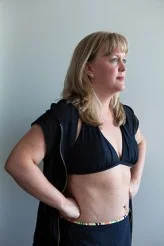
You probably spent an hour looking through gallery pages and noticed that the “before and after” photos all look different. One patient’s results look soft and natural. The other one looks fuller and rounder. Another patient’s results appear smaller, lighter, and more balanced.
The fact is, all of these patients had breast lifts, but they didn’t have the exact same procedure. The results you see in breast lift photos depend not just on the surgeon, but also on the specific type of procedure. Thus, learning about these variations helps you understand what’s best and realistic for your own body.
At Artisan Plastic Surgery in Atlanta, the city’s first woman-led team of cosmetic surgery specialists in Georgia, we help patients review galleries every week and explain what’s realistic for their own bodies. In this article, we’ll discuss how results vary between the main types of breast lift procedures, how patient factors affect which photos are shown, and what to look for when viewing any surgeon’s gallery.
Key takeaways
Here’s a quick overview before the full guide. These are the main points patients usually want to know before looking at the galleries.
- Breast lift gallery results vary dramatically by technique (periareolar, vertical, or anchor), with each incision pattern chosen to match a different degree of sagging.
- A lift alone changes shape and position but does not add volume, so gallery results look perkier without looking fuller on top.
- Implants combined with a breast lift fill the upper pole, while combining a lift with a reduction produces the most dramatic size change and often relieves back and shoulder strain.
- Mommy makeover and post-weight-loss galleries often show breast lifts combined with body contouring. These photos highlight changes in overall body shape, not just the breasts.
- Factors like age, skin elasticity, and weight history affect the final results just as much as the procedure itself. That’s why the most helpful gallery cases are those where the “before” photo looks similar to your own starting point.
What are the main types of breast lift procedures, and how do their before-and-after results differ?
A breast lift encompasses a variety of incision techniques, each tailored to the amount of excess skin to be removed and the nipple movement required, as covered in a complete guide to how mastopexy works. Your surgeon selects the method that provides the greatest lift with the smallest incision, which is why results can vary significantly between different techniques.
Surgeons use a shorthand called the Regnault classification to determine the severity, as detailed in peer-reviewed studies. Grade I indicates mild sagging, with the nipple at the level of the breast fold. Grade II signifies moderate sagging, with the nipple below the fold. Grade III denotes severe sagging, where the entire gland drops below the fold. Each severity level usually correlates with one of three primary incision patterns.
| Technique | Best for | Incision | Scar location |
|---|---|---|---|
| Periareolar (donut) lift | Mild sagging (grade I) | Circle around the areola | Hidden at the edge of the areola |
| Vertical (lollipop) lift | Moderate sagging (grade II) | Around the areola plus vertical to fold | Circle plus a vertical line |
| Anchor (Wise-pattern) lift | Severe sagging (grade III) | Around the areola, vertical, and horizontal | Circle, vertical line, and along the fold |
Periareolar lift results
Periareolar lifts, sometimes called donut lifts, correct mild ptosis by removing a ring of skin around the areola and elevating the nipple by about 2 to 3 centimeters. In before photos, you’ll typically see breasts with a slight droop following pregnancy or aging. The after photos show a perkier shape with minimal scarring concealed at the edge of the areola.
The trade-off is that periareolar lifts can slightly flatten the breast because they pull the skin envelope more tightly in the horizontal direction. This technique shines when the patient’s starting point is close to ideal and just needs a small refinement.
Vertical (lollipop) lift results
Vertical lifts handle moderate sagging, when the nipple sits about 1 to 2 centimeters below the fold under the breast. The incision adds a vertical line running down from the areola to the fold. According to peer-reviewed research, this pattern tightens the lower pole of the breast and increases projection, making the after photos look perkier and more contoured.
If you’ve browsed a lot of breast lifting before and after images and noticed that many “after” photos show a cone-like, projected shape, you’re probably looking at vertical lifts.
Anchor (Wise-pattern) lift results
Anchor lifts, also known as Wise-pattern or inverted-T lifts, target severe sagging where the entire breast has fallen below the inframammary fold. The incision consists of a horizontal line along the fold, a circle, and a vertical line, forming an anchor shape.
In preoperative photos, breasts often appear elongated and deflated, with nipples pointing downward. Postoperative images display a significant transformation: the breast sits higher on the chest, the nipple projects forward at a youthful level, and the overall silhouette is rounder and firmer.
This technique is commonly used alongside substantial breast reductions or reshaping after weight loss. Now that you can recognize the technique behind each outcome, let’s explore how results differ when a lift is performed alone versus in combination with other procedures.
What do breast lift alone (mastopexy without implants) results look like in photos?
Breast lift alone is mastopexy without implants. The surgeon reshapes and elevates the breast using only your existing tissue, so volume remains roughly the same while the shape changes dramatically. This is the approach you’ll see in most images of breast lifts without implants, where the goal is restoring natural contour rather than adding fullness.
In before photos, the breast often looks elongated or pendulous, with the nipple sitting low and pointing downward. According to ASPS, after photos tend to show breasts that sit higher on the chest wall, with firmer and rounder contours and forward-facing nipples at a youthful level.
What you won’t see, and this matters, is added upper-pole fullness. If a patient comes in hoping for the “full on top” look, a lift alone won’t deliver it. A lift gives you a better-shaped version of what you already have, not more volume.
The patients who see the most dramatic improvement from a lift alone are those whose main complaint is position and shape rather than size. If your breasts feel heavy or just low, a lift alone often delivers exactly what you’re hoping for. If the word “deflated” keeps coming to mind when you describe how you feel, implants may belong in the conversation, too.
Artisan performs breast lift plastic surgery as outpatient surgery at our Atlanta-area facilities, typically in 2 to 3 hours. Our team customizes the incision pattern based on your anatomy and the amount of skin to be removed. The range of techniques means we rarely recommend the same approach twice.
Looking at before-and-after pictures of a breast lift without implants is one of the most helpful things you can do at this stage. Browse our before-and-after gallery to see real patient results across every technique we offer.
What do before-and-after photos of a breast lift combined with augmentation show?

A breast uplift looks dramatically different before and after, especially when implants are involved. The lift addresses position and shape, while the implant restores volume that may have deflated over time. This combination appears frequently in galleries because it’s one of the most requested breast contouring and lifting solutions for patients whose breasts have changed after pregnancy, weight loss, or natural aging.
In preoperative photos, the breast often appears ptotic and deflated, with a loss of upper-pole convexity, meaning the top of the breast looks flatter and less full. Peer-reviewed literature describes the postoperative result as a lifted, perkier contour with prominent upper-pole fullness and improved symmetry. The implant fills the ptotic skin envelope from the inside, while the lift adjusts the envelope itself.
Most lift-with-augmentation cases use silicone gel implants, with volumes typically in the 300 to 400 cubic centimeter range and moderate-plus profiles, according to published clinical series. The “dual-plane” technique, in which the implant sits partially beneath the muscle, is often chosen for ptotic breasts because it allows the tissue to drape naturally over the implant.
Taylea B., who returned for a breast lift with implant exchange after an earlier tummy tuck, shared her experience:
“Dr. Diane Alexander is my go to physician for plastic surgery. She performed my tummy tuck in 2020 and a breast lift with implant exchange in 2025. I trust her implicitly, and my outcomes have always exceeded my expectations.”
In lift-plus-augmentation galleries, note that photos often show the tissue settling and the implant dropping into place over several months, resulting in a fuller, more rounded appearance. Photos taken at different times can look quite different, so verify whether the gallery indicates the timing (such as 3 months, 6 months, or 1 year). If the timing isn’t specified, ask your surgeon. Keep in mind that immediate post-op photos usually don’t reflect the final outcome.
If your complaint concerns both shape and size, this is typically the discussion to have. Customization occurs in the specifics: implant size, profile, and placement are selected together. When you’re comparing specific lift-plus-augmentation cases, you can view before-and-after results from patients whose starting anatomy resembles yours.
How do breast lifts with reduction results appear in galleries?

Breast reduction with lift, known clinically as reduction mastopexy, typically exhibits the most striking before-and-after differences. Preoperative photos often display large, heavy, pendulous breasts with nipples positioned well below the fold. Postoperative images show smaller, lifted, and more proportionate breasts, with nipples repositioned 3 to 8.5 centimeters higher and approximately 300 to 1,100 grams of tissue removed from each breast.
The reason reductions change the silhouette so dramatically is that they address both weight and position. Published research documents a 35 percent reduction in low-back compressive forces and a 76 percent improvement in functional disability after reduction surgery, meaning patients often feel the difference just as much as they see it. Many report better posture, easier exercise, and relief from chronic discomfort within the first few weeks.
Common signs that a reduction-plus-lift is worth discussing:
- Chronic pain in the back, neck, or shoulders
- Deep grooves from bra straps
- Rashes or skin irritation beneath the breasts
- Numbness or tingling in the hands
- Difficulty exercising comfortably
- Breasts that feel disproportionate to your frame
At Artisan, breast reduction procedures, often sought for relief from back pain caused by large breasts, typically last 2 to 3 hours at our surgical facility near Atlanta. The most common incision is the anchor (Wise-pattern), as it accommodates the removal of significant skin and tissue and requires the longest incision. Over the course of a year, scars usually mature and fade into fine lines that are easily concealed by bras and swimsuits.
What do mommy makeover and combination-procedure breast lift photos show?
Mommy makeover galleries tell a different kind of story. Instead of isolated breast results, you’re looking at the whole silhouette. ASPS data describes the breast lift in a mommy makeover pairing with abdominal skin removal surgery, liposuction, or a combination of the three. The before photos typically show post-partum or post-weight-loss changes across both the breasts and abdomen. The after photos show lifted, perkier breasts alongside a flatter, contoured waistline.
In many mommy makeover cases, the breast lift is paired with an implant in the 350 to 450 cubic centimeter range alongside a full abdominoplasty, as documented in published case series. The photos are usually taken 3 to 4 months after surgery, once most swelling has resolved and the breast tissue has settled around the implant.
What’s worth knowing: post-weight-loss patients often see similar results even if they didn’t give birth. Significant weight loss results in similar sagging of the breasts and abdomen, and the combination procedures are the same. Artisan’s mommy makeover plastic surgery approach is customized based on whether the starting point was pregnancy, weight loss, or both. The treatment plan is never pulled off a menu.
Taylor R., a patient who chose a mommy makeover after four c-sections and nearly a decade of nursing, shared her experience:
“My experience with Dr. Ashraf, Dr. Alexander, and Jordan Beasley has been nothing short of life-changing. I’m 45 years old, and I had 4 children via c-section (not the plan) and nursed all 4 for a combined total of 9 1/2 years. I wanted a mommy makeover (breast implants and tummy tuck). I couldn’t even imagine the results would look and feel as natural as they do.”
A quick note on expectations. The decision to combine procedures isn’t only about outcomes; it’s about recovery bandwidth. Combined surgery means a longer single procedure and a more involved healing period, but only one recovery rather than two or three. For patients with life responsibilities that make it hard to take extended time off more than once, efficiency matters.
How do patient factors like age, skin quality, and weight history affect lift results?
Two patients can have the same procedure by the same surgeon and look different in their after photos. That’s not a failure of technique; it’s the reality of how bodies heal. Skin elasticity, age, weight history, and genetics all shape the final result and its longevity.
Patients in their 30s post-pregnancy typically have better skin elasticity, resulting in smoother contours and fewer complications, as reported in a published series on postpartum procedures. Patients in their 50s and beyond often have reduced elasticity, which sometimes means a longer incision pattern or a slightly different approach. Both age groups can achieve beautiful, natural-looking results; the techniques simply flex to match the starting point.
Weight history matters too. After 100 or more pounds of weight loss, skin often loses significant elasticity, and the skin of the breasts and abdomen may sag substantially. These patients frequently need more extensive lifts and sometimes body-contouring in addition, with results that are genuinely transformative.
When you’re evaluating before-and-after photos, look for patients whose before photos resemble yours. A surgeon’s best 10 results are usually their youngest, highest-elasticity patients, but they’re not necessarily the best predictor of your outcome. The galleries that matter most are the ones featuring patients with starting points like yours.
That kind of side-by-side comparison is what an in-person consultation is designed to do. Our team sits down with you to review gallery cases that match your anatomy. We discuss which technique is likely to produce the result you’re hoping for and walk through recovery expectations in detail.
Conclusion
Those hours you spent scrolling through galleries are the same hours others spent beginning their journey, and that same journey inspired so many of our patients to finally take their next step toward transformation.
The photos that stand out to you reflect the right combination of surgical technique, unique anatomy, and your surgeon’s skills. Once you know what to look for, you empower yourself to envision what is truly possible for you.
Exploring real patient photos that reflect your own starting point is one of the most powerful steps you can take on your self-confidence journey. Yet, even the most comprehensive gallery can only show part of the story. A personal consultation will address your unique questions, clarify your options, and ensure you feel supported at every stage. This visit is your opportunity to experience our expertise and see for yourself the dedication we bring to every patient’s vision.
Remember, investing in yourself is about reclaiming confidence, embracing your individuality, and making choices that honor your personal journey. The right team will guide you with compassion and expertise so you can move forward with excitement and assurance. Your story is waiting to be rewritten, so let’s create the next chapter together.
At Artisan in Atlanta, we believe every patient deserves to feel truly heard, respected, and empowered to choose a plan that reflects their unique goals. Don’t let uncertainty hold you back from the transformation you deserve. Contact us or call (404) 851-1998 today, and take the first step toward a more confident you.
Frequently Asked Questions
Will my breast lift scars fade over time?
Yes. Breast lift scars are permanent, but they become much less noticeable over time with proper pre- and post-operative care, fading significantly within 1 to 2 years. Most mature scars can be concealed in a bra and swimsuit tops.
How long is the recovery after a breast lift?
Most patients return to desk work around 7 to 10 days after surgery, with some swelling and tenderness lasting 4 to 6 weeks. Our surgical team recommends no lifting, pulling, or pushing anything heavier than 5 pounds for the first 3 weeks, and no sports or gym activity for 6 weeks.
Can I breastfeed after a mastopexy?
Many women can still breastfeed after a breast lift, although the procedure can affect milk ducts in some cases. This is a conversation worth having with your surgeon if future nursing is a priority for you.
What causes breasts to sag enough to need a lift?
Sagging comes from a combination of pregnancy, breastfeeding, weight fluctuations, aging, gravity, and heredity. Over time, these factors stretch the skin and soften the internal support structures, which is why even women who maintain a steady weight can see changes in breast position as they age.
How much does a breast lift cost?
Cost depends on technique, whether implants or a reduction is included, and any complementary procedures.
When can I exercise after breast lift surgery?
Light walking is encouraged within the first few days to help circulation. Avoid strenuous exercise, sports, and gym activity for about 6 weeks, and wait for your surgeon’s specific clearance before resuming chest or upper-body workouts.
What’s the difference between a breast lift and a breast augmentation?
A breast lift reshapes and elevates the breast without significantly changing size, while cosmetic breast enhancement procedures add volume through implants but don’t correct sagging on their own. The two are often combined for patients who want both greater fullness and improved positioning, and your consultation will determine which combination best fits your goals.
Who is a good candidate for a breast lift without implants?
If your main concerns are shape and position rather than volume, a lift alone is often a great fit. Good candidates have enough natural tissue to shape, are nonsmokers or willing to quit before surgery, and have no medical conditions that would impair healing.
How soon after pregnancy should I consider a breast lift?
Most surgeons recommend waiting until you’ve finished having children and breastfeeding, and until your weight has been stable for several months. That timing protects your result, since pregnancy and nursing can both significantly change breast shape.
How painful is breast lift recovery?
Most patients describe mild to moderate discomfort in the first few days, which is managed with prescription pain medication and typically improves quickly. Our surgical team provides detailed aftercare instructions and follow-up visits at 1, 3, and 6 weeks to support a smooth, steady recovery.
*Disclaimer: This content is for educational purposes only and does not constitute medical advice. A consultation with a qualified board-certified surgeon is required to determine the best treatment plan for your individual needs and any questions you may have about a medical condition or procedure.