

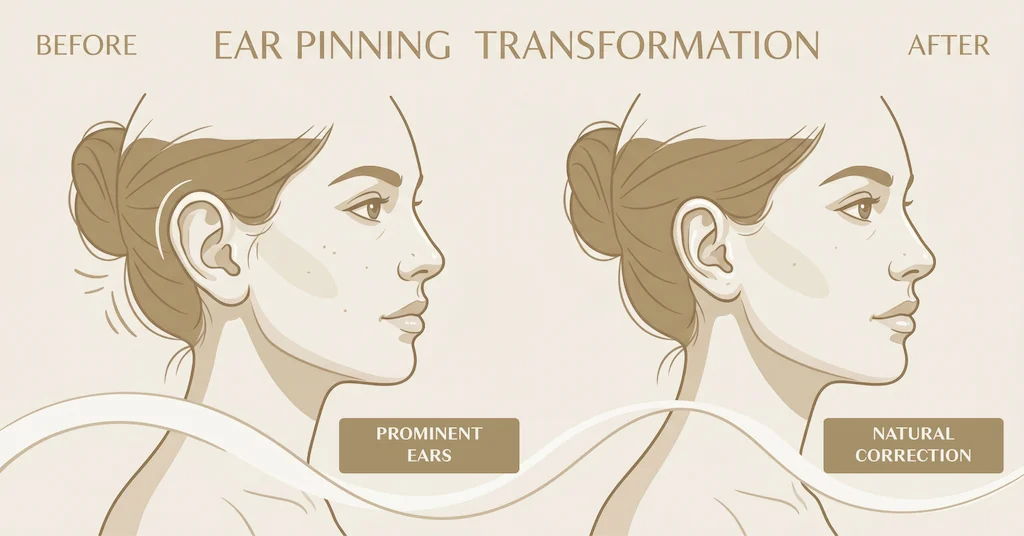
Otoplasty, often called ear pinning surgery, is a safe and well-established way to reshape ears that stick out so they sit closer to the head. It helps both children and adults feel more comfortable and confident in their appearance.
It is also far more common than many people realize. Surgeons performed 363,754 ear surgeries worldwide in 2024, according to ISAPS. That makes otoplasty one of the most common procedures used to reshape prominent or misshapen ears.
At Artisan Plastic Surgery in Atlanta, the city’s first woman-led practice, we know how personal this decision can feel. This guide covers who makes a good candidate, what the surgery and recovery involve, and how cost and insurance usually work.
Key takeaways
- Otoplasty, also called ear pinning surgery, reshapes or repositions the ears through hidden incisions behind the ear, so prominent or misshapen ears sit closer to the head.
- Children are usually considered candidates around age five to seven, once the cartilage is stable, while adults can have the procedure at any age.
- Recovery follows a predictable path: protective dressings for a few days, a night headband for several weeks, and a return to school or work within about a week.
- Otoplasty is generally safe with long-lasting results, and serious complications are uncommon when aftercare is followed closely.
- Cosmetic ear surgery is rarely covered by insurance, but financing through Alphaeon Credit, Cherry, and CareCredit can make it manageable.
Are you or your child a good candidate for ear pinning surgery?
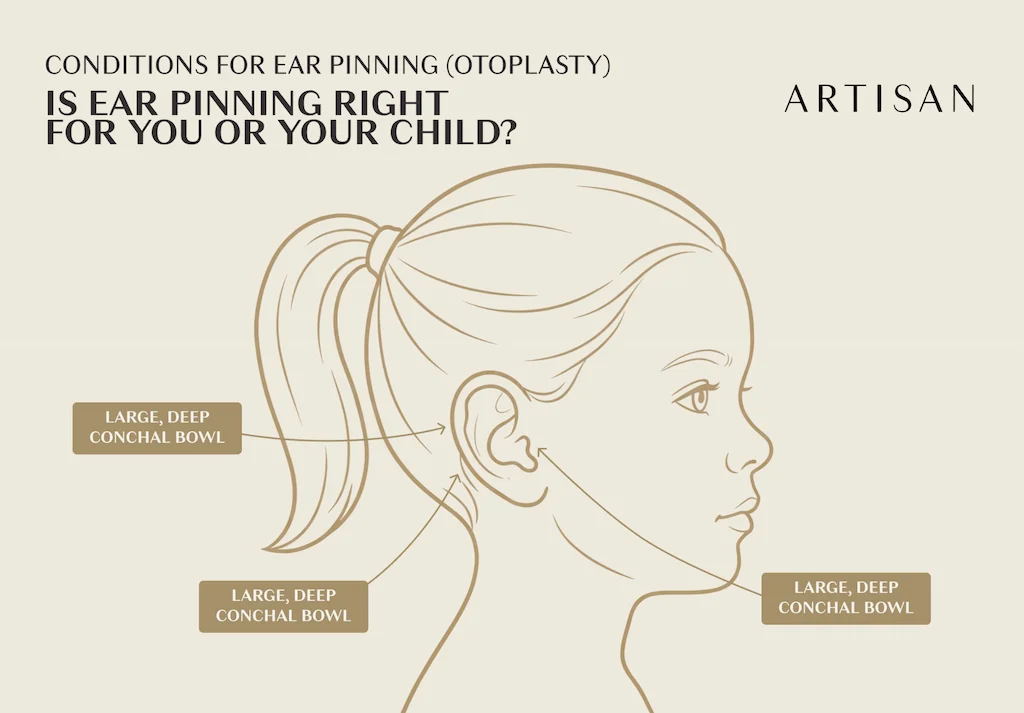
You may be a good candidate if your ears stick out, appear uneven, or have a shape that has bothered you for years. Otoplasty reshapes, repositions, or adjusts the size of the ears through small openings, usually made behind the ear. Through these openings, your surgeon reshapes the cartilage and secures it in a more natural position with sutures.
Ear differences are more common than most families realize. About 15 to 20 percent of newborns are born with some form of external ear difference, and most do not correct on their own over time. Knowing this is not rare can take some weight off the decision.
Ear concerns otoplasty can correct
Otoplasty addresses a range of concerns, and a consultation is the best way to know what applies to you. Commonly corrected issues include:
- Protruding or prominent ears that sit far from the head
- Overly large ears, a condition surgeons call macrotia
- Noticeable asymmetry between the two ears
- Underdeveloped or misshapen ears present from birth
- Ears changed by an injury or a previous surgery
Prominent ears are often inherited and run in families. Other changes, such as folded or cauliflower-shaped ear, come from trauma. Your surgeon can usually tell the difference during an in-person exam.
The right age for children
For children, timing matters. Surgeons generally wait until around age five to seven, once the ear has reached most of its adult size. By then the cartilage is stable enough to hold its new shape, and the child is old enough to cooperate with aftercare.
Here is the part that matters most. A child should want the surgery for their own reasons, feel healthy, and be free of ongoing ear infections. Wanting to protect your child from teasing does not make you vain or overprotective. One pediatric study from 2023 found that 92.5% of parents would recommend the surgery to other families.
Otoplasty for adults
Adults are also candidates, at any age. Many have spent years styling their hair a certain way or skipping updos altogether. Research shows that adults often report a real boost in confidence after surgery. There is no expiration date on feeling comfortable with how you look.
At Artisan, our board-certified surgeons evaluate every child and adult individually, treating each person as a unique canvas. That personal attention shapes the whole plan, never a cookie-cutter approach.
If you are unsure where you or your child stand, schedule a consultation for a hands-on evaluation.
What happens during ear pinning surgery?
Ear pinning surgery reshapes the cartilage so the ear folds and sits the way it naturally should. Most of the work happens through a small opening behind the ear, tucked into the crease where it meets the head. That keeps any scar hidden. When the front of the ear needs adjusting, those openings are placed inside the natural folds.
You will be kept comfortable throughout the procedure. It can be performed under general anesthesia, where you are fully asleep, or under local anesthesia and sedation. Children most often receive general anesthesia, while many adults do well with the lighter option.
So what is actually happening to the cartilage? Your surgeon may gently score it, creating fine, controlled scratches that soften its springiness and allow it to bend into a smoother fold. Permanent internal stitches are then used to hold the ear in its new position.
There is also more than one way to approach the surgery. Here is how the two main techniques compare:
| Approach | How it works | Good to know |
|---|---|---|
| Traditional otoplasty | An opening behind the ear lets the surgeon reshape and stitch the cartilage directly | The most widely used and studied method |
| Incisionless otoplasty | Tiny needle punctures reposition the cartilage with no large opening | Not right for every ear, and correction can relax over time |
Most ear surgeries take about one to two hours, though more involved cases take a little longer. Once the reshaping is done, a soft, padded dressing is wrapped around the head. It cushions the ears and protects their new contour while healing begins.
What does recovery look like, week by week?
Recovery from otoplasty is steady and predictable, with the most noticeable changes occurring in the first few weeks. For the full arc, here’s what otoplasty recovery looks like week by week. The first day or two may bring some aching, throbbing, or tenderness, which is completely normal. This is usually well managed with the pain medication your surgeon recommends. Keeping your head elevated can also help the early swelling settle.
The protective dressing typically stays on for three to five days before being replaced with a soft headband. This headband is worn at night for several weeks to keep gentle pressure off the ears. Skipping it is the most common way people compromise part of their result. Sleeping on your back, rather than your side, also protects the new shape during this period.
Here is a general timeline, keeping in mind that your surgeon’s instructions always come first:
| Phase | Timeframe | What to expect |
|---|---|---|
| Right after surgery | Day 1 to 3 | Aching and swelling; rest with the head elevated, dressing on |
| Early healing | Day 3 to 7 | Dressing comes off, headband begins; many return to school or work |
| Settling in | Week 1 to 6 | Headband at night; gentle showering, no rough activity |
| Back to normal | Month 1 to 2 | Strenuous exercise and contact sports usually resume |
Small details matter during these weeks. Glasses should not rest on the healing ears, and earrings are usually postponed for about six to eight weeks. None of these restrictions are permanent, and most people are surprised by how manageable the recovery feels.
That sense of being looked after makes a real difference. Susan, a patient at our Northside office, described the care she felt throughout her experience:
“Dr. Alexander and her entire medical staff have been wonderful — attentive, caring, and professional every step of the way.”
What are the risks and long-term results of otoplasty?
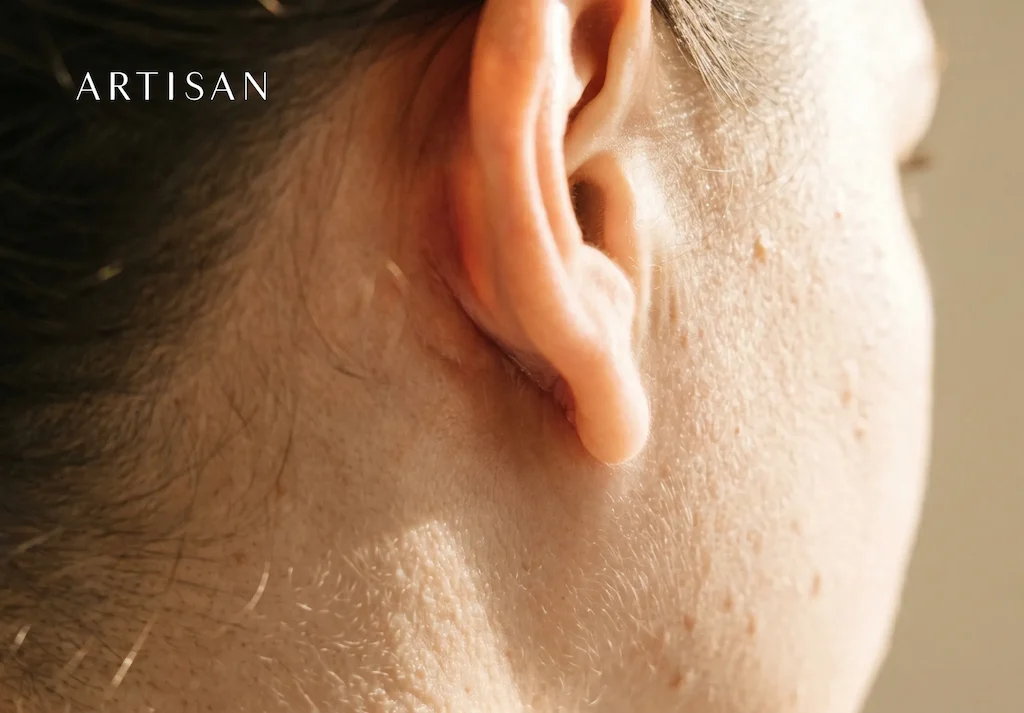
Most patients go through otoplasty without any real trouble. Ear surgery is generally considered a safe procedure, and the results tend to last for years. Still, every surgery carries some considerations, and understanding them can help you feel prepared rather than worried.
In the first weeks, expect temporary swelling, mild bruising, redness, and patches that feel numb or itchy. These are normal parts of healing, not signs that something is wrong. Itching in particular is a common, passing companion of recovery.
Could the ears drift back toward their old position? It can happen, but it is uncommon. A 2024 review of many studies found a recurrence rate of about 2.8%. Following your aftercare, especially the headband, is the best way to protect your result.
Two other concerns come up often, and both are reassuring once you understand them. Scars do not disappear completely, but they are placed behind the ear or within its natural creases, making them rarely noticeable. Overcorrection, where the ears look too tightly pinned back, is something a skilled surgeon actively works to avoid.
It helps to know which signs deserve a call. Reach out to your surgeon promptly if you notice:
- Worsening pain that medication no longer controls
- Increasing redness, warmth, or swelling
- Any drainage, fever, or a change in the shape of the ear
At Artisan, our board-certified surgeons focus on natural-looking results that suit your face. Choosing carefully and asking these questions is exactly the right way to approach a decision this personal.
How much does ear pinning surgery cost, and does insurance cover it?
The honest answer is that cost varies, depending on several factors. Your surgeon’s experience, the type of procedure, the surgical facility, the anesthesia used, and the location all influence the final price. A personalized estimate only becomes clear during a consultation.
It also helps to understand the fees that make up the total. These can include the surgeon’s fee, the facility cost, anesthesia, and any medications. Local anesthesia generally costs less than general anesthesia, since it uses fewer resources and less facility time.
Insurance is the question almost everyone asks. Cosmetic ear surgery for prominent ears is usually considered elective, so most plans do not cover it. When ear surgery is reconstructive or restores function, some coverage may be possible with prior approval. Interestingly, most insurers do cover non-surgical newborn ear molding, even while treating cosmetic otoplasty differently.
Cost should never be the reason you feel stuck. To help make your investment manageable, we offer flexible financing through Alphaeon Credit, Cherry, and CareCredit. You can choose a payment plan that fits your budget rather than paying everything at once.
What should you expect at your otoplasty consultation?
Your consultation is a two-way conversation, not an audition. Your surgeon evaluates your ears, your skin, and your overall health. It is just as much your chance to evaluate them, their approach, their space, and whether you feel genuinely heard.
A good visit is not rushed. Your surgeon performs a hands-on, in-person assessment that a screen simply cannot replicate. You then discuss the options that suit your anatomy and goals. The result is a customized treatment plan built around you, never a one-size-fits-all recommendation, the way an artist considers balance before lifting a brush.
At Artisan, consultations happen in person at our Northside and Johns Creek offices in the Atlanta area. The setting is warm and private, and nothing is rushed. This is also the moment to ask about financing and timing, so you leave with a clear picture.
Many patients tell us the space itself sets them at ease. Sloane, who visited our Northside location, shared her first impression:
“I cannot say enough good things about Artisan Plastic Surgery! First of all, their actual waiting room and the facilities are so beautiful and calming. You feel like you’re in an art gallery mixed with a spa. The front desk ladies are the sweetest, always so kind and helpful.”
When you are ready, book your consultation or call (404) 851-1998 to find a time that works.
Conclusion
Think back to that school photo, or the haircut chosen around one quiet worry. Otoplasty offers a thoughtful, lasting way to let your ears settle into the background, so confidence can step forward.
A helpful next step is simply seeing what is possible. Browsing real patient photos that match your starting point can make the idea feel real. When you are ready, a personal visit fills in the details that pictures cannot show.
Every patient at Artisan deserves to feel heard, respected, and confident in their choices, and that belief shapes every conversation we have in Atlanta.
To talk it through, reach out to our team or call (404) 851-1998.
Frequently asked questions
Is otoplasty a painful procedure?
Most people experience some aching, throbbing, or tenderness in the first few days rather than sharp pain. It is usually well controlled with the pain medication your surgeon recommends. Itching as the ears heal is common and tends to fade on its own.
How long after otoplasty can you sleep on your side?
Plan to sleep on your back for the first several weeks to keep pressure off the healing ears. A loose headband worn at night adds protection during this time. Your surgeon will tell you when it is safe to return to side sleeping based on how you are healing.
Are the stitches used in ear pinning temporary or permanent?
They can be both. Permanent internal sutures usually stay in place to hold the cartilage in its new shape. Any stitches closing the skin may dissolve on their own or be removed at a follow-up.
Can ear pinning be done without any surgical incisions?
Sometimes. An incisionless technique uses a needle to make the cartilage more flexible and reposition it without a large opening. It is not the right fit for every ear, so this is a great question to raise during your consultation.
Will your ears go back to their original shape if you skip the headband?
There is a genuine risk of losing part of your correction if you do not follow aftercare. The night headband keeps the ears from being pulled forward while they heal. Wearing it as directed is one of the simplest ways to protect your result.
Can you get ear pinning surgery on just one ear?
Yes. Prominent or misshapen ears can affect one side or both, so otoplasty can be performed on a single ear when only one needs correcting. Your surgeon will aim for balanced, symmetrical results between the two.
What is the difference between otoplasty and pinnaplasty?
In everyday use, there is no real difference. Both terms describe cosmetic surgery to reshape or pin back the ears, and they are used interchangeably. You may simply see one term or the other depending on the source.
Are otoplasty results long-lasting?
For most people, yes. Otoplasty is designed to give a durable correction, and the ears stay in their new position for years in the large majority of cases. A small number of patients see some relaxation over time, which careful aftercare helps prevent.
Can babies have non-surgical ear pinning?
Yes, though for infants it is ear molding rather than surgery. Soft splints gently guide a newborn’s pliable cartilage into a better shape. Results are best when treatment begins within the first few weeks of life. At Artisan Plastic Surgery, our team offers newborn ear molding with EarWell and EarBuddies devices.
*Disclaimer: This content is for educational purposes only and does not constitute medical advice. A consultation with a qualified board-certified surgeon is required to determine the best treatment plan for your individual needs and any questions you may have about a medical condition or procedure.