


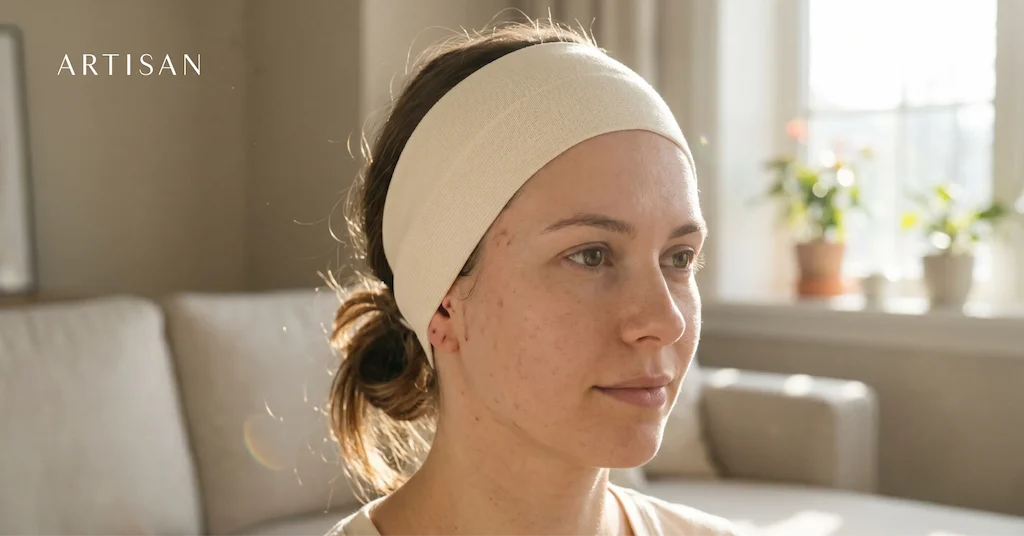
Recovery after otoplasty is generally smooth and well understood. Knowing what to expect at each stage, from the bulky dressing in the first days to the moment your ears settle into their final shape, takes much of the worry out of healing.
It also helps to know you are in good company. Ear pinning is one of the most commonly requested facial procedures worldwide. According to ISAPS, about 363,754 otoplasty surgeries were performed globally in 2024. It is a well-studied procedure, and the recovery follows a fairly predictable rhythm.
At Artisan Plastic Surgery in Atlanta, a trusted Atlanta plastic surgery team and the city’s first woman-led practice, we walk every patient through that rhythm. Healing should feel less like a mystery and more like a map. This article covers what each week looks like, when your final shape appears, and how to tell normal healing from a reason to reach out.
Key takeaways
- The bulky dressing usually stays on for three to five days, then comes off at your first follow-up, where it is replaced with a soft supportive headband.
- A headband is worn around the clock for the first week, then at night only for several more weeks.
- Most people return to desk work or school within five to seven days. Strenuous exercise waits several weeks longer.
- Around week three is the turning point, when most swelling settles and the new shape becomes clear. Subtle swelling can keep fading for months.
- Contact sports and swimming wait the longest, since both can put the healing cartilage at risk before it has fully set.
What happens during the first week after ear pinning surgery?
The first week is about protection. Your ears are held in their new position mostly by sutures at this stage. The goal is to protect the area from pressure, friction, and bumps while the tissue settles.
In the first few days, swelling, bruising, mild throbbing, and a bit of numbness around the ears are expected. A little soreness is normal and usually eases with the medication your surgeon recommends. Itching as the skin heals is also common. While it can be annoying, it is a sign your body is doing its job.
The bulky surgical dressing usually stays on for three to five days. It is removed at your first follow-up visit, where your surgeon checks the incisions behind your ears and replaces it with a lighter, softer headband. The formal bandage time is often shorter than people expect.
Once the dressing is off, a few habits make the first week much smoother:
- Wear the soft headband around the clock to keep your ears from folding or shifting.
- Sleep on your back with your head raised on two or three pillows, and avoid side-sleeping for now.
- Reach for button-front or zip-up shirts so nothing has to pull over your head.
- Skip strenuous activity, heavy lifting, aspirin, ibuprofen, and nicotine, which can all interfere with healing.
If side-sleeping feels impossible, a U-shaped travel pillow can gently keep your head centered through the night. Small adjustments like this protect your result far more than they inconvenience you. If you are weighing this procedure and want a clear picture of the recovery before you commit, schedule a consultation to talk through what your week one would look like.
What changes between weeks two and four of otoplasty healing?
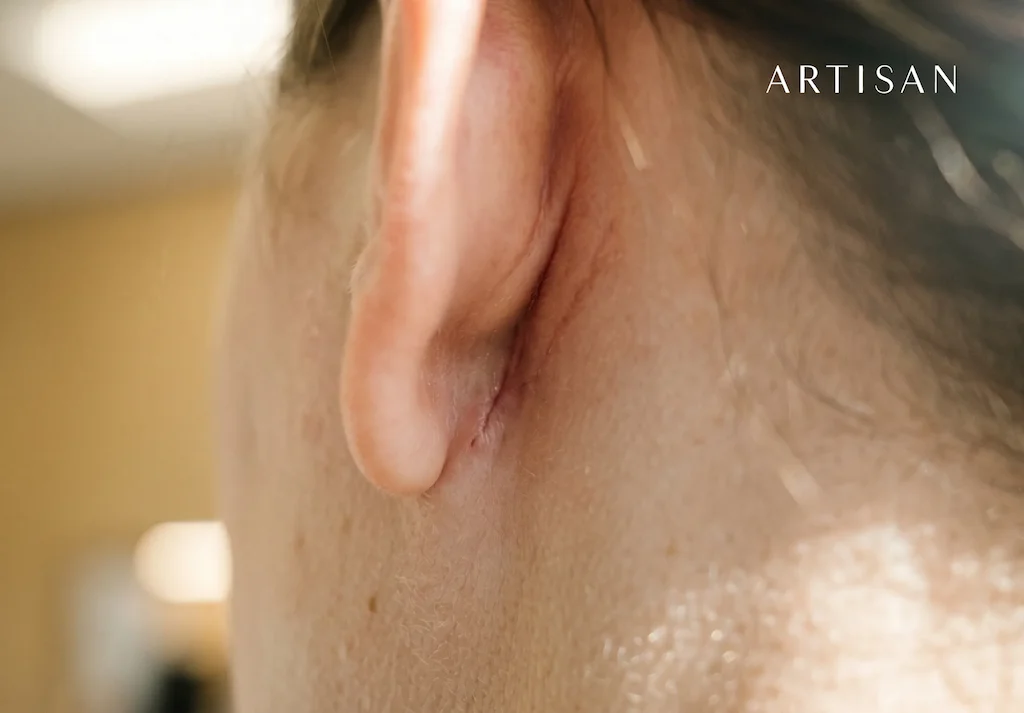
This is the stage where things start to feel normal again. The dramatic early swelling and bruising begin to fade, the headband schedule loosens, and most of your daily routine starts to return.
Swelling, bruising, and sensation
Most visible bruising fades through the second week, and the new shape of your ears becomes easier to see. You may still notice tingling, itching, or areas of numbness as small nerves recover. This numbness is normal, and most patients regain full sensation within about six months, so try not to worry too much about a temporary loss of feeling.
The itching can be tempting to relieve by scratching, but the skin behind your ears is still healing. An over-the-counter antihistamine is a safer way to find relief than your fingertips.
Headband and sleep
Around week two, most people shift from wearing the headband 24 hours a day to wearing it only at night. Most surgeons keep the nighttime headband going for several more weeks, sometimes a few months, to guard the ears during sleep. Side-sleeping should still wait until your surgeon clears it, usually after the two-to-four-week mark.
Activity and water
Light walking and desk work are usually fine early in recovery, and most patients return to work or school within five to seven days. Strenuous workouts, however, are typically put on hold for a few more weeks while swelling continues to settle. Swimming waits the longest of the everyday activities, since pools, baths, and hot tubs can expose healing incisions to bacteria before they are fully closed. The Artisan team will tell you when the water is safe again, based on how your incisions look at each follow-up.
When will your ears look like the final otoplasty result?
Patience is the quiet skill of this recovery. You will see a real change the moment the dressing comes off. The truly refined result arrives in stages, as the swelling resolves and the cartilage settles into its new shape.
Early visual improvements usually show up within two to three weeks, as reported by the Cleveland Clinic. Around week three, many patients notice a turning point, when the ears start to feel like their own again and most of the swelling has eased. Near-final results tend to emerge by weeks five and six, and by the second or third month, your ears have largely settled into their lasting position.
Here is how the whole arc tends to unfold:
| Phase | Timeframe | What to expect |
|---|---|---|
| Right after surgery | Days 1-5 | Bulky dressing on; swelling, bruising, throbbing; rest with head elevated |
| Bandage comes off | Day 3-5 | Dressing removed at follow-up; switch to a soft headband; gentle hair washing |
| Early healing | Weeks 2-4 | Bruising fades; headband at night; back to desk work and light walking |
| Turning point | Weeks 3-4 | Most swelling settles; the new shape becomes clear |
| Near-final result | Weeks 5-6 | Minimal swelling; most exercise resumes; contact sports near 6-8 weeks |
| Full settling | Months 2-6+ | Ears reach final position; scars keep fading; subtle swelling resolves |
Even after you feel completely normal, subtle swelling can linger quietly for a few months. The thin scars tucked behind your ears keep fading and flattening over six to twelve months.
The Aesthetic Society noted that small refinements can continue for up to a year. Protecting those healing scars with sunscreen during this window helps them mature evenly.
Della, a patient at our Johns Creek office who valued a smooth, complication-free recovery, shared their experience:
“Surgeons are excellent, after care superb. Not one problem after surgery, results are amazing.”
When can you return to work, exercise, and contact sports?

Getting back to your routine happens in stages, and the timing depends a lot on what that routine demands of you. The general rule is simple: the more an activity could jostle, raise pressure in, or risk a blow to your healing ears, the longer it needs to wait.
Here is how the common milestones usually line up:
- Work or school comes back first, usually within five to seven days once the dressing is off and you feel up to it.
- Gentle walking is fine right away, while light exercise typically resumes around two to three weeks.
- Heavy lifting and anything that spikes your heart rate generally waits four to six weeks to limit swelling and bleeding.
- Contact sports stay on hold the longest, about six to eight weeks, to protect the reshaped cartilage from a direct hit.
- Glasses with heavier frames can press on tender ears, so ease back into them gently and ask your surgeon if you are unsure.
One more piece that is easy to overlook is sun care. Fresh scars are vulnerable to the sun, which can darken them as they heal. Consistently keeping the area shaded and protected with SPF throughout the first several months pays off.
Because everyone heals at a different pace, the surgeon at Artisan builds your clearance timeline around your job, your activities, and your healing, not a generic calendar. Think of it as a recovery plan curated for you rather than a one-size-fits-all checklist.
What warning signs mean you should call your surgeon?
Most otoplasty recoveries are smooth, and the day-to-day discomfort is usually mild and short-lived. Still, knowing the handful of signs that warrant a phone call gives you real peace of mind, because catching something early is always easier than catching it later.
Reach out to your surgeon promptly if you notice any of these:
- Sudden, severe, or worsening throbbing pain, especially in the first few days, which can signal a pocket of blood collecting under the skin.
- A fever, or bleeding that soaks through your dressing.
- Spreading redness, warmth, or a foul-smelling yellow or green discharge, which can point to infection.
Normal healing, by contrast, looks like gradual swelling and bruising that changes color over time, along with a small clear or pink-tinged drainage in the first day or two. One rule matters above all: never remove, loosen, or readjust your dressings on your own, as they hold your ears in position and adjusting them can undo the correction.
A couple of other things tend to worry patients more than they should. Your external stitches usually dissolve or are removed within about one to two weeks. If a deeper, permanent stitch ever surfaces later, do not pull or trim it. Your surgeon can remove it quickly in the office without affecting your result.
And if your ears look a little over-pinned right when the wrap first comes off, that is by design. Surgeons set the ears slightly tighter to allow for a natural spring-back, and they relax outward into a balanced position over the following weeks.
When something feels off, you can always reach out to our team at Artisan Plastic Surgery rather than sit and worry.
Susan, a patient at our Northside office who appreciated how attentive the team stayed through recovery, shared their experience:
“Dr. Alexander and her entire medical staff have been wonderful, attentive, caring, and professional every step of the way.”
Conclusion
Remember those first-night questions, the throbbing and the wondering when your ears would finally look right? By now you can see that the answers follow a steady, week-by-week path from the dressing coming off to the new shape gradually settling in. If you are still mapping out whether ear pinning surgery fits your life, that timeline is a reassuring thing to have in hand, and it helps to know the different types of cosmetic ear surgery that might apply to you.
When you are ready to picture your own outcome, browsing real before-and-after results is one of the most helpful next steps, because photos show what words cannot. From there, an in-person visit fills in the details specific to you.
Every patient deserves to feel heard, supported, and confident at each step of healing, and that is the care we bring to recovery at Artisan in Atlanta. When you are ready to talk it through, call (404) 851-1998 and our team will help you take the next step.
Frequently asked questions
How long until the bandages are removed after otoplasty?
At your first follow-up visit, the bulky surgical dressing usually comes off three to five days after surgery. Your surgeon takes it off, checks the incisions, and fits you with a lighter headband to wear going forward.
Do I need to wear a headband after otoplasty, and for how long?
Yes, a soft headband is an important part of healing. You will typically wear it around the clock for about the first week, then switch to wearing it only at night for several more weeks. Some surgeons recommend keeping up the nighttime headband for a few months to protect your ears during sleep.
Can I sleep on my side after ear pinning?
Not at first. Side-sleeping puts pressure on healing ears and can affect the result. You will sleep on your back with your head elevated for at least the first two to three weeks, until your surgeon says it is safe to change position.
When can I go back to work or school after otoplasty?
Most people with desk jobs or classroom schedules return within five to seven days, once the dressing is off. Jobs with heavy physical demands need a longer recovery period, and our board-certified team will tailor that timing to your situation.
When can I shower or wash my hair after the bandage comes off?
You can usually wash your hair and ears gently once the primary bandage is removed, around three to five days after surgery. Be careful not to scrub or pull the ears forward while they are still healing.
When will the swelling start to go down?
Swelling peaks in the first few days and then drops noticeably over the next two to three weeks. Most visible swelling is gone by around week four, though subtle puffiness can take a few months to fully resolve.
Is numbness in the ears normal, and when does it improve?
Yes, temporary numbness is very common because small nerves are disturbed during surgery. Sensation returns gradually, and most patients are back to normal within about six months. It is a routine part of healing rather than a cause for concern.
When can I resume exercise or gym workouts after otoplasty?
Light walking can start right away, and gentle exercise usually resumes around two to three weeks. Strenuous workouts and heavy lifting wait roughly four to six weeks so your ears are not exposed to extra pressure or bleeding risk.
When can I swim after ear pinning surgery?
Swimming waits at least three to four weeks, and sometimes longer, because submerging healing incisions can invite infection. You should only get back in the water once your surgeon confirms the incisions are fully closed and healed.
Why do my ears look too pinned back right after the bandages come off?
This is expected and temporary. Surgeons intentionally set the ears a little tighter to account for a natural spring-back, and early swelling adds to the effect. Over the next several weeks, the ears relax outward and settle into a balanced, natural position.
Do stitches need to be removed, and when?
It depends on the technique, since dissolvable stitches absorb on their own while non-dissolvable ones usually come out in the office about a week after surgery. If a deeper stitch ever surfaces later, do not touch it, and our team can remove it quickly at one of our Atlanta-area offices.
*Disclaimer: This content is for educational purposes only and does not constitute medical advice. A consultation with a qualified board-certified surgeon is required to determine the best treatment plan for your individual needs and any questions you may have about a medical condition or procedure.