


Maybe it started with a photo that caught you off guard, a shadow along your jawline you don’t remember seeing before, or a softness in your lower face that wasn’t there last year. You tilt the mirror, adjust the lighting, and wonder when things started to shift. Your skin doesn’t quite snap back the way it once did, and the little changes are starting to add up.
You’re nowhere near wanting a full surgical transformation. But at the same time, the creams, the BOTOX®, the fillers? They’re not quite keeping up anymore, either. If you’re somewhere in that space, you’re not alone, and you have more options than you might think.
According to the American Society of Plastic Surgeons, member surgeons performed 79,058 facelifts in 2024 alone, and an increasing number of those are mini facelifts chosen by patients in their 30s, 40s, and early 50s.
A mini facelift (also called a short scar facelift, S-lift, or weekend facelift) targets early to moderate aging in the lower face and jawline with shorter incisions, lighter anesthesia, and roughly half the recovery time of a traditional facelift.
As Atlanta’s first woman led plastic surgery practice, Artisan Plastic Surgery, we offer a full spectrum of facial rejuvenation options, from mini and short scar lifts to full SMAS and deep plane facelifts.
Our board certified surgeons approach every lift as both a science and an art, sculpting natural, balanced results that look like you, only refreshed. This guide covers who’s a good candidate, what techniques are used, and what recovery, results, and costs look like in Atlanta.
Quick Facts
- A mini facelift targets the lower face and jawline using shorter incisions and lighter anesthesia, making it ideal for early to moderate aging
- Best suited for patients in their 30s through 50s with good skin elasticity and early jowling
- Recovery is typically one to two weeks, roughly half the time of a traditional facelift
- Atlanta mini facelift costs range from $3,500–$10,000 with financing available through Alphaeon Credit, Cherry, and CareCredit
What Is a Mini Facelift and How Does It Differ from a Traditional Facelift?
If the term “mini” makes you wonder whether the results will feel equally small, that concern is completely understandable. A mini facelift is a targeted surgical procedure that uses shorter incisions, typically limited to the area in front of and around the ears, to address early aging in the lower face and jawline. It’s also known as the S-lift, short scar facelift, MACS lift, or “weekend facelift.”
A traditional facelift is a bigger procedure; it covers the neck, cheeks, and deeper layers of tissue through longer incisions. A mini facelift, on the other hand, zeroes in on just the lower part of your face, mainly around the jawline and jowls.
Most patients are awake but comfortably sedated rather than fully under general anesthesia, and the procedure itself typically takes just 1–2 hours. Even though it’s less extensive, your surgeon still tightens the structural layer beneath your skin, not just the surface, which is what gives mini facelift results real staying power compared to a skin only lift.
Your surgeon can tailor your facelift using everything from traditional methods to limited incisions that provide a mini lift, selecting the right approach based on your anatomy, your goals, and the degree of rejuvenation you need.
| Feature | Mini Facelift | Traditional Facelift |
|---|---|---|
| Incision length | Short (around ear only) | Extended (hairline to behind ear) |
| Anesthesia | Local + light sedation | General or IV sedation |
| Surgical time | 60 to 90 minutes | 3 to 5 hours |
| Recovery time | 1 to 2 weeks | 2 to 3 weeks |
| Addresses neck | Minimally / not typically | Yes |
| Age recommendation | Early aging, 30s to 50s | Moderate to advanced aging, 50s+ |
| Atlanta cost range | $6,000 to $12,000 | $8,000 to $24,000 |
Who Is a Good Candidate for a Mini Facelift?
If you’re in your 30s or 40s and feel a little hesitant, like maybe you’re ‘too young’ to even be thinking about a facelift, that’s a completely normal thing to wonder. But there’s no magic age that makes you ready or not ready. It’s not about a number on your birthday. It’s about what you’re seeing in the mirror, how it makes you feel, and what your unique facial structure needs.
If you have good skin elasticity with early to moderate jowling or jawline softening and you’re in good overall health, you’re likely a strong fit. A growing number of patients in their 30s are choosing mini facelifts proactively as part of a “prejuvenation” approach, addressing visible changes before they become advanced. This early timing often delivers the most natural looking results because there’s less tissue to reposition and the skin heals with minimal scarring.
Here’s what makes you a strong candidate:
- Mild to moderate skin laxity in the lower face
- Early jowling or loss of definition along the jawline
- Good overall health with no uncontrolled medical conditions
- Non smoker, or willing to quit four to six weeks before and after surgery
- Realistic expectations about what a mini facelift can and cannot address
If you’re experiencing significant neck laxity, heavy jowling past the jawline, or substantial mid face volume loss, a full or deep plane facelift typically delivers better outcomes. During your consultation, your surgeon takes time to understand your unique goals and anatomy, creating a customized plan that delivers natural, balanced results. If a mini facelift isn’t the right fit, your surgeon will recommend the approach that actually matches where you are in your aging process.
Amanda shared her experience with Dr. Alexander listening to her concerns:
“Highest level of expertise and care. Dr Diane Alexander and her team go above and beyond for beautiful, natural results with an emphasis on wellbeing. She takes time to listen to your concerns and does her magic. The recovery process is very easy with her knowledgeable team to support you on your way to feeling your best be it facial or body contouring.”
What Surgical Techniques Are Used in a Mini Facelift?
If the thought of visible scars is what’s holding you back, you’re in very good company, it’s the single most common concern patients bring up in consultations. The good news is that today’s techniques have come a long way, and scarring is far less noticeable than most people expect. There are three main approaches to a mini facelift, and while each one works a little differently beneath the surface, they all share one thing in common: shorter, carefully placed incisions designed to heal as discreetly as possible.
S-Lift
The S-lift uses internal sutures to plicate (fold and tighten) the SMAS layer, or the tissue that connects the facial muscles to the skin, without extensive dissection. It’s named for the S-shaped incision pattern that curves in front of and around the ear.
MACS Lift
This technique uses a series of looping stitches to lift tissue upward with very little disruption beneath the skin. A 2026 study published in the medical journal Medicina found that the MACS lift took significantly less time in the operating room than deeper facelift methods, while delivering equally strong cosmetic results.
Short Scar Facelift
Think of this as the middle ground; your surgeon works with both the skin and the deeper structural layer underneath, repositioning them in a way that’s similar to a full facelift, just through a shorter incision. It offers more lifting power than the S-lift or MACS lift while still keeping scarring minimal.
What all three techniques have in common: incisions are tucked into the natural creases and hairlines around your ear; places where they blend in naturally as they heal. Most patients find their scars are virtually invisible within three to six months. And because the work stays in the superficial layers, well above the deeper nerves and glands in your face, the risk of nerve injury is very low.
What Can (and Cannot) a Mini Facelift Address?

One of the biggest worries we hear is, “What if I choose the wrong procedure?” That fear makes complete sense; this is your face, and you want to get it right. The best way to feel confident in your decision is to have a clear picture of what a mini facelift can do beautifully and where a different approach might serve you better. Not so you’ll feel limited, but so you’ll walk into your procedure feeling informed, empowered, and genuinely excited about the results ahead.
What a mini facelift can address:
- Early jowling and jawline softening
- Mild skin laxity in the lower face and cheek area
- Early deepening of marionette lines
- Loss of definition along the lower facial border
What a mini facelift cannot address:
- Significant neck banding or turkey neck (requires a neck lift or full facelift)
- Mid face volume loss (requires fat transfer or fillers)
- Forehead or brow descent (requires a brow lift)
- Eyelid concerns (requires blepharoplasty)
- Skin texture or pigmentation issues (requires laser or skin treatments)
The most common source of disappointment is expecting full facelift results from a mini. For patients with both lower face and neck concerns, combining a mini facelift with a neck lift may be the right recommendation.
Artisan Plastic Surgery offers three approaches to facial rejuvenation: surgical facelift (including mini), FaceTite™ minimally invasive lifting, and noninvasive treatments like RF microneedling and BOTOX. Your surgeon can help you curate a treatment plan that targets exactly what you want to address.
Susan, who had a facelift with upper and lower eye surgery, shared her experience:
“Dr. Alexander and her entire medical staff have been wonderful, attentive, caring, and professional every step of the way. The level of care and communication has been excellent. I’m already thrilled with my results and the overall experience.”
How Does Mini Facelift Recovery Compare to a Full Facelift?
It’s natural to feel anxious about what the first few days will look like. Swelling, bruising, and tightness can feel alarming, especially if you’ve been reading about other people’s experiences online. Here’s what to realistically expect.
Mini facelift recovery runs roughly half the time of a traditional facelift, with most patients back to their routine within one to two weeks. Most swelling resolves in the first two weeks. The “weekend facelift” nickname comes from procedures done on Friday with patients returning to light activity by Monday, though most surgeons recommend at least a full week off work.
- Week 1: Swelling peaks at 48 to 72 hours. Bruising is visible. Light walking is fine. Sutures are often removed by the end of the week.
- Week 2: Swelling and bruising fade significantly and become coverable with makeup by days seven to 10. Most desk job patients return to work.
- Weeks 3 to 4: Minimal swelling remains. Light exercise like walking and gentle yoga resumes.
- Weeks 5 to 6: Full exercise cleared. Incision scars begin fading and softening.
- 3 to 6 Months: Final results fully visible. Any residual tightness resolves.
- Up to 1 Year: Faint numbness near incision sites may linger as nerves regenerate. Scars continue to mature and fade.
How Long Do Mini Facelift Results Last?
A question that comes up a lot, and understandably so, is whether results that last five to seven years are truly worth the investment and downtime. It’s a smart thing to think through, and the honest answer is it depends on you.
On average, mini facelift results hold beautifully for five to seven years, while a full facelift typically lasts 10 to 15. A 2025 research review in Aesthetic Plastic Surgery found that patients who had deeper, more extensive facelifts reported slightly higher satisfaction (94.4%) than those who had less invasive techniques (87.8%), which makes sense, since the deeper approach generally produces longer lasting results. But that doesn’t mean a mini facelift isn’t the right choice. For many patients, it’s exactly the right amount of work at the right time.
How long your results last is shaped by things like your age when you have the procedure, how your skin responds to healing, your sun habits, whether you smoke, and how stable your weight stays. Treatments like BOTOX®, fillers, and skin tightening procedures can also help you hold onto your results longer between touch ups.
And here’s something worth considering: having a mini facelift in your late 30s to mid 40s, before the changes become more advanced, often means more natural looking, longer lasting results. Waiting until your mid 50s or beyond isn’t wrong, but by then, your skin may need a more involved procedure to achieve the same effect.
What Are the Risks and Complications of a Mini Facelift?
Fear of a botched result, whether that’s nerve damage, an unnatural “pulled” look, or visible scars, is completely understandable. Social media amplifies these fears, but the data tells a more reassuring story.
Complication rates are below 2% with board certified plastic surgeons, making the mini facelift one of the safer surgical facial rejuvenation options. On RealSelf, the mini facelift holds a 91% “Worth It” rating based on 206 recent ratings and over 600 total reviews.
Known risks include:
- Hematoma (blood pooling under the skin), (the most common complication)
- Infection
- Visible or raised scarring
- Temporary nerve numbness
- Asymmetry
- Hair loss near incisions
- Temporary skin irregularity
The risk of significant nerve damage is very low, because the work stays in the surface layers of the face, well away from the deeper nerves that control your expressions. That’s one of the built in safety advantages of a mini facelift.
If there’s one thing you can do on your end to protect your results, it’s this: if you smoke, plan to stop at least four to six weeks before and after your procedure. Nicotine restricts blood flow to healing skin, which can slow your recovery and affect how well everything heals. We know quitting isn’t easy, but your surgeon and their team can help connect you with support to make it more manageable.
Two other things that work in your favor: choosing a board certified plastic surgeon, as recommended by the International Society of Aesthetic Plastic Surgeons (ISAPS), someone with verified training and credentials like our own here at Artisan Plastic Surgery, makes a real difference in both safety and outcomes. And because most mini facelifts use light sedation rather than putting you fully to sleep, the risks that come with general anesthesia are largely taken off the table.
How Much Does a Mini Facelift Cost in Atlanta?
Let’s talk about the investment, because that’s really what this is. When you see the full cost for the first time, it’s natural to hesitate a little. But once you understand what’s behind the numbers, most patients find the pricing makes a lot more sense than they expected. Here’s what goes into it, so you can feel confident and fully prepared when you’re comparing quotes.
In Atlanta, mini facelift costs typically range from $6,000 to $12,000. The national average is approximately $11,395, before anesthesia or operating room facilities costs. Your total depends on surgeon experience and credentials, facility type, anesthesia, geographic location within metro Atlanta, and procedural complexity.
| Cost Component | National Range | Atlanta Range |
|---|---|---|
| Surgeon Fee | $3,500 to $7,000 | $4,000 to $8,000 |
| Anesthesia | $800 to $3,000 | $800 to $3,000 |
| Facility Fee | $800 to $4,000 | $1,000 to $4,000 |
| Pre/Post Op Care | $200 to $1,200 | $200 to $1,200 |
| Total Estimate | $4,500 to $12,000 | $6,000 to $12,000 |
Artisan Plastic Surgery offers flexible financing through Alphaeon Credit, Cherry, and CareCredit to help make your mini facelift more accessible. During your consultation, your surgeon’s team will provide a transparent, itemized quote covering every component.
It’s important to remember that a lower price doesn’t necessarily mean a better deal. Complication risk and revision rates rise with less credentialed providers. Board certification is non-negotiable when it comes to your face and your health and safety.
Mini Facelift, Full Facelift, or Non Surgical Alternatives: Which Is Right for You?
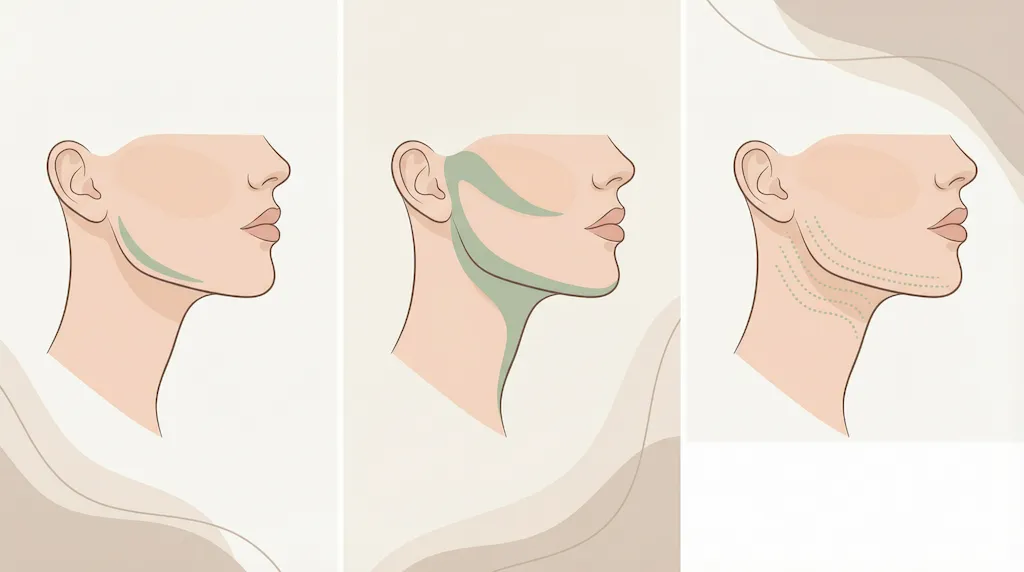
Decision paralysis is real, especially when you’re weighing cost, downtime, and the fear of choosing wrong. Here’s where it gets interesting. The right procedure depends on your degree of laxity, the areas you want to address, how much recovery time you have, and your budget.
A mini facelift is ideal if you’re in your 30s through 50s and starting to notice early changes in your lower face and jawline, you want real, surgical results without a long recovery. A full facelift goes deeper and wider, addressing the neck, cheeks, and more advanced signs of aging for patients who need a more comprehensive refresh.
And if you’re looking for something between a full surgical procedure and non-surgical treatments, FaceTite is a minimally invasive 45 to 60 minute option that uses radiofrequency energy beneath the skin to tighten and contour through tiny entry points, making it a great fit for patients with mild looseness who want noticeable improvement with minimal downtime.
It’s worth noting that minimally invasive and non-surgical options are best suited for early or mild signs of aging, while surgical procedures like the mini facelift and full facelift address moderate to severe structural changes that non-surgical treatments simply can’t correct.
| Mini Facelift | Full / Deep Plane Facelift | FaceTite | |
|---|---|---|---|
| Invasiveness | Surgical (minor) | Surgical (major) | Minimally invasive |
| Anesthesia | Local + sedation | General or IV sedation | Local |
| Surgical Time | 60 to 90 min | 3 to 5 hours | 45 to 60 min |
| Recovery | 1 to 2 weeks | 2 to 3 weeks | 3 to 5 days |
| Best For | Early aging, 30s to 50s | Moderate advanced aging, 50s+ | Mild laxity, no surgery preference |
| Treats Neck | Limited | Yes | Some improvement |
| Atlanta Cost | $6,000 to $12,000 | $8,000 to $24,000 | Consult for pricing |
Artisan Plastic Surgery‘s three tier facial rejuvenation approach means you’ll never be pushed toward a procedure you’re not ready for. Your surgeon will curate a personalized plan around your anatomy and goals. View before and after results from real patients.
What Should You Expect During a Mini Facelift Consultation?
It’s completely normal to feel nervous before your first consultation. Many patients worry about being judged for their concerns or pushed into something bigger than they need. At our Northside and Johns Creek locations, every consultation begins with listening.
Your surgeon will evaluate your facial anatomy, skin quality, degree of laxity, and aesthetic goals, presenting all relevant options across the three tier approach. The consultation is designed to be educational and exploratory. You’ll leave with a clear picture of your options, not a sales pitch.
Here’s what to bring to your appointment:
- Photos of the look you’re aiming for
- A list of current medications and supplements
- Any questions you have (the FAQ section below is a great starting point)
- Your goals, concerns, and timeline
- A personalized surgical plan and transparent cost breakdown
- Information about financing through Alphaeon Credit, Cherry, and CareCredit
Consultations are available at both surgical locations: Northside in Atlanta and Johns Creek. Both locations offer private, comfortable settings.
Conclusion
Noticing changes in your face doesn’t mean you’ve waited too long, and wanting to do something about it doesn’t mean you’re vain. It means you care about feeling like yourself, and that’s something we understand deeply.
A mini facelift isn’t a lesser version of a “real” procedure. It is real, just beautifully focused on exactly where you need it. For patients in their 30s, 40s, and early 50s, it offers genuine, lasting results with a shorter recovery, incisions that fade quietly into your natural contours, and a price that reflects its targeted approach. And because early timing tends to mean softer healing, more natural outcomes, and longer-lasting confidence, there’s real wisdom in not waiting until the changes feel impossible to ignore.
You deserve to look in the mirror and recognize yourself; just rested, refreshed, and a little more like the version of you that matches how you actually feel inside.
If you’re curious about what’s possible, we’d love to talk. Book a consultation at Artisan Plastic Surgery’s Northside Atlanta or Johns Creek location, and let’s explore your options together, no pressure, no rush, just an honest conversation about what’s right for you. Your next chapter starts with one simple step.
Frequently Asked Questions
How long do mini facelift results last?
Mini facelift results can last for years with proper care. Factors like skin quality, sun exposure, smoking, and weight fluctuations can affect longevity.
What’s the difference between a mini facelift and a full facelift?
A mini facelift uses shorter incisions and targets the lower face only, with one to two weeks of recovery. A full facelift addresses the neck, mid face, and deeper tissues through extended incisions, with two to three weeks of recovery, and generally longer-lasting results.
Can I get a mini facelift in my 30s?
Yes. Many patients in their 30s are excellent fits if they have early jowling or jawline softening with good skin elasticity.
Can I combine a mini facelift with other procedures?
Yes. Common combinations include blepharoplasty (eyelid surgery), neck lift, fat transfer, and non surgical treatments like BOTOX and fillers.
Is financing available for mini facelifts?
Yes. Artisan Plastic Surgery offers financing through Alphaeon Credit, Cherry, and CareCredit to make your procedure more accessible.
Disclaimer – This content is for educational purposes only and does not constitute medical advice. A consultation with a qualified board-certified surgeon is required to determine the best treatment plan for your individual needs and any questions you may have about a medical condition or procedure.