




Injectable, needle-only breast augmentation is heavily marketed online as a quick, surgery-free way to add fullness. Understanding what these treatments really are, and what the science says about them, helps you make a confident, well-informed choice about your body.
The evidence on this is clear and worth knowing. ISAPS noted that, as of 2023, no injectable filler or liquid silicone product was FDA-approved for breast augmentation, and warned that injectable silicone used for body contouring can cause serious complications. Marketing is years ahead of science.
At Artisan Plastic Surgery, our board-certified plastic surgery team believes you should have the full picture before you trust your body to a trend. This article covers what gets marketed as injectable breast augmentation, the real risks behind those promises, and the FDA-recognized options that actually work.
Key takeaways
- “Injectable breast augmentation” is a marketing umbrella for several different things, and none of the needle-only versions are FDA-approved for the breast.
- Liquid fillers and silicone injected into the breast can migrate, form hard lumps, cause serious infections, and hide breast cancer on a mammogram.
- The FDA has only ever approved surgical implants for breast augmentation, and it warns specifically against injectable silicone and dermal fillers for this use.
- The proven paths to more breast volume are FDA-approved saline or silicone implants and fat transfer, both placed surgically by a board-certified plastic surgeon.
What procedures are marketed as injectable breast augmentation?
“Injectable breast augmentation” isn’t one procedure. It’s a label stretched over a few very different things, and telling them apart matters for your safety. Some are temporary, some are dangerous, and one isn’t even sold in the United States.
The phrase usually points to one of four approaches. The table below sorts the marketing claims from what each option actually is.
| Marketed as | The claim | What it really is |
|---|---|---|
| Hyaluronic acid filler | A needle-only size boost | A temporary gel injected in large volumes; not approved for breasts |
| Liquid silicone injection | A cheaper, permanent enlargement | Illegal for breast use; can migrate and cause lasting harm |
| “Injectable implant” (Mia Femtech) | An implant with no real surgery | A solid silicone implant placed through a small incision, not sold in the US |
| Traditional augmentation | The established route | FDA-approved implants or your own fat, placed surgically |
Notice the pattern. The needle-only methods promise the most and carry the least oversight. A true breast augmentation in Atlanta GA, the kind performed by board-certified surgeons, still involves a procedure. Lasting volume that looks and feels natural has to be built, not squirted in.
So why do the injectable versions keep trending? They sound easier. The catch is what that ease costs you, which is where the risks come in.
What are the primary health risks of liquid breast injections?
The risks of injecting filler or silicone into the breast are serious, and they’re the reason regulators keep sounding the alarm. This isn’t a gentle “results may vary” situation. It’s a genuine safety problem.
Here’s what can go wrong when material is injected into breast tissue:
- It can hide cancer. Fillers blur mammogram images, and an FDA expert panel cautioned in 2025 (reported in 2026) that dermal fillers injected into the décolletage (upper chest) area could make breast cancer harder to detect during screening by obscuring tissue or mimicking cancer on imaging.
- It migrates. Gel and silicone don’t stay put. They drift away from the breast into surrounding tissue, sometimes far from where they started.
- It forms lumps. Your body reacts to the foreign material with chronic inflammation, walling it off into hard nodules and granulomas.
- It can cause severe infection. The FDA reports that injected silicone used for body contouring can lead to tissue death and, in rare cases, life-threatening complications.
- It’s hard to undo. Once material has scattered through tissue, removing all of it can be difficult or impossible, even with surgery.
That last point is the one patients underestimate most. A filler marketed as “reversible” or “temporary” can behave very differently once it has spread, and the correction often requires more than the original injection ever did. Pretty far from a lunchtime fix, right?
The reassuring part is that none of this is the only option. Our board-certified surgeons regularly meet patients who started down the injectable path and wished they’d asked more questions first. The safe routes to more volume are well established.
What is the FDA and regulatory status of injectable breast procedures?

The FDA’s stance is clear: the only devices it has approved for breast augmentation are surgical implants. According to the FDA, the breast implants currently approved in the United States are saline-filled and silicone gel–filled implants, both of which are placed surgically. Injectable fillers and liquid silicone are not FDA-approved breast implants.
The agency hasn’t been quiet about the alternatives, either. It has issued formal warnings against injectable silicone and unapproved dermal fillers for breast and body contouring, pointing to the serious, sometimes permanent injuries they can cause. FDA approval isn’t a box-ticking exercise. It represents years of clinical trial data that the injectable options simply don’t have.
History reinforces that point. Macrolane, once the most widely marketed hyaluronic acid filler for breast enlargement, was pulled from breast use worldwide in 2012, as the BBC reported, after experts raised concerns about cancer screening.
The buzzy “injectable implant,” Mia Femtech, tells a similar story. Although marketed in several countries outside the United States, Mia Femtech and its associated implants are not cleared or approved for sale in the U.S. and have not received FDA authorization for commercial distribution.
If you’re weighing your options, this is a good moment to talk with a board-certified plastic surgeon about what’s actually cleared for use, rather than what’s trending. A few minutes of honest conversation can save a lot of regret.
Avery, a patient at our Northside office who chose a proven route after doing her homework, shared her experience:
“Had the BESTTTT experience with Dr. Val she was so knowledgeable in breast augmentation and helped me feel comfortable throughout the whole process. They turned out excellent!”
What are the safer, FDA-approved alternatives for breast enhancement?
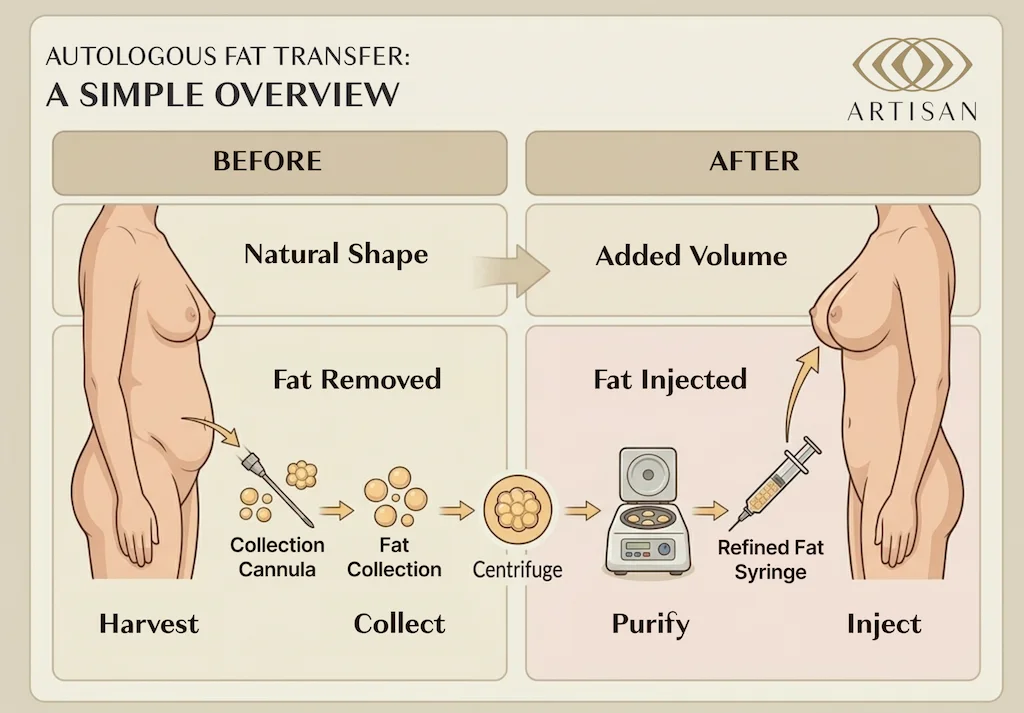
If you want more volume safely, two proven paths stand out, and both are surgical. They’re the routes a board-certified plastic surgeon will actually walk you through, because they’re backed by data and built around your anatomy rather than a one-size-fits-all promise.
Fat transfer
Fat transfer, sometimes called fat grafting, uses your own fat instead of synthetic materials. It is a widely used technique among U.S. plastic surgeons and has become increasingly common in both reconstructive and cosmetic procedures.
Your surgeon removes fat from one area with liposuction, purifies it, and places it into the breast for a soft, natural increase. Because it uses living tissue, it tends to look and feel like, well, you. It suits a modest size goal and pairs well with the artistry of contouring the donor area at the same time. If that appeals, here’s a closer look at breast augmentation without implants.
FDA-approved implants
Saline and silicone implants are the most studied path to fuller breasts. They’re backed by years of clinical-trial follow-up, including a 10-year study published in 2023.
No surgery is entirely without risk. The most common issue is capsular contracture, when scar tissue around an implant tightens. It affects a minority of patients and is well understood by your surgical team.
The FDA also keeps a close watch on implant safety. In 2021, it began requiring a boxed warning and a patient decision checklist on every breast implant sold, so you go in fully informed. That kind of oversight is exactly what the injectable shortcuts lack. You can learn more on the FDA’s implant page.
Choosing your surgeon and what to expect
This is where your homework pays off, because the safest result starts with the right surgeon and an honest, in-person conversation. Think of the consultation as a two-way evaluation. It’s your chance to assess their approach, their space, and their philosophy, not just the other way around.
Co-founded by two board-certified female plastic surgeons, Artisan is Atlanta’s plastic surgery practice, and that perspective shapes every visit. At your in-person consultation at our Northside or Johns Creek office, your surgeon examines your anatomy, listens to your goals, and builds a customized plan. Every treatment is built around you, the way an artist approaches a unique canvas.
Alexandra, a patient at our Northside office who valued a calm, low-pressure visit, described her experience:
“Had a breast augmentation done at Artisan. It went perfectly, and I am so happy with the results. All of the staff was kind and attentive, and I never felt any pressure during the consultation or payment process.”
Cost shouldn’t be the reason you reach for a risky shortcut. To keep a proven procedure manageable, we offer flexible financing through Alphaeon Credit, Cherry, and CareCredit.
Those plans let you move forward without pressure. When you’re ready, schedule a consultation at Artisan Plastic Surgery to talk through which approach fits your goals.
Conclusion
That tempting social-media promise, fuller breasts from a needle with no real surgery, is exactly the kind of shortcut that deserves a second look. Real, lasting breast augmentation is built with proven tools: FDA-approved implants or your own fat, in the hands of a board-certified surgeon. Anything injected with a needle alone simply isn’t worth your health.
If the idea still appeals, the most helpful next step is to see what proven results look like. Browse real patient photos that match your starting point, and let them ground your expectations before any decision.
At Artisan in Atlanta, we believe every patient deserves to feel heard, respected, and confident in their choices. That belief shapes every conversation we have, long before anything else. When you’re ready, reach out or call (404) 851-1998, and we’ll meet you exactly where you are.
Frequently asked questions
Are breast filler injections FDA-approved?
No. The FDA has not approved any injectable filler or liquid silicone for breast augmentation, and it has warned against the practice. The only FDA-approved devices for adding breast volume are saline and silicone implants placed surgically.
What is a liquid boob job?
It’s a marketing term for injecting large volumes of dermal filler, usually hyaluronic acid, into the breast to temporarily increase size. Because the effect fades and the filler can migrate or form lumps, it carries real safety concerns.
Can breast fillers cause breast cancer or hide it on a mammogram?
There’s no proof that fillers cause breast cancer, but injected material can obscure a mammogram and make early cancers harder to detect. That interference with screening is one of the main reasons regulators and radiologists advise against it.
How long do injectable breast filler results last?
Hyaluronic acid fillers are temporary and break down over time, often within a couple of years. The trouble is that the material doesn’t always leave cleanly, and migrated filler can linger in lumps long after the visible volume is gone.
Can dermal fillers like JUVEDERM® or Radiesse® be used for breast enlargement?
No. Those fillers are approved for specific facial uses, not for the breast. Using any dermal filler off-label in such large volumes in breast tissue falls outside FDA approval and isn’t considered safe.
Does breast filler migrate to other parts of the body?
It can. Both liquid silicone and large-volume fillers may drift from the injection site into surrounding tissue. This migration is a key reason the material can be so difficult to fully remove later.
How is a liquid boob job different from a fat transfer breast augmentation?
A liquid boob job injects synthetic filler that your body treats as foreign. Fat transfer uses your own purified fat, placed surgically by a board-certified plastic surgeon, which integrates more naturally and has a far better safety profile.
Is there an injectable breast implant that does not require surgery?
Not a true one. The procedures marketed that way either inject unapproved filler or, in the case of Mia Femtech, place a real implant through a small incision. Genuine, lasting augmentation involves a surgical procedure.
Can liquid silicone injections in the breast be reversed or dissolved?
Liquid silicone cannot be dissolved the way hyaluronic acid filler sometimes can, and once it spreads through tissue, it’s often impossible to remove completely. This is why our board-certified surgeons steer patients firmly toward FDA-approved options from the start.
*Disclaimer: This content is for educational purposes only and does not constitute medical advice. A consultation with a qualified board-certified surgeon is required to determine the best treatment plan for your individual needs and any questions you may have about a medical condition or procedure.

