




A jowl lift is not one standardized operation. The term covers a family of surgical approaches that lift and reposition the deeper tissue along the lower face. Most often that means a lower facelift, sometimes paired with a neck lift.
The scale of that demand is easy to underestimate. Surgeons performed 477,624 neck lifts worldwide in 2024, according to ISAPS. Jowling and neck laxity are exactly the changes those procedures are built to address.
At Artisan Plastic Surgery in Atlanta, our board-certified plastic surgery team matches the operation to the anatomy rather than the other way around. This guide walks through what causes jowls, how the surgical options compare, and what recovery actually looks like.
Key takeaways
- Jowling is rarely just loose skin. Skin quality, descended fat, a weakening deep support layer, and fullness under the chin usually act together, and that mix decides which operation you need.
- A lower facelift is the core jowl lift. Mini and short-scar variations suit earlier, lighter laxity. SMAS and deep-plane techniques reach structural descent.
- A neck lift joins the plan when loose neck skin, fullness under the chin, or visible vertical bands come with the jowls. The two are usually done in one session.
- Recovery is predictable. Swelling and bruising ease over the first few weeks, the contour reads as genuinely improved around weeks three and four, and refinement continues for months.
- Non-surgical treatments work on earlier, milder changes. Surgery is what reaches the structural descent that creates a true jowl.
What actually causes jowls and a softening jawline?
Four things usually happen at once, and only one of them is loose skin. That matters more than it sounds, because each cause responds to a different part of the operation.
| What is changing | What you notice | What addresses it |
|---|---|---|
| Skin elasticity | Crepey texture, skin that no longer springs back | Skin redraping and trimming |
| Descended fat | Heaviness that breaks the jaw’s clean line | Repositioning, sometimes reduction |
| Deep support layer | The whole lower face reads lower | SMAS or deep-plane lifting |
| Fullness under the chin | A blurred angle between chin and neck | Neck lift, liposuction, muscle work |
Skin quality and elasticity
Collagen and elastin, the proteins that give skin its recoil, decline with age and with years of sun exposure. Smoking accelerates the same process. The result is skin that stretches and stays stretched instead of snapping back.
Here’s the thing, though. Skin laxity alone rarely produces a true jowl, which is why skin-only tightening tends to disappoint patients who have deeper changes.
Fat that has shifted
The fat in your face sits in distinct compartments rather than one continuous layer. As their support weakens, the compartments along the cheek slide downward and collect just past the jawline. That accumulation is what breaks the clean edge of the jaw.
The deeper support layer
Beneath the skin and fat sits the SMAS, a sheet of fibrous tissue and muscle that runs continuously from the cheek into the platysma muscle of the neck. When it loosens or is pulled downward, the jawline loses its definition even if your skin is still reasonably firm. Small ligaments that tether tissue to the jawbone give way at the same time.
Fullness under the chin
Sometimes the jaw looks soft because of what sits below it rather than what sits on it. Excess fat under the chin and changes in the platysma muscle both blur the angle where the neck meets the jaw. Chin projection and gradual changes in the jawbone itself can add to the effect.
So how does a surgeon tell which of these is driving your particular jawline? By examining your face and neck at rest and in motion, pinching to gauge how much skin excess there really is, and mapping where the fat sits. That assessment is what turns a menu of procedures into a plan.
Which surgical option fits the amount and location of your sagging?

The honest answer is that the right operation is decided by where your laxity sits and how deep it goes, not by which technique sounds most advanced. A face lift for jowls can mean a fairly limited procedure or a comprehensive one.
| Option | Best suited for | What it involves |
|---|---|---|
| Lower facelift | Jowls and jawline laxity, lower third only | Incisions around the ear, deeper tissue repositioned |
| Mini or short-scar lift | Early, mild jowling with good skin quality | Shorter incisions, more limited correction |
| SMAS or deep-plane lift | Descent of the deep support layer | Lifting or releasing the SMAS itself |
| Neck lift, added | Loose neck skin, fullness, vertical bands | Often a small incision under the chin |
Lower facelift
This is the operation most people mean by a jowl lift. It concentrates on the lower third of the face, lifting the tissue that has slipped past the jawline and restoring the edge. It is the strongest fit when your midface and cheeks still sit where you want them.
At Artisan, the surgical facelift is tailored across a spectrum, from traditional incisions that extend into the lower scalp to more limited ones. That range is deliberate, because a jawline is a composition rather than a standard case.
Mini or short-scar facelift
A mini lift for jowls uses shorter incisions and a more limited correction, which suits early laxity with good skin quality. There is a catch worth knowing. ASPS points out that “mini” has no standardized definition across surgeons, so two practices can mean quite different operations by the same word.
Ask what is actually being lifted rather than how the procedure is branded. A mini face lift for jowls that only tightens skin will not correct descent of the deeper layer.
SMAS and deep-plane techniques
A SMAS-based lift works on that deep support sheet directly, folding it, removing a strip, or elevating and repositioning it. A deep-plane lift goes further, dissecting beneath the SMAS and releasing the retaining ligaments so skin, fat, and muscle move together as one composite unit.
Deep-plane approaches are usually considered when the midface has descended too, not just the jawline. A 2025 systematic review of 21 studies and 2,896 patients compared SMAS and deep-plane techniques. It concluded that both provide robust, long-term outcomes with high patient satisfaction.
Adding a neck lift or other refinements
A neck lift belongs in the plan when loose neck skin, submental fullness, or visible vertical bands accompany the jowls. Because a neck and jowl lift share incisions around the ear, they are typically performed in the same session.
Three refinements often travel with the main procedure. Liposuction reduces a full submental pocket, platysmaplasty tightens the separated neck muscle, and fat grafting restores volume where the face has hollowed rather than sagged. Which of these apply is a question your surgeon answers from your anatomy, not from a package.
Since the primary keyword patients search is a visual one, it helps to look before you decide. You can browse the before-and-after gallery and filter to the Facelift and Neck Lift categories to see real jaw and neck results.
What actually happens during jowl lift surgery?
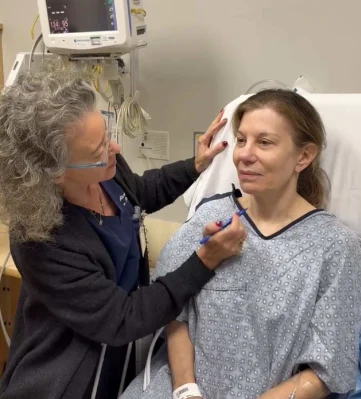
The operation follows a consistent sequence regardless of which technique your surgeon chooses. Knowing that sequence tends to make the whole thing feel less abstract.
A traditional facelift incision commonly begins in the temple hairline, runs around the ear, and ends in the lower scalp. When the neck is being treated, a small incision under the chin is added. The placement is chosen so the lines fall in natural creases and behind the ear where hair and shadow conceal them.
- The skin is elevated off the tissue beneath it, opening access to the deeper layer.
- The SMAS is addressed, by plication, by removing a strip, or by full elevation in a deep-plane technique.
- Retaining ligaments are released where the tissue needs to move further than they allow.
- The repositioned tissue is secured, and only the genuinely excess skin is trimmed.
- Incisions are closed with fine sutures, and temporary drains are sometimes placed to limit swelling.
That fourth step deserves emphasis. Redraping the skin without tension is what separates a natural result from a tight one, and it only becomes possible once the deeper layers are already carrying the lift.
ISAPS reports that facelift surgery typically takes two to three hours and is most often performed under general anesthesia or intravenous sedation, so you are comfortable and aware of nothing during the procedure. Whether your neck, cheeks, or nasolabial folds are included depends on the plan you agreed to beforehand.
Claudia, a patient at our Northside office who had the lower face and neck lift combination described above, shared her experience:
“Dr Alexander did a lower face and neck lift on me. I could not be more pleased! She and her entire staff are truly wonderful people! They all made my experience rewarding! My results are better than expected! Dr Alexander is a truly gifted surgeon. I HIGHLY recommend her and her staff. You will not be disappointed”
What will recovery and your final jawline look like?
Recovery is gradual and reasonably predictable, which is its own kind of reassurance. The first week feels the furthest from your goal, and that is normal rather than a sign something has gone wrong.
| Phase | Timeframe | What to expect |
|---|---|---|
| Immediate | Day 1 to 2 | Compression dressing, rest, no driving or showering |
| First week | Day 3 to 7 | Swelling and bruising peak, sutures out around a week |
| Early recovery | Week 2 | Light work and gentle activity for many patients |
| Turning point | Week 3 to 4 | Contour reads as genuinely improved, no strenuous exercise |
| Refinement | Month 3 to 6 | Final contour settles, incision lines continue to fade |
Swelling, bruising, tightness, and patches of numbness are expected in the first week. The numbness is usually the part patients find strangest, and it fades as the small sensory nerves settle over the following weeks.
ISAPS reports that swelling and bruising typically improve over two to three weeks. Strenuous activity waits at least three weeks, and the result is generally appreciable at three to six months. Most patients feel socially presentable well before their result is final.
Will the jowls come back? Aging continues, so results are long-lasting rather than permanent, and weight changes can soften a jawline again. At Artisan, our team has spent years refining a post-operative protocol that helps each facelift patient heal faster and more comfortably. How you recover shapes what you end up with.
How do you decide whether surgical jowl correction is right for you?
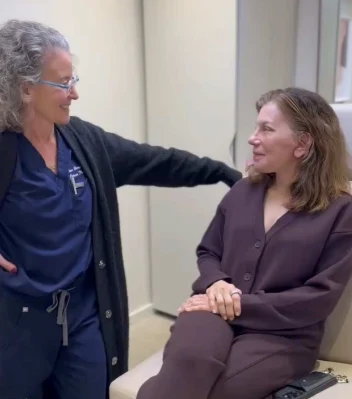
This is the part that deserves the most patience, and researching it carefully before committing is exactly the right approach. Candidacy comes down to how much laxity you have, where it sits, and how well your body is set up to heal.
Health factors that affect healing
Two health factors carry the most weight. Smoking meaningfully raises the risk of healing problems in the skin, and an unstable weight can undo a result you just paid for in time and recovery.
Our surgical candidacy criteria are straightforward, and you can largely self-assess against them:
- Noticeable excess skin along the face and neck
- No medical conditions that could impair healing or increase surgical risk
- A non-smoker, or willing to stop before surgery
- A stable weight you expect to maintain
Blood thinners are usually paused for a short window before surgery under your surgeon’s direction, and a full medical history is taken at the consultation rather than assumed.
Risks worth understanding
The vast majority of patients move through this process without any real trouble. A 2023 systematic review of 27 studies covering 6,086 patients who had SMAS facelift techniques found more than 85 percent satisfaction. Nerve effects, where they occurred, were temporary in the overwhelming majority of cases.
The specifics worth knowing are bruising beneath the skin, infection which is genuinely uncommon, temporary changes in sensation or movement, slower skin healing especially in smokers, and scars that mature over many months. A 2025 review of 47 studies covering 10,766 patients compared safety across superficial and deeper facelift techniques and found both well tolerated. Choosing a board-certified plastic surgeon who operates in an accredited facility is where you have the most control over those risks.
Ask directly. ASPS suggests confirming board certification, surgery-specific training, hospital privileges, and facility accreditation. It also suggests asking what your options are if you are dissatisfied with the outcome, and a good surgeon welcomes that question.
Surgery versus non-surgical options
Here is the distinction that saves people the most disappointment. Non-surgical treatments like Morpheus8™ and dermal fillers work well for earlier, milder concerns, while surgical procedures like a lower facelift address the more advanced structural changes underneath. Fat transfer sits alongside fillers as a volume option when the face has hollowed rather than sagged.
FaceTite®, which our practice offers, sits between the two as a minimally invasive surgical option that tightens skin and reduces fat beneath the surface through very small openings. It suits jowls that have started to form but have not yet outrun what energy can reach. When the deep support layer has genuinely descended, no non-surgical device will substitute for repositioning it.
Inside your consultation
Your consultation is not only a chance for a surgeon to evaluate you. It is equally your chance to evaluate them, their approach, their space, and how carefully they listen before recommending anything.
As Atlanta’s first woman-led plastic surgery practice, Artisan brings a particular perspective to that conversation. It happens in person at our Northside or Johns Creek office, because a hands-on assessment of your skin, your deeper support, and the fat along your jaw cannot be done any other way. Your surgeon will discuss the approach the way an artist discusses a composition, weighing balance and proportion rather than reading from a menu.
Cost comes up here too, and it varies with the technique chosen, the complexity of your anatomy, anesthesia, and facility time. Your consultation includes a personalized breakdown rather than a guess, and we offer flexible financing through Alphaeon Credit, Cherry, and CareCredit so the timing works for you. Every plan is curated to your anatomy and goals, never a one-size-fits-all recommendation.
Carol, who described the preparation and aftercare around her own lower face and neck lift at our practice:
“Dr Alexander performed a lower face and neck lift on me 5 weeks ago. The results are amazing already. The staff and Dr Alexander were so helpful prep and post op and answered all my questions and concerns promptly. The whole process included pre op vitamins and post op included very helpful facials and products to make the recovery so easy and painless. Dr Alexander is a perfectionist and her work was flawless. Would highly recommend her services to anyone considering plastic surgery.”
When you are ready to find out which approach fits your anatomy, you can schedule a consultation and get a straight answer rather than a sales pitch.
Conclusion
A jowl lift was never one operation, and that is genuinely good news. It means a lower facelift can be scaled to what your jawline actually needs, whether that is a limited correction or a fuller lift paired with neck work.
Looking at real patient photos that start from a jawline like yours is the most clarifying next step. A consultation then fills in what photographs cannot show.
Every jawline is its own composition, and Artisan Plastic Surgery exists in Atlanta to help you bring yours back into balance while it still looks unmistakably like you. Call (404) 851-1998 when you want to talk it through with people who will listen first.
Frequently asked questions
What is a jowl lift, and is it the same as a facelift?
A jowl lift is a patient-facing term rather than a formal operation. In practice it almost always means a lower facelift, sometimes with a neck lift added. A full facelift covers more territory, including the midface and cheeks.
Can a lower facelift get rid of jowls permanently?
A lower facelift corrects the jowls you have now, and the correction is long-lasting. It does not stop aging, so laxity gradually returns over time. Stable weight and sun protection help preserve the result.
Is a neck lift needed with a jowl lift?
Not always. A neck lift is added when you also have loose neck skin, fullness under the chin, or visible vertical bands. If your neck is still crisp, the lower facelift alone may be enough.
What is the difference between a mini facelift and a lower facelift for jowls?
A mini facelift uses shorter incisions and corrects less. It suits early, mild jowling with good skin quality. A full lower facelift allows more repositioning of the deeper layer, which matters once the descent is more established.
Is a SMAS facelift or a deep-plane facelift better for jawline sagging?
Neither is universally better. A SMAS lift works on the deep support sheet directly and has an excellent track record. A deep-plane lift releases retaining ligaments and moves tissue as one unit, which is often preferred when the midface has descended alongside the jawline.
Can liposuction alone improve jowls?
Only in a narrow set of cases. Liposuction removes fullness under the chin but does nothing for descended tissue or loose skin, and removing volume from an already lax face can make sagging look worse. It works best combined with lifting.
Who is a good candidate for surgical jowl correction?
You are likely a good candidate if you have noticeable excess skin along the face and neck, no conditions that impair healing, and a stable weight. Not smoking, or being willing to stop before surgery, matters just as much. Our surgeons assess skin quality and the deeper support layer together before recommending an approach.
How long does jowl lift surgery take?
Most facelift procedures take about two to three hours. Adding a neck lift or other refinements extends that. Your surgeon gives you a specific estimate once your plan is set.
How painful is recovery after jowl lift surgery?
Most patients describe tightness and pressure more than sharp pain, and prescription medication covers the first few days comfortably. Swelling and bruising peak early in the first week. Numbness in patches is common and settles gradually.
When can you return to work and exercise after a jowl lift?
Light work and gentle activity are often possible within one to two weeks, depending on how visible your role is. Strenuous exercise and heavy lifting wait at least three weeks. Your surgeon clears you based on how you are healing, not a calendar.
What scars can you expect after surgery?
Incisions follow the natural creases in front of and behind the ear, with a small one under the chin if the neck is treated. They look pink at first and fade over many months. Placement in shadowed creases is what makes them difficult to spot once mature.
What should you look for when comparing before and after jowl lift photos?
Look for patients whose starting anatomy resembles yours, not just the most dramatic results. Check the jaw from an angled view rather than straight on, since that is where definition shows. Consistent lighting and the same head position in both photos are signs the gallery is being honest with you.
*Disclaimer: This content is for educational purposes only and does not constitute medical advice. A consultation with a qualified board-certified surgeon is required to determine the best treatment plan for your individual needs and any questions you may have about a medical condition or procedure.

