



If you’ve been going back and forth between browser tabs, reading about tummy tucks, then liposuction, then wondering whether CoolSculpting® might be enough, you’re not overthinking it. You’re just trying to figure out which path actually fits your body and your life. That’s a reasonable thing to want clarity on, and it’s harder to find than it should be.
Here’s what we wish more pages said upfront: a tummy tuck, liposuction, and the newer non-surgical treatments aren’t competing options. They solve different problems, and the right answer depends on what’s going on beneath the surface, not just what you see in the mirror. According to ISAPS, liposuction was the second most performed surgical procedure worldwide in 2024. Most contouring journeys involve lipo in some form, but that doesn’t mean it’s where yours should start.
At Artisan Plastic Surgery in Atlanta, the city’s first woman-led plastic surgery practice and your guide to cosmetic surgeons and their specialties, we sit with patients through exactly this kind of sorting, no pressure, no upsell, just honest guidance. This article walks you through three things: how a tummy tuck compares to lipo, what combining procedures actually looks like, and when a non-surgical alternative is a smarter first step.
Key takeaways
Here’s the short version of what each option does best and where combinations make sense.
- Liposuction removes stubborn fat. A tummy tuck removes excess skin, repairs separated abdominal muscles (diastasis recti), and recontours the midsection. Different problems, different tools.
- Combining lipo with a tummy tuck (lipoabdominoplasty) is well studied. A meta-analysis of 17 studies covering 14,061 patients found the combination does not raise complication rates when technique is careful.
- A mommy makeover uses the tummy tuck as the anchor and adds a breast lift, implants, lipo, or a body lift. Combined surgeries typically run 3 to 5 hours.
- Non-surgical alternatives like CoolSculpting®, CoolTone®, BodyTite®, and Morpheus8™ work for mild concerns. They do not remove loose skin or repair separated muscles.
- The pinch test matters more than anything. Loose skin plus a weak wall points to surgery. Firm skin with pinchable fat opens up more options.
What’s the difference between a tummy tuck and liposuction, and when should you choose one?
A tummy tuck and liposuction often show up in the same conversation, but they solve fundamentally different problems. The choice usually comes down to what your midsection actually needs.
Tummy tuck handles skin, muscle, and fat
A tummy tuck, medically called abdominoplasty, removes excess skin and fat from the belly and repairs separated rectus muscles, the vertical muscles that often stretch apart during pregnancy. According to the Mayo Clinic, it’s a contouring surgery, not a weight-loss procedure.
There are two common versions. A full tummy tuck treats the entire abdomen and usually includes muscle repair and belly button repositioning. A mini tummy tuck addresses only the lower belly in patients with no muscle separation and limited skin excess.
Liposuction handles fat only
Liposuction works through small openings using a thin tube (a cannula) to suction localized fat that hasn’t budged with diet and exercise. A numbing fluid goes in first so the fat is easier to remove. Lipo does not tighten loose skin or repair muscle separation. Its job is fat contouring.
Common abdominal areas include the upper and lower belly, love handles, and the lower back.
Liposuction alone: the right fit
If your skin snaps back when you pinch it and your muscles feel firm, and your concern is a localized fat pocket, lipo on its own can do the job. Ideal candidates are within 10 to 20 pounds of a stable goal weight, with good skin elasticity and no muscle separation, and what to expect from liposuction surgery includes light-activity recovery in about 1 to 2 weeks.
Tummy tuck: the right fit
If you have loose or hanging skin, a visible “shelf” over your waistband, or a gap between your abdominal muscles, lipo alone won’t address any of it. The skin needs to be excised and the muscles may need to be sutured. That’s a tummy tuck’s role.
A quick side-by-side
| Element | Tummy tuck | Liposuction |
|---|---|---|
| Removes excess skin | Yes | No |
| Repairs separated muscles | Yes | No |
| Removes stubborn fat | Some (often paired with lipo) | Yes |
| Ideal candidate | Loose skin, muscle diastasis | Good skin, isolated fat |
| Typical light-activity recovery | 3 to 6 weeks | 1 to 2 weeks |
Many patients arrive expecting to pick between these two procedures, only to find they’re candidates for both at once.
Can you safely combine a tummy tuck with liposuction, and what are the benefits?

In short, yes. The combined procedure, called lipoabdominoplasty, uses lipo to refine the waist, flanks, and upper abdomen while the tummy tuck removes loose skin and rebuilds the abdominal wall. Together, they can deliver a silhouette neither procedure produces alone.
The combined procedure, step by step
Your surgeon typically begins with liposuction to sculpt the waist, flanks, and upper abdomen, then moves into the abdominoplasty, removing excess skin, tightening the muscle wall, and repositioning the belly button. Doing lipo first means the waist can be shaped before the remaining skin is pulled smooth, which is part of why the combined result looks more refined than either procedure on its own. According to ASPS, the approach is now widely used.
That said, combining two procedures in one session is still surgery, and it’s fair to ask what the risks look like. A 2015 study of 300 consecutive patients reported an overall complication rate of about 17.3 percent, but context matters. The large majority of those were minor issues like small areas of skin separation or temporary swelling that resolved with routine follow-up, not emergencies or returns to the operating room. When the surgeon preserves blood supply to the abdominal flap, that rate is comparable to a tummy tuck performed on its own. In other words, the addition of liposuction doesn’t meaningfully raise the risk when the technique is sound.
That’s exactly why who performs the procedure matters as much as which procedure you choose. Artisan’s board-certified plastic surgeons approach the combination as one coordinated surgical plan, not two separate procedures stitched together, with every step designed to protect circulation, minimize tissue trauma, and give your body the best possible conditions to heal.
One surgery versus two
A single combined surgery means one round of anesthesia and one recovery window. A 2018 meta-analysis of 17 studies covering 14,061 patients actually showed lower seroma and hematoma rates for the combined procedure versus abdominoplasty alone. That’s counterintuitive, but it reflects how much surgical technique has matured.
Who is a good candidate
The best candidates are healthy non-smokers with a stable weight, some excess skin and fat across the midsection, and realistic expectations. Most surgeons look for a BMI under 30 to 35 for safety.
Risks to understand
Every surgery carries some uncertainty. The most common concerns after a combined surgery are temporary swelling, bruising, and a small pocket of fluid the body often reabsorbs on its own (called seroma). Serious concerns are genuinely uncommon. Wearing your compression garment and staying mildly active after surgery reduces each risk meaningfully.
If you’ve been weighing a combined procedure, schedule a consultation and we’ll walk you through a realistic plan in a calm, no-pressure visit.
What other procedures can be combined with a tummy tuck in a mommy makeover?
A mommy makeover is less a single procedure and more a set of procedures chosen to restore the body after pregnancy, breastfeeding, or significant weight loss. The tummy tuck is almost always the anchor.
Breast procedures
The most common add-on is breast surgery. A breast lift raises the breast tissue, and breast implants restore lost volume. Many patients do both together in an augmentation-mastopexy. Published outcome data confirms that mommy makeovers most often pair abdominoplasty with breast procedures, and when you hear patients describe why, the pairing makes intuitive sense.
Taylor R., who came to Artisan after four c-sections and nearly a decade of nursing, chose exactly that combination:
“My experience with Dr. Ashraf, Dr. Alexander, and Jordan Beasley has been nothing short of life-changing. I’m 45 years old, and I had 4 children via c-section (not the plan) and nursed all 4 for a combined total of 9 1/2 years. I wanted a mommy makeover (breast implants and tummy tuck).”
Liposuction for extended contouring
Lipo extends a mommy makeover beyond the abdomen. Common added areas include the waist, bra rolls, and inner thighs. The goal is smoothing transitions between treated zones. Our team treats each body restoration surgery after childbirth as a customized plan, not a fixed package.
Body lift after major weight loss
If you’ve lost a significant amount of weight, you may be looking at a body lift rather than a tummy tuck alone. A body lift, a form of post-bariatric body contouring, combines a tummy tuck with a posterior lift to remove excess skin from the flanks and lower back. The surgery takes 3 to 4 hours.
Combining safely and recovery
Longer operating times raise the stakes of pre-op prep. Most surgeons cap combined cases at around 5 hours for safety and stage surgeries when the list grows too long. Recovery from a combined mommy makeover means two to three weeks of significant downtime and several more weeks before exercise.
That said, when the planning is done carefully, combining procedures can go remarkably smoothly, even ambitious ones. Della D., who had a blepharoplasty, facelift, breast augmentation, and tummy tuck all in one session, put it simply:
“66 years old, had a Blepharoplasty, face lift, breast augmentation, and tummy tuck all at one time. priced fairly, surgeons excellent, after care superb. Not one problem after surgery, results are amazing.”
What are the top non-surgical tummy tuck alternatives?
Non-surgical body contouring has matured a lot in the last decade. For the right concern, these devices deliver real results with little or no downtime.
The key word is “right concern.” They work beautifully for pinchable fat and mild laxity, and they do not replicate a tummy tuck for significant skin or muscle changes.
CoolSculpting (cryolipolysis)
CoolSculpting uses controlled cooling to freeze fat cells until your lymphatic system flushes them out. Published data shows a 20 to 25 percent reduction in treated fat per session, with results appearing over 2 to 3 months. At Artisan Beaute, our med spa, fat freezing with CoolSculpting is offered at our Westside location as a series of two sessions.
It’s a fat-reduction device, not a skin-tightening device. If your belly skin is firm and your concern is a small bulge, it can be a good fit.
Emsculpt and CoolTone for muscle toning
Emsculpt and CoolTone use high-intensity electromagnetic energy to trigger thousands of muscle contractions per session. Standard protocols call for four sessions over two to four weeks to build muscle tone in the abdomen, buttocks, or thighs.
Radiofrequency: BodyTite and Morpheus8
Radiofrequency treatments deliver heat beneath the skin to contract existing collagen and spark new collagen over time. BodyTite® uses tissue coagulation for smoother body contours, working through a small opening. Morpheus8™ is non-surgical and uses microneedles to deliver radiofrequency. Both improve mild-to-moderate laxity but neither removes redundant skin.
Realistic expectations
Non-surgical contouring is a series of small wins, not one-and-done. Most devices require 2 to 4 sessions with results appearing over several months. Effects can last with a stable weight, though the appearance of your skin naturally changes over time.
To weigh the cost side of surgical versus non-surgical paths, you can explore flexible financing through Alphaeon Credit, Cherry, and CareCredit.
How do you know if you’re a candidate, and what should you consider before deciding?
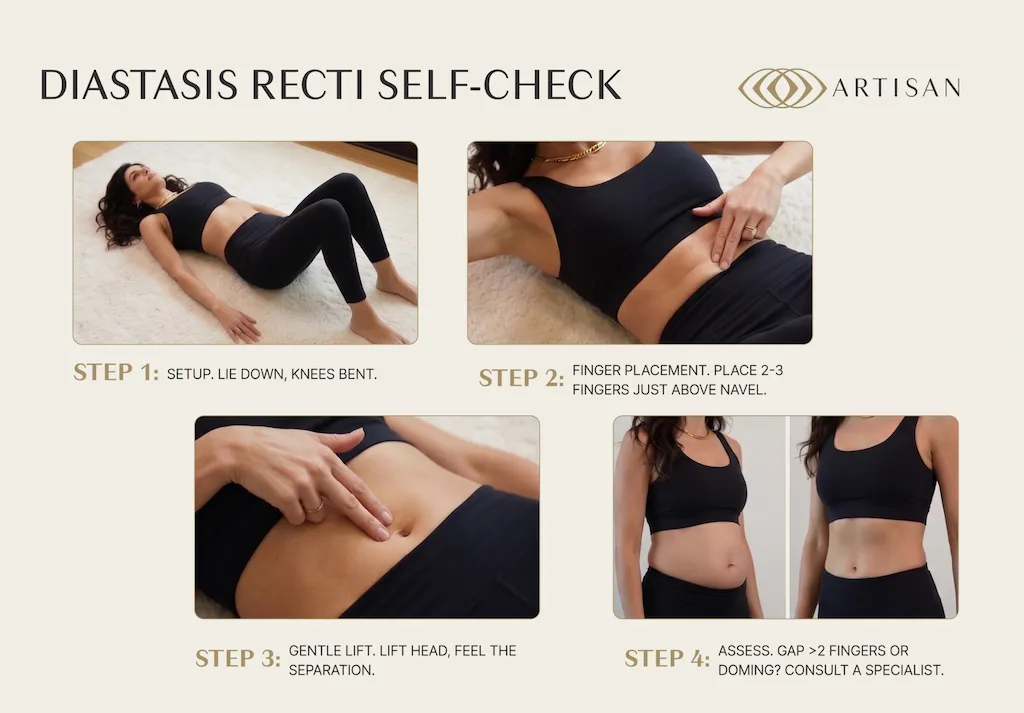
There’s no single answer, because candidacy depends on your anatomy, your health, and your goals. The good news is that a careful consultation can usually sort out the right path in one visit.
Skin laxity versus stubborn fat
There’s a simple test you can do right now. Stand in front of a mirror and pinch the skin on your lower belly. If it springs back and what you’re grabbing feels like a layer of fat over a firm wall, lipo or a non-surgical option may be all you need. If what you’re holding is a fold of skin that hangs on its own, the kind no amount of pinching makes disappear, that’s a tummy tuck conversation.
Now try this one. Lie on your back, put your hand just above your belly button, and slowly lift your head. If you feel a soft gap between the muscles wider than two fingers, that’s diastasis recti, a separation that pregnancy commonly causes and that no device, no matter how many sessions you buy, can close.
Weight, health, and timing
Weight plays a role in timing, and it’s worth having a conversation about. Most surgeons ask for six to twelve months at a steady weight before a tummy tuck, not to create a hurdle, but because your results hold up better when your body isn’t still changing underneath them. Data from ABPS abdominoplasty cases suggests an average BMI around 27, with risk increasing significantly above 30.
If your weight isn’t where you want it yet, that’s not a disqualification, it’s just a different starting point. Our prescription-based slimming programs combine FDA-approved GLP-1 medications with nutrition and behavioral support to help you get to a stable place first. Think of it less as a prerequisite and more as part of the same journey, one step setting up the next.
Cost, recovery, and logistics
Cost varies with the complexity of your plan and whether you’re combining procedures. We don’t publish set prices because every treatment plan at Artisan is customized, not cookie-cutter. What we promise is a transparent breakdown at your consultation.
Recovery is often underestimated. A standalone lipo is the shortest at 1 to 2 weeks, a tummy tuck is about 2 to 3 weeks of significant rest, and a combined mommy makeover runs longer. A week-by-week look at tummy tuck recovery shows what those stages actually feel like. It helps to plan childcare and work coverage ahead of surgery day.
Your Consultation
A consultation isn’t a sales pitch, it’s your chance to ask the questions you’ve been carrying around and get answers that are specific to your body, not someone else’s. You’re sizing up the surgeon, the space, and the approach just as much as they’re assessing your anatomy. That’s how it should work.
Every visit happens in person at one of our four Atlanta-area offices, because some things, skin quality, muscle tone, how your body holds its weight, can only be understood by touch, not through a screen. And when it comes to planning, our surgeons think less like technicians and more like collaborators: what matters to you, what your body needs, and how to bring those two things together in a way that feels like you.
Whenever you’re ready, book your consultation or call (404) 851-1998. There’s no expectation to decide anything that day, just a real conversation with a team that takes its time.
Conclusion
If things feel clearer now than they did a few paragraphs ago, that’s the goal. Most of the confusion people feel isn’t about the procedures themselves — it’s about not knowing which problem they’re actually solving. Once you can name it, loose skin, stubborn fat, a muscle wall that isn’t holding, the right path tends to come into focus.
Browsing real patient before-and-after photos is a good place to start, especially when you find someone whose “before” looks like where you are now. But photos only tell part of the story. A consultation fills in everything they can’t, what’s happening beneath the surface, what your body actually needs, and what recovery will look like for your specific life.
When you’re ready for that conversation, we’re here. No timeline, no pressure, just a team that listens first and plans second. Reach out to us or call (404) 851-1998 whenever the moment feels right.
Frequently asked questions
Can you combine liposuction and a tummy tuck?
Yes. The combined procedure is called lipoabdominoplasty, and it’s one of the most common body contouring combinations performed today. When done carefully, research shows it doesn’t raise complication risk compared with a tummy tuck alone, and it often produces a more refined contour in a single recovery window.
What’s better for a post-pregnancy pooch: tummy tuck or liposuction?
For most post-pregnancy concerns, a tummy tuck is the better fit because pregnancy typically stretches both the skin and the abdominal muscles. Liposuction alone can’t tighten skin or repair separated muscles. If your concern is limited to a firm fat pocket with good skin, lipo may be enough, but that’s the minority of postpartum cases.
Which non-surgical tummy tuck alternative works best for fat reduction?
CoolSculpting is the most established non-surgical fat-reduction treatment, with studies showing roughly a 20 to 25 percent reduction in treated fat per session. It works best for pinchable, isolated fat with good overlying skin quality. It does not address loose skin or muscle separation.
How effective is CoolSculpting for belly fat?
CoolSculpting reduces about 20 to 25 percent of treated fat cells per session through controlled cooling, with visible results over 2 to 3 months. Most patients benefit from a series of two sessions. It’s a contouring tool rather than a weight-loss method.
Is Emsculpt a good alternative to surgery?
Emsculpt can improve muscle tone and reduce a modest amount of fat, but it’s not a substitute for surgery when the concern is loose skin or diastasis recti. Think of it as a toning adjunct that complements a healthy lifestyle, not an abdominoplasty replacement.
What is BodyTite, and does it tighten skin like a tummy tuck?
BodyTite uses RF-assisted liposuction technology to melt fat and stimulate collagen for mild-to-moderate skin tightening. It’s classified as minimally invasive surgical because it works beneath the skin through a small opening. It can improve early laxity but doesn’t remove excess skin the way a tummy tuck does.
How long is recovery for a tummy tuck combined with liposuction?
Plan on 2 to 3 weeks of significant rest, a return to desk work around 2 to 4 weeks, and several more weeks before cardio and strength training. Final contour continues to settle over three to six months. Combining lipo with the tummy tuck usually doesn’t extend recovery meaningfully.
Do you need to lose weight first before a tummy tuck?
In most cases, yes. Surgeons usually look for six to twelve months at a stable weight before surgery, because later fluctuations can soften the result. If weight is still a work in progress, a supervised medical weight loss program can help you reach a stable starting point.
What’s the difference between a mini tummy tuck and a full tummy tuck?
A full tummy tuck treats the entire abdomen, repairs muscle separation, and repositions the belly button. A mini tummy tuck treats only the lower abdomen below the belly button, usually without muscle repair. Mini tummy tucks suit a small group of candidates whose changes are limited to the lower belly.
Are there extra risks when combining procedures in a mommy makeover?
Somewhat. Longer operating times and multiple incisions raise the stakes compared with a single procedure, with studies suggesting around a 4 to 10 percent major complication rate depending on how many procedures are combined. That’s why our team caps combined cases and stages larger plans when appropriate.
Can you get a tummy tuck after weight loss surgery?
Yes, and it’s a common reason people pursue abdominoplasty. Most surgeons recommend waiting 12 to 18 months post-bariatric, until your weight has been stable for six months. At that point, a tummy tuck or body lift can address the excess skin after major weight loss.
*Disclaimer: This content is for educational purposes only and does not constitute medical advice. A consultation with a qualified board-certified surgeon is required to determine the best treatment plan for your individual needs and any questions you may have about a medical condition or procedure.