




Facelift surgery used to be a yes-or-no decision. The procedure was one fairly standard operation, and a patient either signed up for it or stayed in the world of creams and small fixes. That isn’t really the choice anymore. Today’s consultation is more often a conversation about scope — whether the right procedure is a comprehensive lift of the entire lower face and neck, or a smaller, focused one that addresses a single concern.
The numbers reflect that shift. According to ISAPS, roughly 737,028 face lifts were performed globally in 2024. That represents a 7.4% increase over the prior year, making it one of the fastest-growing procedures in facial plastic surgery.
At Artisan Plastic Surgery in Atlanta, Georgia’s first woman-led plastic surgery practice, we offer surgical and nonsurgical cosmetic treatments and approach every face as a unique composition. This article walks you through what a full facelift addresses as one of the surgical anti-aging treatments for the face, how targeted procedures compare, and how to think about which path might suit you.
Key takeaways
- A full facelift (rhytidectomy) repositions deeper facial tissues and is designed for moderate-to-advanced sagging across the lower face and neck, while targeted procedures address smaller, earlier concerns in one specific area.
- Non-surgical options like fillers, fat transfer, and skin-tightening treatments work well for earlier, milder concerns; surgery addresses more advanced structural changes that non-surgical treatments cannot reach.
- Recovery differs noticeably: full facelifts involve a longer healing arc and more initial swelling, while mini or targeted lifts typically allow a quicker return to normal routines.
- The best choice is rarely obvious from a photo. A thoughtful consultation looks at your anatomy, your timeline, and your goals together.
What exactly is a full facelift, and what does it address?
A full facelift, known clinically as a rhytidectomy, is among the most comprehensive face and neck lifting procedures, tightening and repositioning the deeper structures of the face and neck. It does not simply pull skin tight. It restores the anatomy underneath, so the outer layer settles into a smoother, more natural-looking position.
Areas the procedure targets
A full facelift primarily works across the lower two-thirds of the face: the cheeks, the jawline, the area around the mouth, and the upper neck. According to the American Society of Plastic Surgeons, it addresses common signs of facial aging. Those include midface sagging, deepening folds between the nose and mouth, jowls along the jaw, and loose skin or banding in the neck.
SMAS and deep plane techniques
The layer that surgeons work with is called the superficial musculoaponeurotic system, or SMAS for short. Think of it as the fibrous sheet beneath your skin that holds the facial muscles in their youthful positions. Over time, it loosens.
In a traditional SMAS facelift, that layer is tightened, folded, or partially trimmed. In a deep plane facelift, the surgeon releases retaining ligaments underneath the SMAS and repositions skin, fat, and muscle as one composite unit. That approach often produces a more integrated lift through the midface, which is the foundation of how a deep plane facelift delivers natural, long-lasting results.
What a facelift does not fix
A facelift is a structural procedure, not a skin-quality one. It does not smooth fine lines around the mouth, fade sun damage, or brighten uneven pigmentation. Those concerns usually respond better to laser treatments, medical-grade skincare, or injectables.
We offer three distinct levels of facelift care: surgical, minimally invasive, and non-invasive. A full lift can shift how your face sits on your bones. What it cannot do is change how it feels to live in that face, and that is where your goals, not the procedure, should lead.
What are targeted or mini facelifts, and what do they treat?
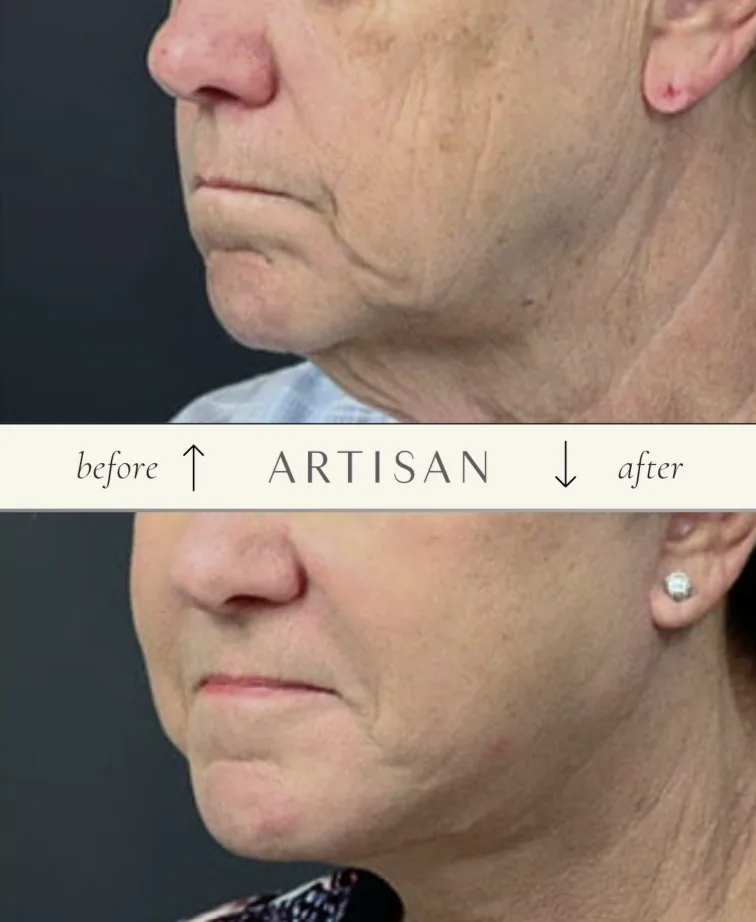
Targeted procedures are smaller, more focused lifts designed for one region of the face or for earlier signs of aging. They use shorter incisions, less tissue dissection, and often a lighter form of anesthesia. The trade-off is scope: they refine a specific area rather than address the whole lower face and neck at once.
Mini facelifts
A mini facelift concentrates on the lower face and jawline. Incisions are typically confined to the skin just in front of and behind the ears, which minimizes scarring. The procedure works well for patients with mild jowling and early skin laxity, particularly in their forties and fifties.
Mid-facelifts and neck lifts
A mid-facelift targets the cheeks and under-eye area, lifting sagging tissue in the midface without touching the lower face. By contrast, facial plastic surgery for aging neck focuses entirely on the neck, addressing sagging skin, muscle banding, and jawline contour through an approach tailored to your anatomy. Some patients add a neck lift alongside a facelift; others find a neck lift alone is enough.
Our patient Laura Clower said this:
“Everyone at this practice is thoughtful, kind, compassionate, and very talented. My procedure is scheduled for 9/11. I feel 100% like I made the right choice going with this practice after meeting with several of Atlanta’s best and both Dr. Alexander & Dr. Ashraf. I’ll update again after!”
Minimally invasive options
Some patients fall between categories. They want more than non-surgical tightening can offer, but less than a traditional lift involves. FaceTite® is a minimally invasive surgical option, using RF-assisted facial tightening through tiny incisions (often no more than a couple of millimeters) to tighten tissue beneath the skin.
How do full and targeted facelifts compare in incisions, anesthesia, and invasiveness?
The practical differences show up in the details: where incisions sit, what anesthesia is used, how long the surgery takes, and how deeply the tissue is manipulated. These choices flow directly from how much of the face each procedure is designed to lift.
| Factor | Full facelift | Mini or targeted lift |
|---|---|---|
| Incision | Hairline, around the ear, into lower scalp; may include a small incision under the chin | Short, confined to the area in front of or behind the ear |
| Anesthesia | General anesthesia or deep sedation | Often local anesthesia with mild sedation |
| Surgery time | Roughly 3 to 5 hours | Roughly 1.5 to 2 hours |
| Tissue depth | Repositions skin, fat, and the deeper SMAS layer | Tightens skin and superficial tissue, with limited SMAS work |
| Setting | Typically performed in an accredited surgical facility with observation | Often outpatient with same-day discharge |
A fuller procedure addresses more anatomy, which means more time in the operating room and a deeper plane of work. A targeted procedure takes less time and treats a narrower zone. Neither is “better” in the abstract. They are different tools for different stages of facial aging.
What is recovery like after a full facelift compared with targeted procedures?
Recovery is often the part patients think about most. It intersects with work, family, and the parts of life that do not pause for surgery. The honest picture is that a full facelift asks more of you upfront than a targeted lift, but it also does more.
| Phase | Full facelift | Targeted or mini lift |
|---|---|---|
| Immediately after surgery | Observation with nursing care, drains possible, initial swelling and bruising | Same-day discharge in most cases, mild swelling and tightness |
| First week | Peak swelling and bruising, gentle movement, head elevation, lots of rest | Much of the visible swelling fades, light activity resumes |
| Second to third week | Most bruising fades, makeup often feasible; many return to desk work | Back to routine activities and social plans for most patients |
| One to three months | Residual tightness softens, contours continue to refine | Final contours settle in |
| Three months and beyond | Final results continue to mature as deep tissue healing completes | Results fully visible |
At Artisan, recovery support is a deliberate part of the process. Our facelift protocol includes follow-up visits at regular intervals, typically at three days, one week, two weeks, four weeks, and six weeks. Lymphatic massage, red light therapy, and a vitamin and skincare program support healing throughout.
Our patient, Susan Mobley, had this to say:
“I had a facelift with upper and lower eye surgery with Dr. Diane Alexander at Artisan, and I’m so pleased with my experience so far. Dr. Alexander and her entire medical staff have been wonderful, attentive, caring, and professional every step of the way. The level of care and communication has been exceptional throughout my healing process.”
If cost is weighing on you, exploring our financing page can help you see what monthly options look like before you ever book a consultation.
How do cost considerations and candidacy differ for full versus targeted facelifts?

Cost and candidacy go hand in hand. Who a procedure is designed for shapes what it involves, which in turn shapes the investment. Rather than quoting figures, the more useful conversation is about what drives variability and whether your anatomy fits the procedure.
What shapes the investment
A surgical facelift involves the operating room, anesthesia, the surgeon’s time, and a detailed recovery protocol that extends weeks beyond the procedure itself. A targeted lift, shorter in duration and narrower in scope, usually involves less of each. Cosmetic facelift procedures are not typically covered by insurance since they are elective.
Financing can bridge the gap between the investment and the timing that works for you. Our practice partners with three providers: Alphaeon Credit, Cherry, and CareCredit. Each offers a different structure, so you can find an approach that fits your budget without compromising the procedure that best fits your face.
Who is suited for a full facelift
Good candidates for a full facelift often share a few traits:
- Noticeable sagging across the midface, jawline, and neck rather than in just one zone
- Stable weight and general good health
- No medical conditions that would complicate healing
- Non-smokers, or patients willing to quit well before surgery
- Realistic expectations about what a surgical lift can and cannot change
When a targeted procedure is enough
Patients with early, localized changes often see excellent results from a targeted procedure alone. A softening jawline without much neck involvement, or a tired midface with firm skin elsewhere, may be a perfect fit. Choosing the smaller procedure at the right time can also mean choosing the larger one later, rather than feeling pushed into more surgery than the situation calls for.
How do I decide between a full facelift and a targeted procedure for my goals?
Deciding is less about “which is better” and more about matching the procedure to where your face is now. Where you want it to be, and what you are willing to trade in recovery time, matter just as much. Three questions usually do most of the work.
How much of your face is involved
If the changes are confined to one area (the jawline, the neck, the midface), a targeted procedure can address exactly that region without doing more than necessary. If several areas have shifted together, a full lift often creates a more harmonious result than layering multiple smaller procedures over the years.
What kind of result you want, and for how long
Surgical facelifts provide a longer-lasting correction than non-surgical options. Non-surgical treatments like fillers, fat transfer, and skin-tightening laser work are excellent for earlier, milder concerns and for maintaining results. They address different severity levels. Surgery addresses structural change that volume restoration alone cannot reach.
Whether combining approaches makes sense
For many patients, the best plan is a combination. A lift restores structure; fillers, fat transfer, or injectables refine volume and expression; a skin laser treatment or medical-grade skincare routine improves skin quality. Thinking of these as complementary rather than competing is part of what makes a plan feel personal.
Our patient Eva de la Motte Hurst, in her 5-star review, said:
“I’ve been seeing Lauren for Botox, fillers and Radiesse, and I couldn’t be happier with the results. She has such a natural eye and takes the time to really listen to what I want. The treatments are always comfortable, and I leave looking refreshed and confident, not overdone.”
What to bring to a consultation
A good consultation is a two-way evaluation. You are assessing the surgeon, and the surgeon is assessing whether the procedure you are asking about is right for you. At Artisan Plastic Surgery, we see patients in person at our Atlanta offices for surgical consultations, with Artisan Beaute in Buckhead and Westside available for non-surgical care. During that visit we listen to your goals, assess the contour of your face and neck, examine skin quality, and talk through candidacy before anything is scheduled.
If you would like that conversation, you can request a consultation online or call us at (404) 851-1998.
Conclusion
Remember that glance in the car window, the mismatch between how old you feel and what the reflection says? That moment is what brings most patients to a consultation, and it is a fair reason to explore the options thoughtfully. Whether the right answer is a full facelift, a targeted procedure, a combination with non-surgical care, or simply waiting a little longer, it should be the one that fits your face and your life.
Browsing real patient photos that reflect your starting point is one of the most grounding next steps. When you are ready, an in-person conversation fills in the details that pictures cannot show.
Our Atlanta team is here to help you think it through with the same care we bring to the procedure itself. Call (404) 851-1998 when the timing feels right. Personalized beauty is an ongoing conversation, and we would be honored to be part of yours.
Frequently asked questions
How long does recovery take after a mini facelift?
Recovery after a mini facelift is generally shorter than a full lift, with much of the visible swelling and bruising easing within the first week. Many patients return to light routines soon after. The exact timeline depends on the technique used and how your body heals, which is why following your surgeon’s post-op plan closely matters.
What is the difference between mini and full facelift incisions?
Mini facelift incisions are shorter and usually confined to the area directly in front of and behind the ears. Full facelift incisions extend farther, from the temples, around the ear, and often into the hairline or lower scalp. A full procedure may also include a small incision under the chin when the neck is treated.
Can a mini facelift address neck sagging?
A mini facelift primarily addresses the lower face and jawline, so its ability to correct significant neck laxity is limited. More involved neck changes (banding, pronounced sagging, excess fat) usually call for a dedicated neck lift or a full facelift that includes neck work.
Who is too young for a full facelift?
There is no strict age cutoff, but patients in their thirties or early forties with only mild changes are typically too early in the aging process for a full facelift. At that stage, a targeted procedure or non-surgical plan usually does more than enough, and your board-certified surgeon can help you sequence treatments over time.
Do facelifts look natural or pulled?
Modern techniques are designed to avoid the “pulled” look that older procedures were known for. Natural-looking results come from repositioning the deeper layers of the face rather than over-tightening skin. Working with an experienced surgeon matters more than the specific technique.
How long do facelift results last?
Surgical facelift results are designed to last for years and are noticeably longer-lasting than non-surgical alternatives. Individual longevity depends on genetics, sun exposure, weight stability, skincare, and overall health. Think of a lift as a reset rather than a freeze-frame.
What causes the facial sagging that facelifts address?
Facial sagging is driven by a mix of skin thinning and relaxation, loss of facial fat and bone support, gravity, sun damage, smoking, heredity, and lifestyle factors. These combine over time to produce jowls, deepening folds, and laxity along the jawline and neck.
Can fillers replace a facelift?
Fillers cannot replace a facelift because they address volume loss rather than structural descent. For earlier, milder concerns, dermal fillers, fat transfer, and skin-tightening treatments can delay the need for surgery. For moderate-to-advanced sagging, they are a supportive tool rather than a substitute.
What is SMAS in facelift surgery?
SMAS stands for superficial musculoaponeurotic system, the fibrous layer under the skin that holds facial muscles in place. Tightening, folding, or releasing this layer is what gives modern facelifts their natural, structurally sound appearance compared with older skin-only lifts.
*Disclaimer: This content is for educational purposes only and does not constitute medical advice. A consultation with a qualified board-certified surgeon is required to determine the best treatment plan for your individual needs and any questions you may have about a medical condition or procedure.

