




One of the most common questions about otoplasty is timing: when is the right age for ear pinning surgery? The reassuring answer is that there is no single deadline, and good candidates range from young children to adults.
It is also a more common procedure for adults than many people assume. Ear surgery isn’t just for young kids. In fact, according to the American Society of Plastic Surgeons, patients 19 and under made up only about 35% of all otoplasty procedures in 2024. Most people who go through it are adults.
At Artisan Plastic Surgery, an Atlanta practice built on personalized care, we’ve seen how much weight this decision can carry, whether you’re thinking about it for yourself or for someone you love. That’s why our approach, the Art of Personalized Beauty, always starts the same way: by listening. In this article, we’ll walk you through the best age for ear surgery, how candidacy looks different for children versus adults, and what it actually takes to be a good fit.
Key takeaways
- For children, the ideal window for ear pinning usually falls between ages five and seven, once the ear is nearly grown and the cartilage can hold a new shape. Babies caught in the first weeks of life can sometimes be treated with non-surgical molding instead.
- Adults face no upper age limit for otoplasty, though firmer adult cartilage calls for slightly different shaping techniques to keep results stable.
- Candidacy turns on different things at different ages: emotional readiness and a child’s own wish to have it done, versus overall health, non-smoking status, and realistic goals for adults.
- Factors that can pause surgery, such as smoking or an uncontrolled health condition, are usually temporary, and most people return to school or work within about a week of the procedure.
What is the best age to have your ears pinned back?
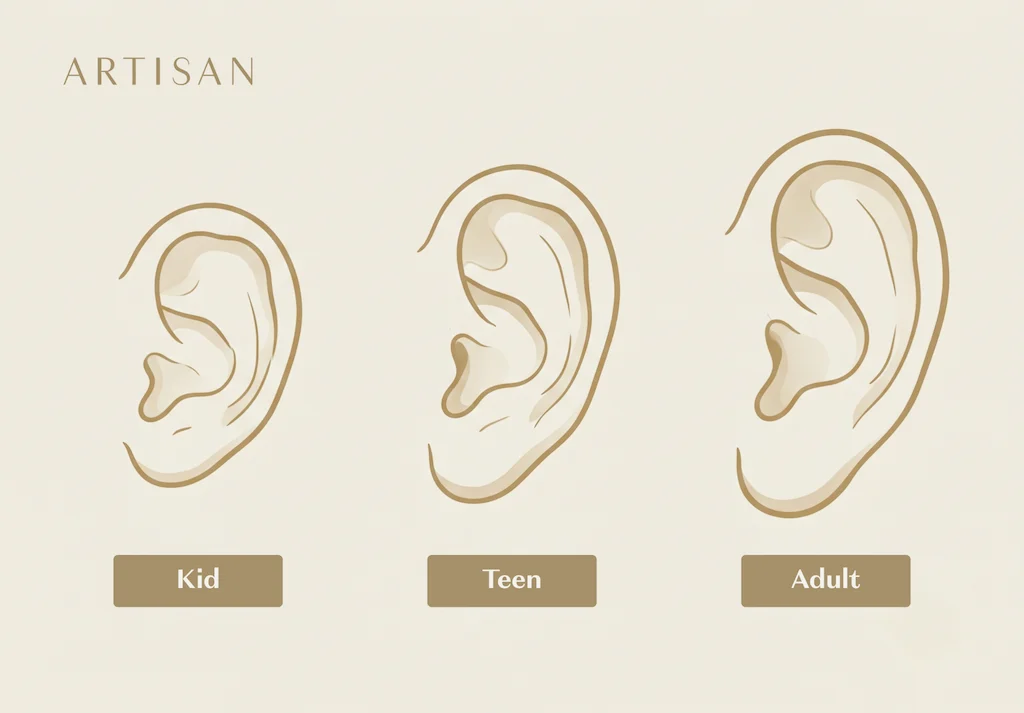
For children, most surgeons point to the same window: roughly age five to seven. By then, the ear has reached 80 to 90% of its adult size, and the cartilage holds a new shape well. That timing also lines up with the start of school, which is often when a child first becomes aware of teasing.
There is a reason surgeons rarely operate earlier. Before about age five, ear cartilage is still soft and floppy, so stitches can pull through before the new shape ever sets. Newborns are the exception.
In the first weeks of life, a baby’s ear cartilage is unusually soft, kept pliable by lingering maternal hormones. During that short window, gentle non-surgical molding can reshape many ears without surgery at all. Our team offers newborn ear molding with systems like EarWell and EarBuddies for babies caught early enough.
| Age stage | Typical approach | Why |
|---|---|---|
| First weeks of life | Non-surgical molding | Cartilage is soft and easy to reshape |
| Under 5 years | Usually wait | Cartilage is too soft to hold stitches |
| Around 5 to 7 years | Ideal surgical window | Ear is nearly grown and holds its shape |
| Teens and adults | Surgery at any age | No upper age limit; results stay stable |
For adults, there is genuinely no upper age limit. People in their thirties, fifties, and well beyond have their ears pinned back every year, often after first asking about non-surgical ear pinning options before deciding on surgery.
If you have ever assumed you aged out of the option, you have not. When you are ready to talk, you can schedule a consultation to map out what actually fits your situation.
How do candidacy requirements differ between children and adults?
The short version is that children are assessed mostly on readiness, while adults are assessed mostly on health. Both matter, but the emphasis shifts with age.
| What’s assessed | For children | For adults |
|---|---|---|
| Main focus | Emotional readiness and cooperation | Overall health and healing |
| Cartilage | Softer, reshapes easily | Firmer, needs extra shaping |
| Anesthesia | Often general, to keep them still | Usually local and comfortable |
| Motivation | The child’s own wish | The patient’s own goals |
For adults, candidacy looks much as it does for other procedures. Good candidates are in reasonable health, do not smoke, and have clear, realistic goals for how they want their ears to look.
Because adult cartilage is firmer and carries a kind of built-in memory, your surgeon may pair stitches with gentle cartilage shaping so the ears settle where they should. It is a small difference in approach that protects a natural-looking, balanced result.
For children, the bar is less about anatomy and more about the heart. A child does best when the surgery is something they genuinely want, not something done to ease a parent’s worry, and that distinction truly matters.
A good young candidate usually shares a few traits:
- Can follow simple aftercare instructions
- Will wear a protective headband without constant fuss
- Can talk about their ears calmly, without distress
- Wants the change for themselves
At Artisan, our surgeons make a point of including the child in that conversation, not just the adults in the room.
What ear shapes and cosmetic concerns can otoplasty correct?
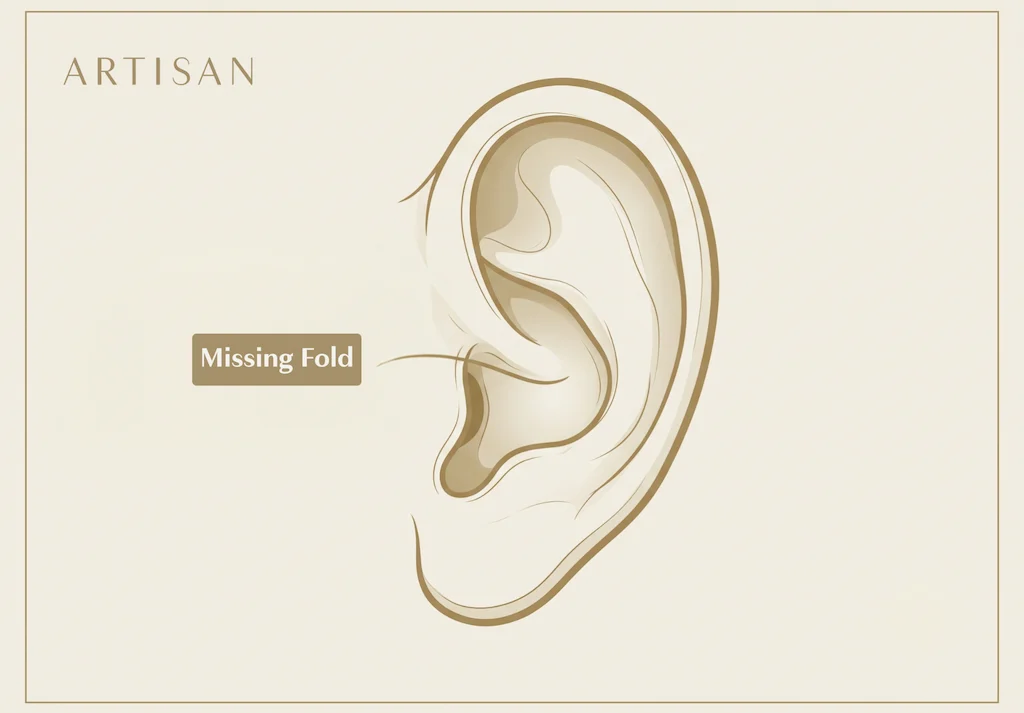
Otoplasty is a flexible procedure, and prominent or protruding ears are only its most familiar reason. Prominent ears are the most common congenital condition affecting the head and neck, occurring in approximately 5% of the population.
Beyond classic ear pinning, the procedure can address several concerns:
- Protruding ears that stick out from the head
- Overly large ears, known as macrotia, are treated with reduction techniques
- Folded or constricted shapes, including lop ear and Stahl’s ear
- Earlobes that have stretched or lengthened over time
Pinning works by recreating the soft fold that should curve along the upper ear, then easing the ear closer to the head. When ears are simply too large, a surgeon removes a measured wedge of skin and cartilage instead, reshaping with an eye for balance rather than just repositioning.
Seeing the range of outcomes often helps more than any description can. You can browse before-and-after results to get a realistic sense of what is possible for different ears.
Whatever the starting point, satisfaction with ear surgery tends to run high. In a recent analysis of patient reviews, more than 90% of patients said their otoplasty results were worth it, one of the highest satisfaction rates among facial cosmetic procedures.
Deborah, a patient at our Northside office who was thrilled with her outcome, put it simply:
“Stellar results from my procedure! I highly recommend the team. The office is wonderful and very accommodating with my busy schedule. Thanks to the team at Artisan!”
What medical and lifestyle factors can disqualify you from ear surgery?
Most people who want their ears pinned back turn out to be good candidates. Still, a few health and lifestyle factors can prompt your surgeon to pause, usually to keep you safe rather than to turn you away for good.
Your surgeon will look closely at a handful of things:
- Smoking or tobacco use, which slows healing by reducing blood flow to the skin
- Conditions such as diabetes or high blood pressure that are not yet well controlled
- An active ear infection or another infection near the surgical area
- Bleeding disorders that raise the chance of a hematoma, a small pocket of trapped blood
Here is the reassuring part. Most of these are temporary or manageable rather than permanent roadblocks. Quitting smoking for a stretch before and after surgery, or bringing a condition under steady control, can move you firmly back into candidate territory.
At Artisan, our surgeons review your full health history before recommending anything, because a careful evaluation is part of how good results happen. Being asked these questions is not a hurdle. It is a sign your surgeon is paying close attention.
What should candidates expect during otoplasty recovery and healing?
Recovery from ear surgery follows a fairly predictable rhythm, which makes it easier to plan around school, work, and weekend life. Most people are back at a desk or in a classroom within about a week, once the bulky dressing comes off.
| Phase | Timeframe | What to expect |
|---|---|---|
| Right after surgery | Day 1 to 5 | A bulky dressing protects the ears; rest and take it easy |
| First couple of weeks | Week 1 to 2 | Dressing gives way to a soft headband; back to school or desk work |
| Healing stretch | Week 2 to 6 | Headband at night; light activity returns gradually |
| Settling in | Week 6 and beyond | Contact sports resume with clearance; final shape settles |
A few small adjustments make those early weeks smoother. Button-down shirts spare you from pulling anything over tender ears, and sleeping on your back with your head propped up keeps pressure off the healing cartilage.
Glasses and earrings wait a little while too, since both press right where the incisions are healing. Your surgeon will give you the green light once things have settled.
None of this has to feel like a mystery, especially with a team walking you through each step.
Melody, a patient at our Northside office, described the support she felt from start to finish:
“I had elective surgery with Artisan Plastic Surgery and couldn’t be happier with the results. From the front desk to the post op every person was very professional, knowledgeable and caring.”
How do you know if a surgeon is the right fit?
A consultation is not only a chance for a surgeon to evaluate you. It is just as much your chance to evaluate them, their approach, their space, and whether you feel genuinely heard.
As Atlanta’s first woman-led plastic surgery practice, Artisan brings a particular sensitivity to that conversation. Your visit happens in person at our Northside or Johns Creek office, where your surgeon can examine your ears directly and talk through what is realistic for you or your child.
From there, the plan is built around you, never pulled from a one-size-fits-all template. Your surgeon will walk you through the approach the way an artist talks about a composition, balancing each part of the ear so the result looks like you, only more at ease.
Cost is a fair thing to ask about, and you will get clear answers here rather than guesswork. To keep things manageable, we offer flexible financing options through Alphaeon Credit, Cherry, and CareCredit, with no pressure to decide on the spot. Call (404) 851-1998 whenever you are ready to set up a visit.
Conclusion
That first question, about whether the timing is right, usually has a gentler answer than people expect. Whether you are five or fifty, ear pinning surgery tends to meet you where you are, with no real deadline on the wish to feel more at ease.
Photos can do what words cannot here. Spending time with real before-and-after results is a grounding next step, and a personal consultation fills in the details that images leave out.
You will never be rushed at any point. At Artisan in Atlanta, every patient deserves to feel heard, respected, and confident in a decision this personal. When you are ready to talk it through, reach out or call (404) 851-1998, and we will meet you exactly where you are.
Frequently asked questions
What is the difference between otoplasty and ear pinning?
Otoplasty is the broad term for any surgery that reshapes the ears, including reducing their size or repairing an injury. Ear pinning is one specific type of otoplasty that moves protruding ears closer to the head. So all ear pinning is otoplasty, but not all otoplasty is ear pinning.
Does otoplasty affect hearing?
No. Ear pinning reshapes the outer ear only and does not touch the inner structures that handle hearing. Your or your child’s ability to hear stays the same before and after surgery.
Is otoplasty permanent, or will the ears move back over time?
Results are designed to last, and for most people the new position holds well. Because cartilage has a little natural memory, a small number of patients need a minor touch-up down the line. Following the headband and aftercare instructions closely helps the shape stay put.
Does otoplasty leave visible scars?
In most cases, no visible scar shows. The incision usually sits in the natural crease behind the ear, where it stays hidden from the front. Any fine line that does form tends to fade and blend into that fold over time.
Can ear pinning be done on only one ear?
Yes. If only one ear protrudes or sits asymmetrically, surgery can be performed on that side alone to bring both ears into better balance. Your surgeon will compare both ears carefully so the final look feels even and natural.
How painful is recovery for children versus adults?
Both children and adults usually describe the discomfort as mild and manageable with the medication their surgeon recommends. Adults often have the procedure under local anesthesia, while children are typically given general anesthesia so they can rest comfortably through it. Most soreness eases within the first several days.
How long will I need to wear a headband after surgery?
A supportive headband is usually worn around the clock for the first week or two. After that, most patients wear it only at night for several more weeks to protect the ears while they settle. Your surgeon will tell you exactly when you can set it aside.
Can I wear glasses or earrings right after surgery?
It is best to wait, since both glasses and earrings press directly on the areas that are healing. Most patients hold off for the first few weeks until the incisions have settled. Our team will let you know when it is safe to go back to your usual frames and jewelry.
What are the main risks of ear pinning surgery?
As with any procedure, possible risks include minor bleeding, infection, changes in skin sensation, mild asymmetry, or a stitch working its way loose. Serious problems are genuinely uncommon, and our board-certified surgeons take careful steps to keep risks low. Following your aftercare plan closely is one of the best ways to support a smooth result.
What happens if a baby is born with prominent ears?
If the ears are caught in the first weeks of life, gentle non-surgical molding can often reshape them without any surgery at all. At Artisan Plastic Surgery, our team offers newborn ear molding for babies seen early enough, and a consultation is the best way to learn whether your little one is a candidate.
*Disclaimer: This content is for educational purposes only and does not constitute medical advice. A consultation with a qualified board-certified surgeon is required to determine the best treatment plan for your individual needs and any questions you may have about a medical condition or procedure.

