
Whether you’re a mommy makeover candidate comes down to three separate questions, not one. Are you healthy enough for several hours of surgery, is your body finished changing, and will you have real help at home while you heal? All three have to line up at the same time.
Here’s what the wider picture shows. ISAPS recorded a 35.4 percent rise in abdominoplasty and a 29.8 percent rise in breast lifts worldwide over the four years to 2024. Those are the two operations most often combined into a mommy makeover, though rising demand has never meant rising eligibility.
At Artisan Plastic Surgery in Atlanta, the city’s first woman-led plastic surgery practice, that assessment starts with what your body is doing right now rather than what you hoped it would be doing by now. Wanting this for yourself after years of putting everyone else first is not vanity, and it needs no defending. This article covers the health criteria surgeons check, how to read your own timing, and what happens at the consultation that settles the question.
Mommy Makeover Candidacy – Key takeaways
- Candidacy is three separate gates rather than one verdict: your medical health, the stability of your weight and family plans, and the help you can arrange for recovery.
- A mommy makeover reshapes what pregnancy and weight change left behind. It removes loose skin and repositions tissue, and it is not a weight-loss treatment.
- Timing is the gate that only needs patience. Finish having children, get several months past breastfeeding, and hold a steady weight.
- Nicotine changes how skin heals. Surgeons ask you to stop weeks before surgery and stay off it afterward, and vaping counts.
- The lifting restriction shapes the first few weeks more than the pain does. If nobody else can pick up your children for three weeks, that is a scheduling problem to solve before you book.
What does a mommy makeover actually address?
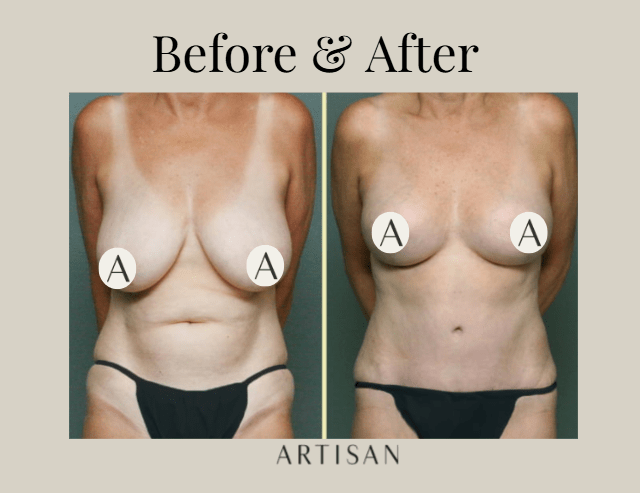
A mommy makeover treats the structural changes pregnancy and weight fluctuation leave in the breasts and the abdomen. That usually means breasts that have lost volume or sit lower than they used to, plus abdominal skin that no longer retracts. Separated abdominal muscles and pockets of fat that stay put belong on the same list.
None of those respond fully to diet or exercise, and that isn’t a failure of effort. Skin elasticity and muscle separation are structural, and structure is what surgery addresses.
The plan itself is assembled from a short list of component operations, chosen for your anatomy rather than pulled off a shelf:
- A tummy tuck to remove loose abdominal skin and repair separated muscle
- A breast lift to reposition breast tissue that has descended
- A breast augmentation to restore volume, or a breast reduction to relieve weight and strain
- Liposuction to refine contours in areas that resist diet and exercise
One thing this operation does not do is take the place of weight loss. ASPS is direct about it, describing a mommy makeover as body contouring rather than a substitute for weight loss or exercise. It refines a shape you already have.
You also don’t need to have been pregnant to have any of this. Sagging, stretched abdominal muscles, and stubborn fat show up after significant weight loss too, and the surgical answer is the same. If you’re trying to picture what the result looks like on a body like yours, browsing the before-and-after gallery does more than any description can.
What health and lifestyle requirements do you need to meet?
ASPS lists four core criteria for a mommy makeover candidate: good medical health, being at your ideal body weight, a positive outlook with realistic expectations, and being finished with childbearing. In practice that second criterion is really about stability, which is a far more useful thing to aim at than a number on a chart.
Good health here is a practical standard, not an idealized one. Chronic conditions rarely rule you out on their own, but they do need to be well controlled before an elective operation. Your surgeon will usually want that confirmed in writing by the physician managing them.
At Artisan, the published candidacy list is short and worth reading against your own situation:
- You want to remove excess skin on the abdomen
- You want to tighten separated abdominal muscles
- You want to lift or reshape the breasts
- You have no medical conditions that could impair healing or raise surgical risk
- You are a non-smoker, or willing to quit before surgery
That last one carries more weight than most people expect. Nicotine narrows the small vessels that feed healing skin, and on a procedure built around large incisions and repositioned tissue, that matters. Our surgeons treat it as non-negotiable rather than a preference.
ASPS recommends stopping four to eight weeks before surgery and staying off cigarettes and nicotine for at least four weeks afterward. The same advice applies to vaping, which surprises people more often than it should.
A few other lifestyle details get checked in the weeks beforehand. Blood-thinning medications and supplements come out of your routine roughly two weeks ahead, alcohol pauses for a week on either side of surgery, and diet pills and weight-loss injections stop entirely.
Then there’s the expectations question, which sounds soft and isn’t. Scars are permanent, some asymmetry is normal, and extensive abdominal contouring means a longer scar than a shorter one would leave. Being genuinely at peace with that trade is part of being a candidate, and thinking hard about it now is exactly the right instinct.
When is the right time for a mommy makeover?
Timing is the part of candidacy you can actually change. Health conditions need managing and household support needs arranging, but timing only needs patience, which makes a not yet a very different answer from a no.
The guidance clusters around four milestones, and they’re worth checking one at a time rather than as a single verdict:
| Milestone | Common guidance | Why it matters |
|---|---|---|
| Finished having children | Before a tummy tuck or breast lift | A later pregnancy stretches abdominal repair and reshapes the breasts again |
| After childbirth | At least six months, often closer to a year | The body keeps changing for months after delivery |
| After breastfeeding | At least six weeks, and preferably three months | Breasts need time to settle back to their resting size and shape |
| Weight | Steady for several months | Large changes afterward can compromise the result |
Those intervals come from surgeons quoted in ASPS guidance, which is careful to add that no single rule fits everyone. Your own surgeon may extend them based on what your exam actually shows.
Being undecided about more children is its own answer, and a reasonable one. A later pregnancy is not unsafe after a mommy makeover, but it will undo part of what the surgery achieved, so waiting is usually the better trade.
Some women want to feel at home in their bodies now, and others would rather finish their families first. Neither choice is the wrong one.
Taylea, a patient at our Northside office whose abdominal and breast procedures happened five years apart, shared her experience:
“Dr. Diane Alexander is my go to physician for plastic surgery. She performed my tummy tuck in 2020 and a breast lift with implant exchange in 2025. I trust her implicitly, and my outcomes have always exceeded my expectations.”
Weight asks for the same patience. If you’re still actively losing, surgery removes skin your body hasn’t finished shedding, and the shape you paid for shifts underneath you. At Artisan, timing is built around where your body actually is.
Waiting well is also easier on the budget than rushing. When you’re ready to map out the cost, flexible financing through Alphaeon Credit, Cherry, and CareCredit spreads it across a schedule that fits your household.
Can you manage the surgery, the recovery, and the help you’ll need?
This is the gate people skip. What usually stands in the way here isn’t the risk, it’s the logistics.
Start with the operation itself. There’s no fixed ceiling on how many procedures can be combined safely. What matters is the specific combination, your time under anesthesia, and your own health profile.
A 2023 prospective study of 37 postpartum women compared combined surgery against abdominoplasty alone and found the combined approach was not inferior for safety. That finding applies to carefully selected patients, which is exactly the point of this gate. Staging into two operations is sometimes the safer recommendation rather than a lesser one.
The honest risk picture is worth reading once, calmly. Alongside bleeding, poor wound healing, changes in breast or abdominal sensation, and fluid collecting under the skin, ASPS lists the anesthesia and clot-related risks that come with any longer operation. The large majority of patients move through recovery without any of it, and every item on that list has something your surgeon or you can do to lower it.
Recovery at Artisan is structured around that reality. Surgery runs about three to five hours, patients stay for a 23-hour observation period afterward, and discomfort is managed with a nerve block that works for the first several days.
The restrictions are what reshape your life for a few weeks, so read them as a schedule rather than a warning:
- No lifting, pushing, or pulling more than five pounds for three weeks
- No raising your arms above shoulder height for the first week
- No sports or gym activity for six weeks
- A minimum of one to two weeks away from work, with help at home for several weeks after that
- Short walks every waking hour once you’re home, which protects circulation
Read that list with your actual week in mind. If you have a toddler who needs carrying and no one who can take that over for three weeks, the answer isn’t that you’re not a candidate. It’s that this isn’t the right month, and that’s a solvable problem.
You’ll also be given a short list of symptoms that mean call the office right away rather than wait for your next visit. Swelling that climbs quickly, pain that medication isn’t touching, an incision that opens or turns red and warm, fever, or calf pain and swelling in one leg all belong on it. Knowing what to watch for is what makes the first weeks feel manageable instead of uncertain.
How does a consultation decide whether you’re a candidate?
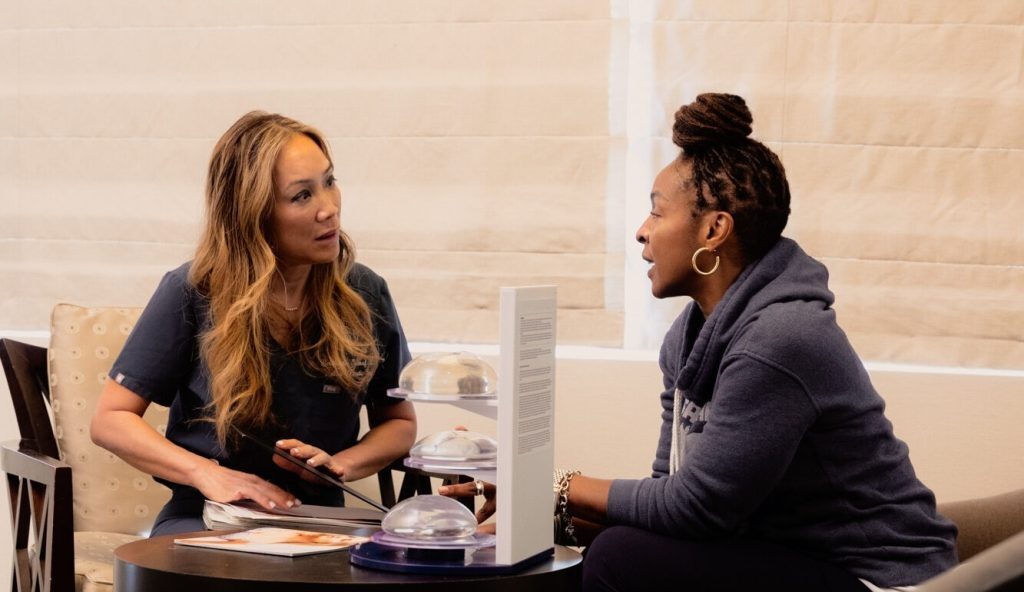
The consultation is where the three gates get tested against your actual body, and it’s required before any mommy makeover here. It’s also not a one-way assessment. You’re evaluating the surgeon just as carefully as she’s evaluating you, and a good one expects that.
Your surgeon reviews your medical history, current medications, vitamins and supplements, prior operations, and your pregnancy history. The examination looks at your skin quality and thickness, the tone and separation of your abdominal muscles, breast size and shape, and whether there’s a hernia that changes the plan. Clinical photographs are part of the record, and any lab work or medical clearance is ordered based on your health and the anesthesia planned, rather than automatically.
What comes out of that visit is a plan built for one person. Our team treats it the way an artist approaches a composition, weighing proportion and balance across the breasts and abdomen together rather than solving each area in isolation.
Sandy, whose daughter went through the same process at our practice, described how it felt from the outside:
“My daughter just had a breast lift and augmentation and I am so impressed with the whole process from consultation to surgery. Everyone is so nice and professional. I am so impressed that I may do the mommy makeover!”
Come with questions of your own, and don’t soften them. Ask how often your surgeon performs these specific procedures, ask to see genuine before-and-after photos of patients whose starting point resembles yours, and ask what she would recommend if you were her sister. You can read our surgeons’ training and credentials on the Artisan team page before you ever walk in.
Sometimes the recommendation is to wait, or to do less. If your concern is mostly localized fat without much loose skin or muscle separation, a smaller operation may serve you better than a full combination. Hearing that is a good sign about your surgeon, not a setback.
Consultations happen in person at our Atlanta-area offices, because skin quality and muscle tone have to be assessed by hand. Whenever you’re ready to have that conversation, you can schedule a consultation at Artisan Plastic Surgery.
Conclusion
Those three questions from the beginning, your health, your timing, and your support at home, are the whole of it. A mommy makeover asks a lot of a body and a household at once, and being ready for it is something you can actually work toward rather than something you either have or don’t.
Looking at real results from patients whose starting point resembles yours is the most useful next step, and our before-and-after gallery is the honest version of that. What a photograph can’t tell you is which combination fits your anatomy, and that part takes a conversation.
Every woman who walks into Artisan in Atlanta arrives with a different body and a different set of reasons, and both get taken seriously. You should leave feeling heard and clear about your options, whatever you decide.
When you want a straight answer about where you stand, reach out to our team or call (404) 851-1998.
Frequently Asked Questions
Can I get a mommy makeover if I still want more children?
You can, but most surgeons will encourage you to wait, and it’s worth understanding why. A later pregnancy stretches the abdominal repair and changes breast shape again, so a good deal of what the surgery achieved would be undone. If you’re genuinely undecided, non-surgical options can hold you over in the meantime.
How long after giving birth should I wait before having a mommy makeover?
Published guidance places the minimum at around six months, with many surgeons preferring closer to a year. Your body continues changing well past the point you feel back to normal. Waiting protects the result rather than delaying it for its own sake.
How long after breastfeeding should I wait before surgery?
The common recommendation is at least six weeks after breastfeeding ends, and preferably closer to three months. Breasts can take several months to settle back to their resting size and shape. Operating before that settling finishes makes it much harder to judge the right lift or volume.
Do I need to be at my ideal weight for a mommy makeover?
Stable matters more than ideal. What surgeons look for is a weight you’ve held comfortably for several months and expect to keep, because significant change afterward can compromise your result. There is no target number you have to hit first.
Can I have a mommy makeover if I am overweight?
Often yes, though it depends on your overall health and your specific anatomy rather than on weight alone. Higher body weight can raise the chance of healing and anesthesia complications, so your surgeon will weigh that honestly with you. If she recommends losing some weight first, it’s about safety and durability, not a judgment.
Can smokers or people who vape have a mommy makeover?
Not while you’re still using nicotine. It restricts blood flow to healing skin, and on an operation with incisions this extensive that meaningfully raises the risk of wound problems. Most surgeons ask you to stop several weeks before surgery and stay off it for at least four weeks afterward, and vaping counts.
What medical conditions might prevent me from having a mommy makeover?
Few conditions rule surgery out outright. Uncontrolled diabetes, bleeding or clotting disorders, heart disease, and anything that impairs wound healing are the usual concerns, and the question is whether they’re well managed rather than whether they exist. You’ll likely need clearance from the physician who treats them.
Is a mommy makeover a weight-loss procedure?
No, and it’s an important distinction. The operation removes loose skin and repositions tissue to reshape a body you already have, and while liposuction refines contours, it isn’t a weight-loss treatment. Most people find their weight barely moves.
Can I be a mommy makeover candidate if I have never been pregnant?
Yes. The name describes the concerns rather than the cause, and significant weight loss produces very similar sagging, stretched abdominal muscles, and stubborn fat. The evaluation and the surgical plan work exactly the same way.
How much help will I need at home after a mommy makeover?
Plan on someone with you for the first several days and available for a few weeks after. You won’t be able to lift more than five pounds for three weeks, which includes small children, and driving is off the table while you’re on prescription pain medication. Arranging that support before you book is the single most practical thing you can do.
How do I find a qualified, board-certified plastic surgeon for a mommy makeover?
Start by verifying board certification and asking how frequently the surgeon performs these specific procedures. Ask to see real before-and-after photos of patients with a starting point like yours, and pay attention to whether you’re being listened to or sold to. Our surgeons are board-certified, and every consultation happens in person at one of our Atlanta-area offices so your anatomy can be properly assessed.
*Disclaimer: This content is for educational purposes only and does not constitute medical advice. A consultation with a qualified board-certified surgeon is required to determine the best treatment plan for your individual needs and any questions you may have about a medical condition or procedure.